

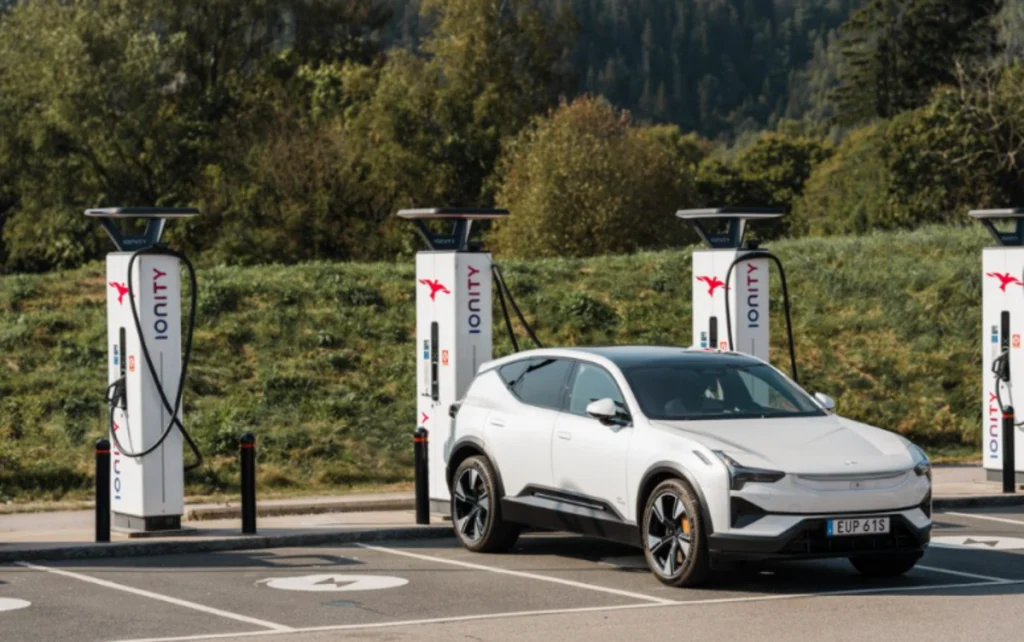
The automotive landscape is undergoing a seismic shift, characterized by the convergence of rapid electrification and hardening geopolitical trade barriers. At the center of this transformation is Polestar, the Swedish electric vehicle (EV) manufacturer. Recently, the company has found itself navigating a complex regulatory minefield in the United States, forcing a tactical retreat from one of the world’s most lucrative markets. As the company prepares for a mandatory cessation of new vehicle sales in the U.S. by the 2027 model year, it is recalibrating its global strategy to focus on European expansion and operational resilience.
The Regulatory Impasse: Why the U.S. Door is Closing
The core of Polestar’s current challenge lies in a recent policy directive from the U.S. Department of Commerce. The Biden-Harris administration has introduced rigorous new regulations aimed at curbing the presence of Chinese-linked hardware and software in connected vehicles. Because Polestar is majority-owned by the Chinese conglomerate Geely Holding, its vehicles are being swept into the broader scope of these security-focused trade restrictions.
The regulation, which focuses on "Vehicle Connectivity Systems" (VCS), essentially prohibits the sale of vehicles equipped with software or hardware originating from "foreign adversaries," with China being the primary target. For Polestar, this means that even if a car is engineered in Sweden, the presence of proprietary technology linked to its parent company renders the vehicle ineligible for the U.S. market starting with the 2027 model year.
Chronology of a Strategic Exit
The timeline leading to this juncture has been accelerated by both regulatory pressures and market volatility:
- Mid-2024: The U.S. Department of Commerce formally proposes the ban on Chinese-linked software/hardware in connected vehicles.
- September 2024: Polestar officially revises its annual growth forecasts downward, acknowledging the intensifying competitive environment and the uncertainty surrounding its North American footprint.
- Early October 2024: CEO Michael Lohscheller confirms in an interview with Reuters that the company is effectively "clearing the decks" in the U.S., focusing on selling through all remaining 2026 model-year inventory before the deadline.
- November 5, 2024: The scheduled date for Polestar to release its full third-quarter financial results, which analysts expect to highlight the impact of these geopolitical shifts on the company’s bottom line.
- 2027 and Beyond: The official enforcement date of the U.S. import and sales ban on connected vehicles tied to Chinese entities, marking the end of Polestar’s primary new vehicle business in the region.
Analyzing the Data: A Tale of Two Markets
Despite the looming exit, Polestar’s recent performance in the United States has been paradoxically strong. During the third quarter of 2024, the brand recorded approximately 2,160 sales in the U.S., a significant increase from the 966 units sold during the same period in 2023.
CEO Michael Lohscheller attributes this surge to the "final push" strategy. As consumers realize that the brand’s newer models may soon become unavailable or harder to service, there has been a tactical rush to secure existing inventory—specifically the Polestar 3 and Polestar 4.
However, looking at the global picture, the data is more sobering. While global quarterly sales reached 14,371 units—a marginal 1% increase over the 14,222 units sold in the same quarter last year—this growth is precarious. Excluding the anomalous surge in the U.S. market, retail sales outside of North America actually declined by 8%. This decline is symptomatic of a broader malaise within the Geely-backed ecosystem. Volvo Cars, Polestar’s sister company, recently withdrew its own annual volume forecasts after reporting a 40% decline in retail sales in China, signaling that the entire group is struggling with a "perfect storm" of high interest rates, slowing EV adoption in key regions, and aggressive price wars.
Official Responses and Tactical Adjustments
In his communication with shareholders and the media, Michael Lohscheller has maintained a tone of pragmatic optimism. He emphasizes that while the sale of new vehicles will cease, the company is not abandoning the U.S. market entirely.
"We are committed to maintaining our service network and our pre-owned vehicle operations," Lohscheller stated. By keeping a footprint in the after-sales sector, Polestar hopes to retain a connection with its existing U.S. customer base, potentially preparing for a return should regulations evolve or if the company can restructure its supply chain to meet the "non-Chinese" criteria required by the U.S. government.
However, the primary shift is now toward Europe. The strategy is three-pronged:
- Manufacturing Localization: To circumvent trade risks, Polestar is focusing on localizing production. The upcoming compact SUV, the Polestar 7, is slated for production at a Volvo facility in Slovakia, directly within the European Union. This move is designed to insulate the product from tariffs and connectivity-related trade barriers.
- Portfolio Diversification: The company is aggressively pushing its new product lineup. The Polestar 5—a high-performance GT—is currently being delivered to customers, with early reports suggesting strong interest in the U.K., Germany, and Scandinavia.
- Logistical Efficiency: The Polestar 4, a crucial volume driver, has already arrived at European ports and is being distributed to retailers. By streamlining the supply chain and focusing on these key European markets, Polestar aims to offset the volume lost in the United States.
Implications: The Future of the "Global" EV Brand
The situation facing Polestar serves as a case study for the "deglobalization" of the automotive industry. For years, the industry was predicated on the idea of a borderless supply chain where engineering, software development, and manufacturing could be distributed across the globe to optimize costs.
The Polestar experience proves that, in the age of digital connectivity, a car is no longer just a piece of hardware; it is a data-gathering, internet-connected device. Consequently, governments are beginning to treat EVs with the same security scrutiny previously reserved for telecommunications infrastructure or defense systems.
1. Supply Chain Decoupling
For Polestar, the long-term implication is the need for a total decoupling of its technology stack from its Chinese parent if it wishes to participate in Western markets long-term. This is a capital-intensive and time-consuming process that involves rewriting software and sourcing alternative hardware providers, all while trying to maintain competitive pricing.
2. European Reliance
Europe has become the company’s "make or break" region. With the U.S. market effectively closing and the Chinese market suffering from intense price competition and saturation, Polestar’s survival depends on its ability to capture European market share from established incumbents like BMW, Mercedes-Benz, and Audi. The successful launch of the Polestar 7 and the continued momentum of the Polestar 5 will determine whether the brand can sustain its current scale.
3. Investor Sentiment and Market Confidence
The market remains wary. The decision to lower growth forecasts in September, combined with the volatility of the Geely group’s overall sales, has put pressure on Polestar’s valuation. Investors are watching closely to see if the November 5th results demonstrate a clear path toward profitability, or if the costs associated with shifting production and re-engineering vehicles will continue to weigh on the balance sheet.
Conclusion: A New Chapter
Polestar stands at a crossroads. The transition from a brand that leverages the massive scale and low-cost manufacturing of China to a truly independent, European-centric manufacturer is fraught with difficulty. The loss of the U.S. new-vehicle market is a significant blow, but it has also provided the company with a clear mandate: simplify, localize, and focus on the markets where it has the strongest brand resonance.
The company’s ability to navigate these geopolitical currents will likely serve as a blueprint—or a warning—for other EV manufacturers with deep ties to foreign markets. As the lines between technology policy and trade policy continue to blur, Polestar’s journey will be defined not just by the performance of its motors, but by the agility of its diplomacy and the resilience of its engineering in a world that is becoming increasingly walled-off.
