

Main Facts
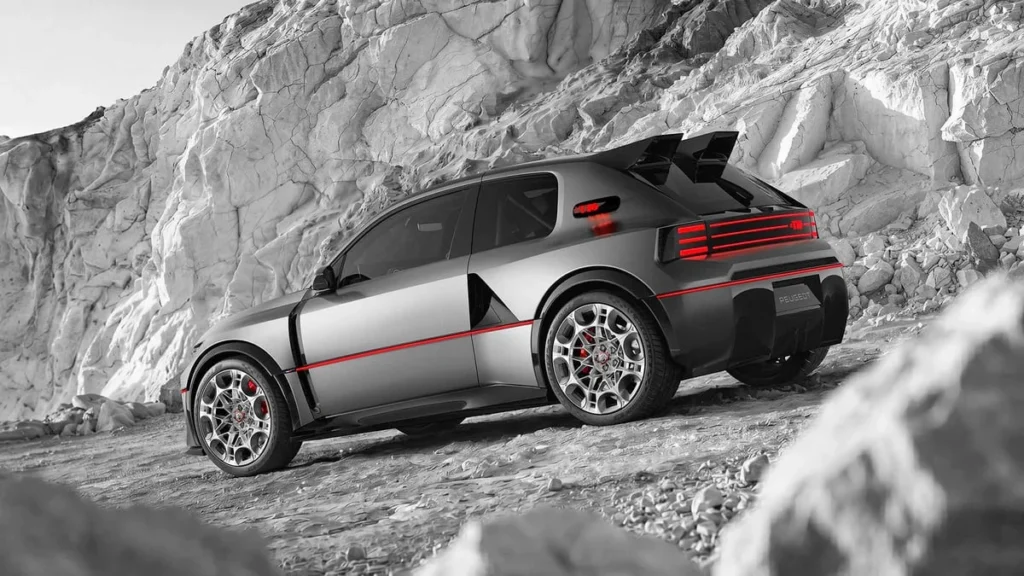
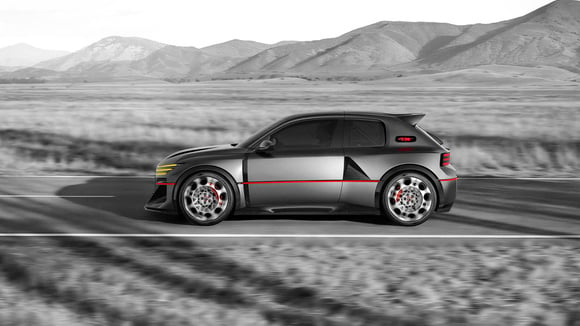
Peugeot has sent shockwaves through the automotive world with the debut of the Peugeot E-T16 concept, unveiled ahead of the Paris Motor Show. Designed as a modern, all-electric homage to the legendary 1980s Peugeot 205 T16 rally weapon, this high-performance compact car pushes technical boundaries to an extreme degree.
Unlike its spiritual rival from across town—Renault’s production-bound 5 Turbo 3E—Peugeot has confirmed that the E-T16 is strictly a design and technology demonstrator. It will never see mass production. However, beneath its exaggerated, muscular bodywork lies a critical real-world mission: the E-T16 serves as a rolling preview of the next-generation Peugeot e-208, scheduled to arrive in 2028 as a 100% battery-electric vehicle.
Key highlights of the Peugeot E-T16 concept include:
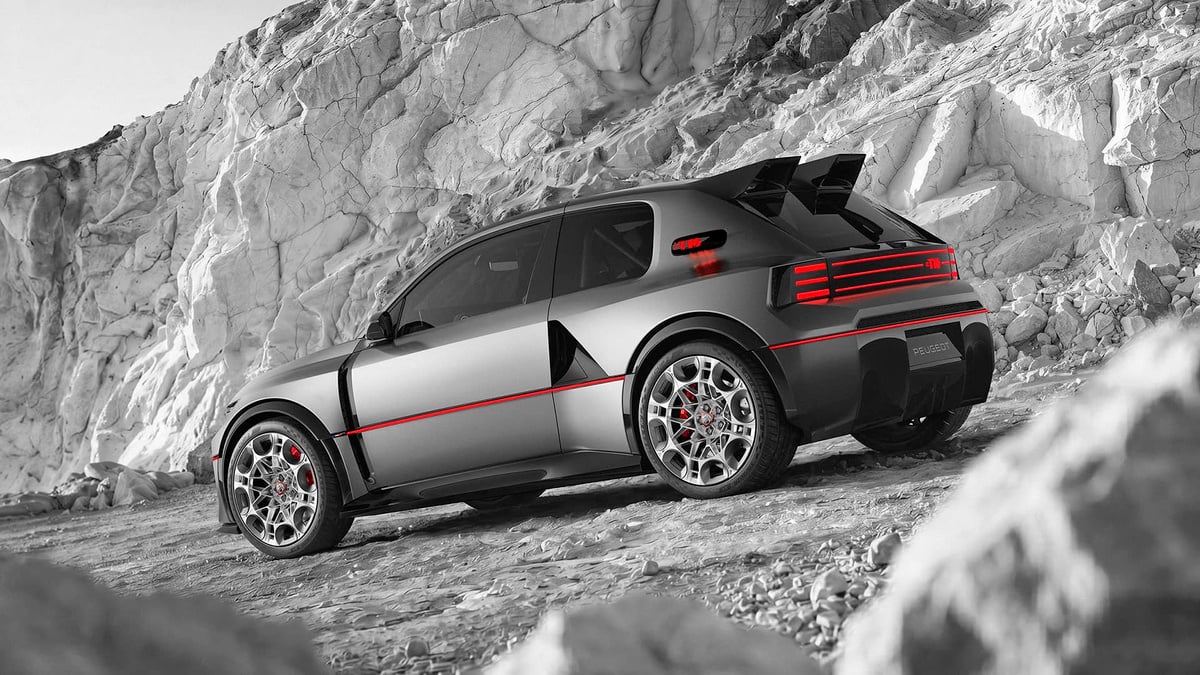
- Astounding Powertrain: A tri-motor setup (one on the front axle, two on the rear) producing a combined 816 horsepower.
- Hypercar Performance: A weight-to-power ratio under 2 kg/hp, enabling a 0 to 100 km/h (62 mph) sprint in just 2.5 seconds and a 0 to 300 km/h (186 mph) run in 16 seconds.
- Advanced Thermal Management: Innovative "Side Cooling" battery technology derived from motorsport to prevent overheating under track conditions.
- 800-Volt Architecture: A high-voltage system paired with an 85 kWh battery, offering roughly 400 km (248 miles) of WLTP range and 10-to-80% fast charging in under 15 minutes.
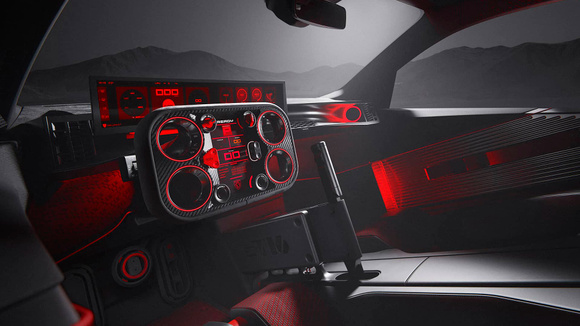
- Cabin Innovation: A preview of the next-generation i-Cockpit, featuring a 21-inch panoramic HD display and the futuristic "Hypersquare" steering yoke.
Chronology of Development and Heritage
To understand the weight of the E-T16 nameplate, one must look back at the golden era of Group B rallying and Peugeot Sport’s storied history.
1984–1986: The Reign of the 205 T16
The original Peugeot 205 Turbo 16 was a homologation special built to conquer the grueling World Rally Championship (WRC). Featuring a mid-mounted turbocharged engine, all-wheel drive, and space-frame chassis hidden beneath a modified 205 silhouette, it dominated the sport, securing manufacturer and driver titles in 1985 and 1986 before Group B was banned. It became an instant cultural icon.
2013: The Pikes Peak Benchmark
Peugeot Sport previously dipped its toes into ultra-high-performance modern concepts with the 208 T16 Pikes Peak, driven by Sébastien Loeb. That monster pulverized the record up America’s most famous hill climb, cementing the idea that small Peugeot hatchbacks could punch exponentially above their weight class.
2026: The Electric Turn at the Paris Motor Show
At the Paris Motor Show, Peugeot positioned the E-T16 as a direct counter-narrative to Renault’s retro-futuristic electric announcements. While Renault leans into commercial viability with cars like the 5 Turbo 3E, Peugeot has chosen the path of pure engineering fantasy—using an untouchable halo concept to disguise the foundational design language of the upcoming, mass-market 208 hatchback.
Supporting Data and Technical Specifications
Peugeot Sport’s engineering team was given carte blanche to build a technological showcase, resulting in a technical sheet that reads more like a hypercar than a subcompact city car.
| Specification | Peugeot E-T16 Concept |
|---|---|
| Powertrain Type | Tri-motor All-Wheel Drive (1 front, 2 rear) with torque vectoring |
| Total Power Output | 816 horsepower |
| Weight-to-Power Ratio | < 2 kg/hp |
| 0 – 100 km/h (0-62 mph) | 2.5 seconds |
| 0 – 300 km/h (0-186 mph) | 16.0 seconds |
| Battery Capacity | 85 kWh |
| Electrical Architecture | 800 Volts |
| WLTP Range | ~400 km (248 miles) |
| Fast Charging (10-80%) | Under 15 minutes |
| Tires | Michelin Pilot Sport Cup 2 semi-slicks |
The "Side Cooling" Breakthrough
Managing thermal loads in a compact electric vehicle pushing over 800 horsepower is a monumental task. Peugeot Sport introduced a proprietary "Side Cooling" technology adapted from top-tier motorsport. Instead of cooling the battery pack from the floorpan—which adds thickness and weight—coolant is circulated strictly through the lateral walls of the cells. According to Peugeot engineers, this hyper-targeted thermal management prevents performance throttling and allows the car to complete three consecutive flat-out laps of the Nürburgring Nordschleife without losing power.
Official Responses and Industry Context
The reveal of the E-T16 has sparked intense debate within the automotive community, primarily centered around why Peugeot refuses to commercialize such an emotional machine.
Speaking on background during private viewings ahead of the public unveiling, brand representatives emphasized that the E-T16 is an artistic and technical exercise. Much like the celebrated Peugeot e-Legend concept of 2018—which similarly broke enthusiast hearts by remaining a non-production one-off—the E-T16 is designed to elicit passion, anchor the brand’s sporting heritage, and test new production methodologies.
"We wanted to remind the world what Peugeot Sport is capable of when unshackled from strict homologation budgets and regulatory volume targets," noted a senior brand insider. "The E-T16 is a bridge. It connects the raw, unadulterated adrenaline of the 1980s 205 T16 to the digital, electric architecture of our near-term future."
Market analysts point out that while enthusiasts may lament the lack of a production run, Stellantis (Peugeot’s parent company) faces a fiercely competitive European EV market where profitability and accessible pricing for city cars take precedence over low-volume halo cars.
Implications for the Future: The Next-Gen Peugeot e-208
Beyond its outrageous power figures and carbon-fiber bucket seats, the E-T16 is essentially a heavily disguised crystal ball for the upcoming third-generation Peugeot 208.
Exterior Styling Cues
The production e-208, expected to hit showrooms in 2028, will inherit several distinct design elements pioneered on the concept:
- Aggressive Stance: While standard production cars will soften the extreme wheel arch flares, the athletic proportions and low-slung roofline preview the hatchback’s dynamic new silhouette.
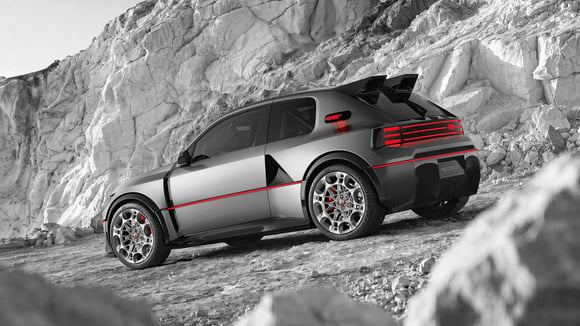
- Heritage Nods: The Winchester matte gray paint, a razor-thin retro-illuminated red stripe running along the beltline, and functional side air intakes—which on the concept double as the charging port and door release mechanisms—point to how Peugeot plans to inject emotional storytelling into its electric fleet.
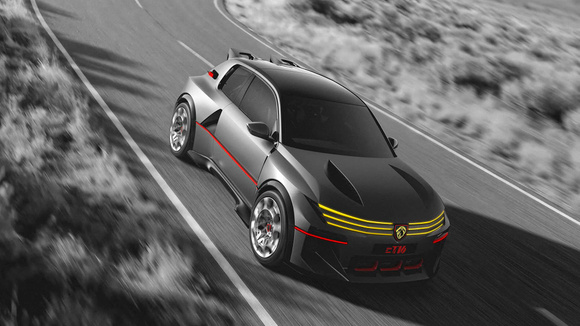
- Lighting Signatures: The horizontal triple-claw lighting motif will become the standard face of future Peugeot passenger vehicles.
Interior Revolution
Inside, the E-T16 showcases the layout for the next evolution of Peugeot’s polarizing i-Cockpit architecture. The cabin is anchored by a massive 21-inch high-definition panoramic display sitting above the futuristic Hypersquare steering yoke—a steer-by-wire control interface designed to reduce physical steering input and modernize the driving interface. While carbon-fiber racing shells will give way to more ergonomic, sustainable materials (such as Pelinova leather derived from luxury leather-goods offcuts), the digital layout points firmly toward the cockpit of tomorrow.
The 800V Question
Perhaps the most crucial implication for the broader Stellantis group is the integration of an 800-volt electrical architecture. While current Stellantis EVs largely rely on 400-volt systems, the E-T16 proves that the group’s platforms are ready to scale up to ultra-fast charging capabilities. If technologies like the 800V layout and Side Cooling trickle down from concepts like this into mainstream platforms, future Peugeot EVs could soon match or beat their Korean and German rivals in charging speed and thermal efficiency.
Ultimately, while no enthusiast will ever park an 816-horsepower E-T16 in their garage, its shadow will loom large over every standard Peugeot e-208 that rolls off the assembly line in the years to come.
