

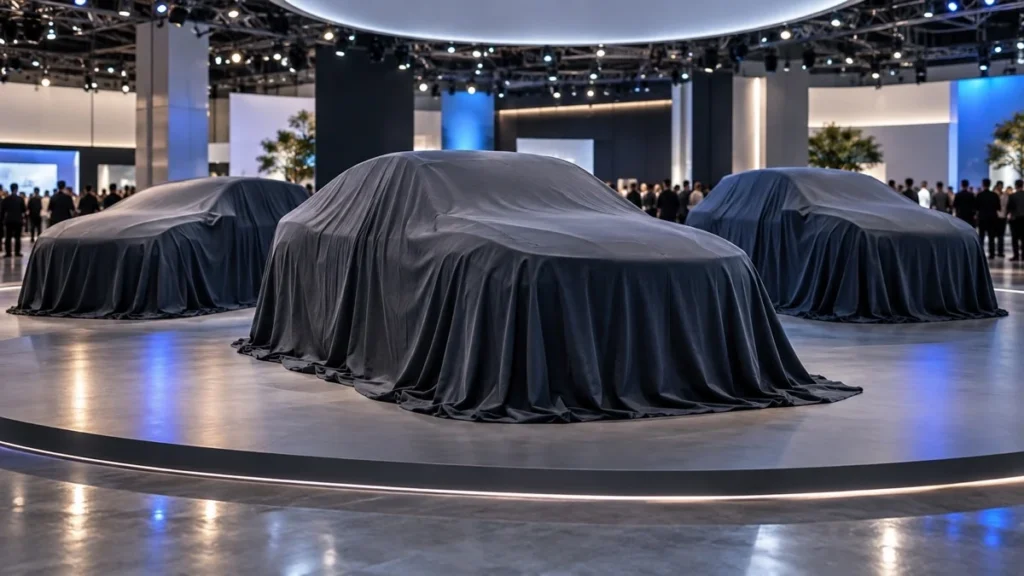
PARIS — As the automotive world turns its gaze toward the French capital, Renault Group is preparing a commanding presence for the upcoming Mondial de l’Auto 2026. Demonstrating a dual strategy that marries forward-thinking technological innovation with a deep reverence for its rich automotive heritage, the French automotive powerhouse has announced an impressive lineup. A total of 50 vehicles and concept cars will occupy its exhibition space, highlighted by six major world premieres—four of which will be cutting-edge concept cars designed to push the boundaries of design, engineering, and sustainable mobility.
For enthusiasts, industry analysts, and prospective buyers alike, the Paris exhibition serves as a crucial barometer of where Renault Group—encompassing Renault, Dacia, Alpine, and the commercial-focused Renault Pro+—is heading in an era of rapid electrification and shifting consumer expectations.
Main Facts: The Blueprint of Renault Group’s 2026 Showcase
The scale of Renault Group’s deployment at the Paris Expo Porte de Versailles is significant. Confirmed via official corporate communications released on September 23, the group will anchor its presence in Hall 6, utilizing a unified layout divided into four distinct brand stands.
The Core Highlights of the Exhibit:
- Total Vehicles on Display: 50 models, spanning production vehicles, commercial solutions, and experimental prototypes.
- Global Premieres: 6 distinct novelties making their debut.
- Concept vs. Production Balance: 4 of the 6 major novelties are concept cars, emphasizing the group’s focus on exploratory design, avant-garde technologies, and long-term brand vision.
- Brand Segments: Dedicated, immersive spaces for Renault (passenger vehicles and innovation), Dacia (robust, value-driven mobility), Alpine (high-performance and electric sportiness), and Renault Pro+ (tailored solutions for business and professional clients).
Chief among the most anticipated reveals is the Renault 8 Gordini Concept, unveiled to the public on September 24. This striking vehicle bridges decades of motorsport legacy with contemporary electric vehicle (EV) architecture. Described by Renault as a high-performance, two-seat electric coupe, the concept features a rear-wheel-drive layout capable of churning out an impressive 270 horsepower. Its low-slung, wide-stance silhouette is a modern, aggressive reinterpretation of the legendary Gordini lineage, blending retro charm with track-inspired proportions.
However, automotive consumers must exercise a degree of pragmatism. Renault has explicitly framed the R8 Gordini Concept—alongside three other undisclosed prototypes—as a design exercise and a technological exploration. Its presence on the stand is a testament to what is technologically and aesthetically possible, rather than a definitive promise of an imminent showroom release.
Chronology: A Step-by-Step Schedule of the Event
Navigating the Mondial de l’Auto requires careful planning, particularly given the strict delineation between media preview days and public exhibition dates. Renault Group has structured its press events into a streamlined, high-impact morning sequence on the opening day.
Press Day: Monday, October 12, 2026
Media representatives and industry insiders will have exclusive access to the stands on Monday, October 12. The morning features a rapid-fire succession of press conferences, allowing journalists to absorb the strategic visions of each brand in quick succession:
- 08:30 AM: Renault Press Conference (Hall 6)
- 09:00 AM: Dacia Press Conference (Hall 6)
- 09:20 AM: Alpine Press Conference (Hall 6)
Public Exhibition Days: October 13 – October 18, 2026
Following the press unveilings, the doors of the Paris Motor Show will officially open to the general public from Tuesday, October 13, through Sunday, October 18, 2026.
To accommodate visitors, organizers have established flexible daily operating hours, including late-night openings (nocturnes) to allow working professionals and families ample time to explore the exhibits:
| Day of the Week | Operating Hours |
|---|---|
| Tuesday, October 13 – Thursday, October 15 | 9:30 AM – 8:00 PM |
| Friday, October 16 | 9:30 AM – 10:00 PM (Nocturne) |
| Saturday, October 17 | 9:00 AM – 10:00 PM (Nocturne) |
| Sunday, October 18 | 9:00 AM – 6:30 PM |
Note: Last entry is strictly enforced one hour prior to closing time across all dates.
Supporting Data: Understanding the Concept-to-Production Gap
One of the recurring pitfalls for auto show attendees is confusing breathtaking design studies with readily available consumer products. Renault Group’s breakdown of its "six novelties" provides a compelling case study in modern automotive marketing and product development pipelines.
The Anatomy of an Auto Show Concept
Out of the six major debuts, four are concept cars. In the automotive ecosystem, concepts serve distinct operational purposes:
- Design Language Exploration: Testing new aesthetic styling cues, body proportions, and interior ergonomics that may trickle down to future mass-market cars.
- Technological Showcase: Displaying advanced battery chemistries, sustainable interior materials, artificial intelligence interfaces, or next-generation aerodynamic efficiencies.
- Brand Positioning: Signaling shifts in brand identity—such as Alpine’s transition into an all-electric performance powerhouse or Dacia’s evolution in rugged, outdoor-focused utilitarian design.
Consumer Buying Realities
For prospective car buyers visiting Hall 6 with the intent of purchasing their next vehicle, industry experts advise looking beyond the glossy paint and futuristic cockpits of concept cars. Real-world purchasing decisions must rely on hard commercial data:
- Production Status: Is the vehicle confirmed for assembly lines, or is it purely a one-off study?
- Commercial Timeline: When will order books officially open, and when will first deliveries take place?
- Pricing and Trim Levels: What will the vehicle cost, and what features will come standard across different versions?
While vehicles like the Renault 8 Gordini Concept offer immense emotional appeal and capture the imaginations of petrolheads, they remain emotional anchors rather than transactional options. Visitors are encouraged to balance their awe of the concepts with rigorous inquiries into Renault’s current production catalog.
Official Responses and Strategic Vision
Renault Group’s leadership views the 2026 Paris Motor Show not merely as a local tradeshow, but as an international platform to validate the success of the "Renaulution" strategic plan. Corporate statements emphasize that technological innovation is being funneled directly into customer-centric benefits.
In official releases leading up to the event, brand executives highlighted that the integration of electrification across Renault, Alpine, and Dacia is reaching a critical maturity phase. Rather than showcasing technology for its own sake, the group is striving to demonstrate how electrification, software-defined vehicle architectures, and circular economy principles can coexist within affordable, desirable, and practical cars.
Furthermore, the dedicated Renault Pro+ presence underscores the group’s aggressive push into the commercial sector. As urban centers introduce stricter low-emission zones (ZFE) across Europe, business fleets require innovative, zero-emission light commercial vehicles. Renault Pro+ will use the Paris stage to exhibit solutions specifically engineered to optimize the total cost of ownership (TCO) for trade professionals and logistics companies.
Implications: What the 2026 Showcase Means for the Market
The announcements surrounding Renault Group’s Hall 6 footprint carry profound implications for both the European automotive landscape and consumer expectations.
1. The Revival of Emotional Motoring in an Electric Age
The inclusion of the Renault 8 Gordini Concept alongside high-performance Alpine models signals a clear industry trend: automakers are acutely aware that the transition to electric vehicles risks sterilizing the driving experience. By injecting heritage, passion, lightweight engineering, and high-output electric powertrains (such as the 270-hp layout of the R8 Gordini) into neo-retro shapes, Renault is proving that driving emotion can survive—and even thrive—in a decarbonized world.
2. Managing Consumer Expectations
As electric vehicle adoption matures, consumers are becoming more discerning. The clear demarcation between Renault’s production-ready models and its four exploratory concept cars reflects a maturing marketing approach. Automakers can no longer rely on vaporware promises; they must balance futuristic dreams with concrete delivery dates, reassuring buyers who are navigating a complex economic and technological transition.
3. A Home-Turf Triumph for French Industry
For the Mondial de l’Auto, securing a robust, multi-brand anchor like Renault Group is vital. As international auto shows face global attendance shifts, Paris remains a stronghold for French manufacturers. By assembling 50 vehicles across four dedicated stands, Renault, Dacia, Alpine, and Renault Pro+ are sending an unyielding message of industrial confidence, domestic commitment, and technological leadership.
As the countdown to October 12 ticks away, the stage is set for a landmark event. Whether visitors are drawn by the nostalgia of a revived Gordini badge, the utilitarian promise of Dacia, or the high-tech visions of Renault’s conceptual future, Hall 6 at the Paris Expo Porte de Versailles promises an unmissable glimpse into tomorrow’s mobility.
