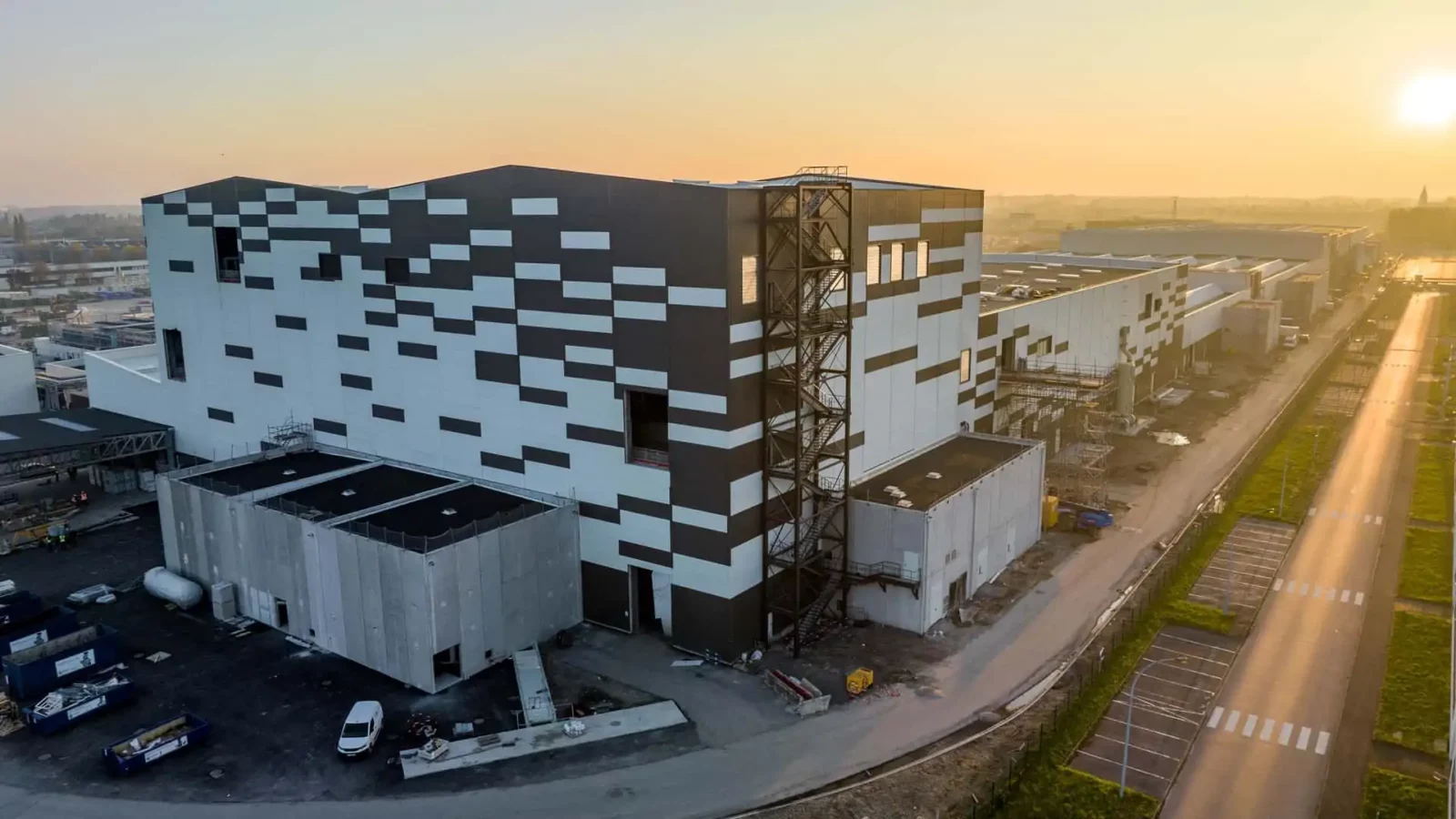
The dream of European industrial sovereignty in the electric vehicle (EV) sector is currently playing out on a high-stakes stage in Billy-Berclau, France. At the Automotive Cells Company (ACC) gigafactory—a joint venture between Stellantis, Mercedes-Benz, and TotalEnergies—the atmosphere is one of hard-won relief mixed with profound strategic anxiety. After years of struggling with catastrophic scrap rates, the facility has finally stabilized its production lines, now powering the Peugeot E-3008 and E-5008. However, even as the factory "sees the light at the end of the tunnel," a massive, low-cost competitive wave from China is threatening to render their entire business model obsolete before it even reaches full scale.
Main Facts: A Technical Triumph Under Siege
For years, the Billy-Berclau facility was an industrial headache. When production commenced in 2024, the "scrap rate"—the percentage of defective battery cells that had to be discarded—reached levels that were, in industry terms, bordering on the indecent. The delicate alchemy of manufacturing Nickel-Manganese-Cobalt (NMC) cells requires a hyper-controlled environment; even a microscopic fluctuation in humidity or a speck of dust during the coating process can lead to a short-circuit and the total loss of the unit.
Today, those challenges have been largely mitigated. The scrap rate has dropped below 15%. While this remains above the 5% target demanded by financial stakeholders to reach operational profitability, it marks a critical turning point: the facility is now reliably feeding the assembly lines in Sochaux and Rennes. Approximately 40,000 EVs are currently navigating European roads powered by these northern French cells. Yet, while the engineers celebrate this milestone, the boardrooms of the parent companies are facing a stark reality: the market has shifted, and their "premium" technology may no longer be what the consumer—or the balance sheet—demands.
Chronology: Two Years of Trial and Error
The journey to reach this point has been a lesson in the difficulty of "reshoring" critical technologies.
- 2022-2023: The Learning Curve. The initial phase was defined by a struggle to master processes that had never been performed at this scale in France. With machinery sourced from South Korea and China, the workforce had to be trained from scratch. Every stage of the production line required recalibration to ensure the chemical liquid could be poured without bubbles—a seemingly simple task that proved to be an engineering nightmare.
- Early 2024: The Productivity Gap. As the factory began churning out cells, the volume of waste was immense. Every rejected cell represented a massive hit to the venture’s cash flow, sparking concerns among investors about the feasibility of the project.
- Mid-2024: Achieving Stability. The technical team successfully stabilized the production flow. The transition from a chaotic start-up phase to a functional industrial site was achieved through grueling iteration and continuous process improvement.
- Late 2024: The Strategic Pivot. As the factory hit its stride, the broader EV market underwent a seismic shift. The rise of Lithium-Iron-Phosphate (LFP) batteries, championed by Chinese manufacturers, drastically altered the price expectations for the European market.
Supporting Data: The Economic Divide
The core of the issue lies in the chemistry. ACC’s original strategy was predicated on the dominance of NMC chemistry, which offers high energy density—the "gold standard" for long-range, premium vehicles. However, NMC is expensive due to its reliance on cobalt and nickel, two commodities with erratic pricing and highly concentrated, volatile supply chains.
In contrast, Chinese manufacturers have standardized LFP technology. By substituting expensive transition metals with abundant iron and phosphate, these cells are 30% to 40% cheaper to produce. While LFP batteries have lower energy density, requiring a larger physical footprint to achieve the same range, the cost advantage is insurmountable for the mass market.
The Financial Breakdown:
- NMC (Nickel-Manganese-Cobalt): Favored for high performance and long range (700km+). High cost, high supply chain risk.
- LFP (Lithium-Iron-Phosphate): The "accessible" standard. 30-40% cheaper than NMC. Essential for EVs priced under €25,000.
The market reality is unforgiving: consumers are increasingly opting for affordability over the extended range that NMC provides. This creates a "financial fracture" where European manufacturers are struggling to compete with the price points set by Chinese giants like CATL and BYD.
Official Responses and Strategic Shifts
The impact of this shift has been immediate and painful for the ACC consortium. Plans to expand the gigafactory model to Kaiserslautern, Germany, and Termoli, Italy, have been brought to a complete standstill.
Stellantis CEO Carlos Tavares has been notably pragmatic regarding this pivot. Recognizing the inability of current European cost structures to compete with Chinese LFP, Stellantis has already begun exploring partnerships with Chinese firms to produce LFP batteries within Europe. This represents a bitter pill for those who championed the idea of total technological independence. The message from the boardrooms is clear: European sovereignty cannot come at the cost of commercial suicide. If the market demands LFP, and Europe cannot produce it at a competitive price, the consortium must either adapt or face obsolescence.
Implications: The Risk of the Isolated Island
The success of the Billy-Berclau facility is a testament to French engineering prowess and a symbolic victory for industrial policy. However, as it stands, it risks becoming a "prestige project"—an isolated island of high-tech production that is too expensive to sustain without heavy subsidies or a protected market.
The Sustainability of the Model
Financial equilibrium for ACC has been pushed back to 2027 or 2028. This long horizon is daunting in an industry where technology cycles move in 18-to-24-month increments. Without a rapid pivot toward more cost-effective chemistries or a radical optimization of fixed costs, the facility may struggle to find customers willing to pay a "sovereignty premium."
The "Sovereignty" Dilemma
Europe is currently facing a fundamental question: Is it willing to pay the price for its own battery supply chain? Currently, the disparity between Asian production costs and European operating expenses is creating a chasm that only government intervention can bridge. If the goal is to create a robust, independent ecosystem, European manufacturers need more than just the ability to manufacture; they need the scale to match the global price-setters.
The Path Forward
The future of Billy-Berclau depends on three factors:
- Scaling and Efficiency: Achieving the 5% scrap rate target is non-negotiable for cost reduction.
- Chemical Diversification: ACC must incorporate LFP or next-generation chemistry (such as sodium-ion) into its production lines to meet the needs of the mid-market segment.
- Market Integration: Collaboration with automakers must evolve from simple supply contracts to deep integration, ensuring that the batteries being built are the ones that cars actually need, not just the ones that were planned five years ago.
The "Gigafactory era" in Europe is moving past the phase of political grandstanding and into the cold, hard phase of market competition. The survival of ACC will serve as the ultimate barometer for whether Europe can sustain a domestic battery industry in the shadow of the Asian manufacturing juggernaut. For now, the engineers have done their part; the rest of the battle will be fought in the balance sheets, the trade policies, and the showrooms of the world.