

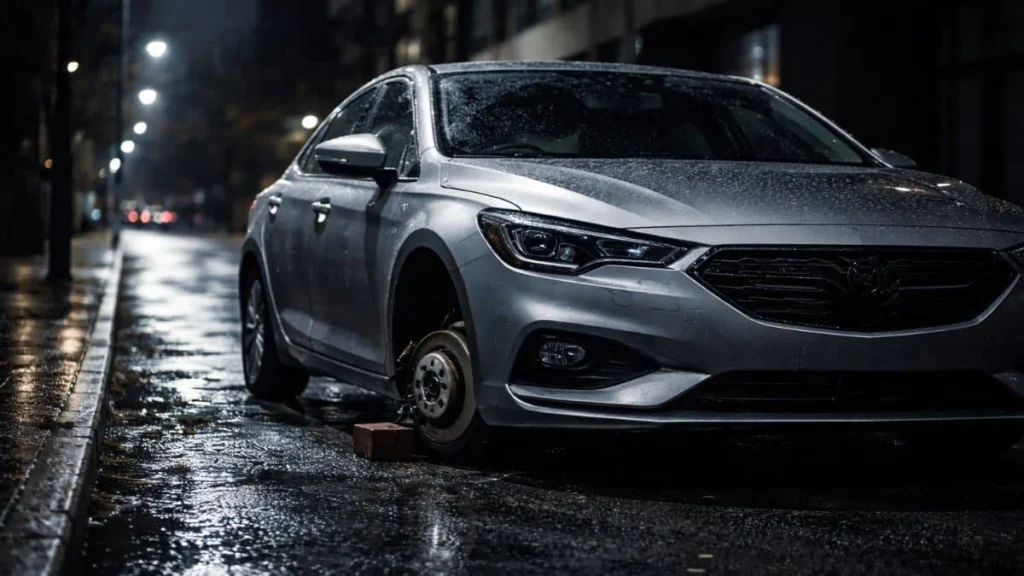
PARIS — For decades, the automobile has remained much more than a mere utilitarian vessel designed to transport commuters from point A to point B. Particularly in Western Europe, owning a vehicle represents a tangible milestone of personal achievement, a societal marker of adulthood, and, quite frequently, an outward display of accumulated wealth. To slide behind the steering wheel of a high-end luxury sedan or a sleek sports car is to project an image of financial stability and social standing.
However, this cultural romance with the automobile comes with a dark and increasingly expensive downside. Parked along urban thoroughfares, lining suburban residential streets, and sitting quietly in municipal lots, millions of cars effectively function as unattended bank vaults on wheels. To an organized criminal network or an opportunistic thief, a modern vehicle is not just a mode of transport; it is a repository of high-value commodities sitting in plain sight, often left unprotected in the dead of night.
As the economic climate shifts and the black-market demand for component parts reaches a fever pitch, the automotive landscape is facing a profound security crisis. According to alarming new data published by the automotive publication Capital, automobile-related thefts across France have surged by a staggering 10% in 2025 alone. This upward trajectory has pushed law enforcement agencies to their limits, turning what was once viewed as localized property crime into a nationwide epidemic. In response, police prefectures and automotive safety experts have issued urgent new guidelines, urging motorists to adopt rigorous daily precautions to safeguard their vehicles from professional strippers and opportunistic vandals alike.
1. Main Facts: The Anatomy of the 2025 Automotive Crime Wave
To understand the severity of the current crisis, one must look beyond traditional carjackings or the complete theft of entire vehicles. While grand theft auto remains a persistent issue, the real driver behind the 2025 statistics is the alarming proliferation of component and parts theft—commonly referred to in law enforcement circles as vehicle stripping.
Modern cars are rolling technological marvels, packed with sensors, advanced lighting systems, complex bumpers, infotainment units, and specialized safety gear. Ironically, as vehicles have become safer and more technologically advanced, they have also become significantly more lucrative to dismantle.
The Economics of Automotive Dismantling
According to investigative figures compiled by Auto Plus, the black-market economy for stolen car parts is remarkably profitable, functioning with industrial efficiency. Consider the street value of commonly targeted components:
- A standard front or rear bumper: Can easily fetch up to €500 on secondary unregulated online marketplaces.
- Advanced headlight assemblies (LED and Matrix systems): Frequently command upwards of €1,000 per pair due to their scarcity and high manufacturing cost.
- Catalytic converters: Though slightly regulated in recent years, they remain prime targets due to the precious metals (platinum, palladium, and rhodium) housed within them.
- Reversing cameras and exterior sensors: Highly compact, easily detached with basic tools, and intensely sought-after for quick, untraceable resale.
When thieves can strip a car of its headlights, bumpers, and side-view mirrors in under ten minutes—yielding a return of over €2,000—the risk-to-reward ratio heavily favors the criminal. For honest citizens, however, waking up to find their vehicle decimated on bricks is a devastating financial and psychological blow, often resulting in soaring insurance premiums and lengthy repair delays.
2. Chronology: How the Crisis Escalated to Breaking Point
The seeds of the 2025 crime wave were not sown overnight. To trace the trajectory of this phenomenon, criminologists and automotive analysts point to a distinct timeline of evolving criminal behavior over the past half-decade.
2020–2021: The Pandemic Disruption and Supply Chain Bottlenecks
During the global health crisis, international manufacturing supply chains suffered catastrophic disruptions. New car production ground to a near-halt, creating unprecedented backlogs for spare parts across Europe. Dealerships and official garages faced months-long delays in securing basic replacement components like bumpers, electronic control units (ECUs), and specialized light clusters.
As legal supply dried up, the underground economy stepped in. Criminal syndicates recognized that stolen parts could be funneled into legitimate-seeming repair networks or shipped abroad to meet soaring demand, transforming occasional street-level theft into a structured, supply-chain-driven enterprise.
2022–2023: The Rise of High-Tech Tooling
As automakers introduced more sophisticated anti-theft measures—such as encrypted keyless ignition systems and engine immobilizers—petty thieves shifted their focus away from stealing entire cars. Instead, they invested in portable diagnostic tools, specialized wrenches, and thermal cutting equipment designed to bypass exterior security in seconds. The era of stripping high-value exterior hardware reached suburban neighborhoods, moving outward from major metropolitan hubs.
2024: Geographic Shifts and Urban Vulnerability
By late 2024, law enforcement noted a distinct migration of organized auto-stripping gangs toward the southern regions of France. Cities blessed with mild climates and extensive street-parking infrastructure became ground zero for nighttime raids. Local police forces reported a noticeable uptick in overnight complaints from vehicle owners who discovered their cars systematically dismantled while parked outside residential homes.
2025: The 10% Surge and Nationwide Alarm
Entering 2025, the situation crossed a critical threshold. The formal release of data by Capital confirmed a nationwide 10% year-on-year increase in parts theft. The sheer volume of incidents overwhelmed municipal police departments, forcing national authorities to issue comprehensive public safety advisories and prompt insurance agencies to reevaluate their coverage policies for street-parked vehicles.
3. Supporting Data: Unpacking the Statistics and Targets
One of the most persistent misconceptions surrounding automotive crime is that luxury vehicle owners bear the brunt of the risk. Popular culture often portrays international syndicates targeting high-end Ferraris, Porsches, or top-tier Mercedes-Benz models.
Reality, however, paints a starkly different picture.
The Paradox of the Targets: Why Everyday Cars Lead the List
According to security databases, the vehicle most frequently targeted by parts thieves in France is not an exotic supercar, but rather the ubiquitous Renault Clio 5.
The reasons for this are practical and economic:
- Mass Market Ubiquity: Because millions of Clios populate French roads, the market demand for replacement parts is exponentially higher than for a rare luxury sports car.
- Component Accessibility: Popular models often feature standardized exterior fittings that are remarkably easy to detach. For instance, the Clio 5’s integrated reversing camera has become a primary target; it can be cleanly popped out and disconnected with minimal effort, offering thieves an instant, high-margin item for resale.
- Standardization: Parts from mainstream vehicles fit a massive installed base of cars, making them exceptionally easy to offload via classified ad websites and underground digital marketplaces.
The Geographic Divide: Southern Vulnerability
Geographically, France is far from uniform when it comes to the prevalence of automotive vandalism. While Paris and its surrounding Île-de-France region continue to log high absolute numbers of vehicle crimes, the southern regions of France have emerged as the most intensely targeted zones per capita.
While specific municipal rankings fluctuate with ongoing police operations, law enforcement data consistently highlights urban centers along the Mediterranean coast and the Provence-Alpes-Côte d’Azur region as hotspots for organized vehicle stripping. The combination of dense residential street parking, high tourist turnover, and accessible highway routes makes these areas prime territory for mobile criminal crews.
4. Official Responses and Mitigation Strategies
Faced with mounting pressure from victimized motorists and consumer advocacy groups, law enforcement agencies, municipal leaders, and security experts have launched a concerted educational campaign. While police emphasize that absolute security does not exist in an urban environment, motorists can dramatically reduce their vulnerability by adopting proactive countermeasures.
Essential Daily Reflexes to Deter Thieves
Security forces recommend a strict checklist for motorists who must park their vehicles on public streets or unsecured areas:
- Strategic Parking Choices: Whenever possible, park in well-lit areas covered by municipal CCTV systems or private surveillance. Avoid dark, isolated alleys, unlit side streets, and dense foliage that provides cover for criminals to work undetected.
- Wheel and Component Locks: Invest in specialized security lug nuts for alloy wheels, as well as reinforced mounting brackets for vulnerable exterior fixtures like catalytic converters and exposed cameras. While determined professionals can bypass these with heavy-duty tools, they significantly increase the time and noise required, often deterring opportunistic thieves.
- Steering Wheel and Pedal Locks: Visible physical deterrents remain surprisingly effective. A heavy steel bar locking the steering wheel to the brake pedal signals immediately that the vehicle will not yield an easy target, prompting prowlers to move on to an easier mark.
- Active Alarm Calibration: Ensure that your vehicle’s perimeter alarm is sensitive enough to detect tilting, glass breakage, and tampering with exterior panels, rather than just heavy impacts or door openings.
- Home Security Integration: If parking in a private driveway or garage courtyard, install motion-activated floodlights and Wi-Fi security cameras equipped with real-time smartphone alerts.
5. Implications: The Broader Impact on Society and Insurance
The 2025 surge in automotive component theft carries consequences that extend far beyond the immediate financial frustration of an individual vehicle owner.
Economic and Insurance Fallout
As insurers grapple with the 10% rise in claims, the financial burden is inevitably passed back to consumers. Comprehensive insurance premiums are projected to rise across affected regions, particularly for owners of highly targeted mainstream models like the Renault Clio 5. Furthermore, policy deductibles (franchises) are seeing upward adjustments, meaning motorists must shoulder a greater portion of repair costs out of pocket when disaster strikes.
The Psychological Toll on Motorists
For many urban residents, a car is not merely a luxury; it is an indispensable tool for maintaining employment, caring for family members, and managing daily life. Waking up to find a vehicle immobilized, stripped of its headlights and bumpers, creates severe disruption. The loss of time spent dealing with tow trucks, repair shops, insurance adjusters, and police reports engenders a palpable sense of violated security among citizens.
A Call for Legislative and Technological Reform
Industry insiders argue that automakers must also step up their responsibility by designing exterior components with anti-theft integration from the factory floor. Securing reversing cameras behind reinforced housing, utilizing proprietary fasteners that require specialized dealership tools to remove, and embedding digital serialization chips into major body panels could render stolen parts virtually impossible to resell anonymously online.
Until such technological safeguards become standard industry practice, the onus remains on the motorist. As France navigates this turbulent automotive crime wave in 2025, vigilance, community awareness, and disciplined parking habits are the frontline defenses keeping honest citizens from paying the ultimate price for the underworld’s lucrative spare-parts economy.
