

By Fabien Delaporte
Enriched and Adapted from Automotive Reports
Main Facts
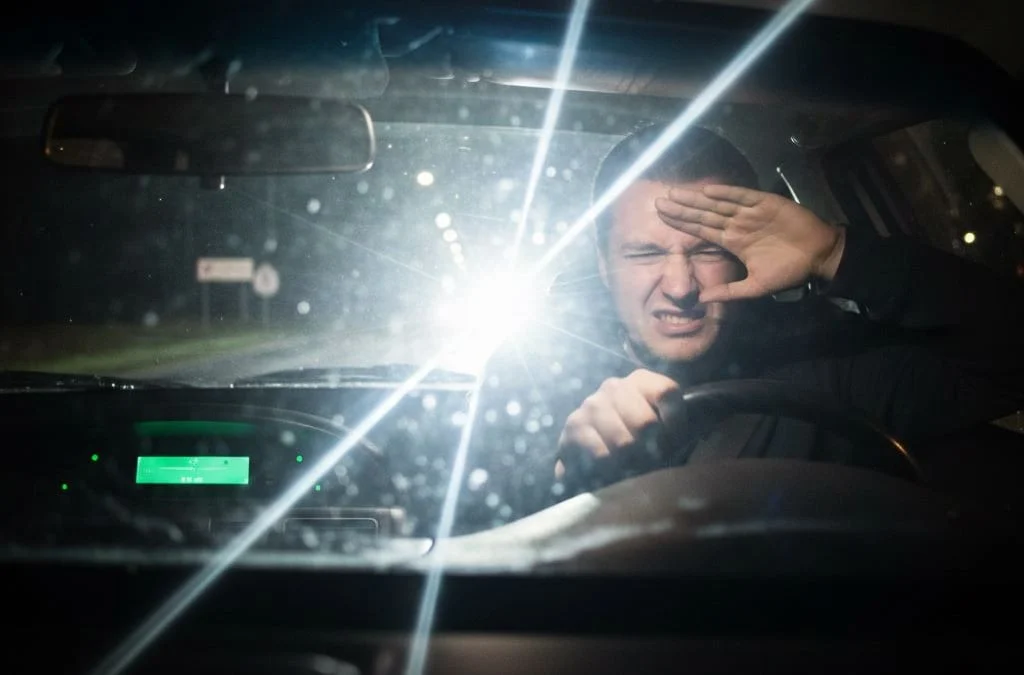
Modern automotive lighting technology has achieved unprecedented levels of illumination, yet drivers have never felt less secure on the road after dark. According to a landmark study conducted by the British roadside assistance and recovery firm Start Rescue, nearly 90% of motorists (86% to be precise) report being regularly blinded by the headlights of oncoming vehicles during night driving.
While the public outcry has largely focused on the proliferation of high-riding Sports Utility Vehicles (SUVs) and their elevated optical alignments, the problem runs much deeper. The crisis is not merely a byproduct of advanced engineering or vehicle architecture; it is compounded by human error, poor maintenance, automation reliance, and improper equipment usage.
Key takeaways from the current landscape of nighttime driving include:
- 86% of survey respondents experience frequent, severe glare from oncoming traffic.
- One-third of drivers report being dazzled even during daylight hours by improperly managed or left-on daytime running lights and headlights.
- 60% of motorists believe the issue is actively worsening year over year.
- 20% of drivers now actively avoid driving at night whenever possible simply to escape the psychological and physical stress of headlight glare.
Chronology: The Evolution of Automotive Lighting and the Glare Crisis
To understand how modern roads became a theatre of dazzling beams, one must trace the technological trajectory of automotive illumination over the past three decades.
1. The Era of the Halogen Standard (Late 20th Century to Early 2000s)
For decades, traditional halogen bulbs were the universal standard across the automotive industry. While they produced a yellowish, relatively warm light with limited lumen output, instances of debilitating nighttime glare were statistically lower. Drivers adjusted to dimmer roads by relying heavily on high beams in rural areas, but standard low beams rarely posed a systemic threat to oncoming visibility.
2. The Xenon Transition and LED Revolution (2010s)
High-Intensity Discharge (HID) Xenon lights emerged as a premium alternative, offering a sharper, whiter light. However, due to their high production and replacement costs, Xenon technology remained largely confined to luxury vehicles.
The true paradigm shift occurred with the mass adoption of Light Emitting Diodes (LEDs). Offering superior energy efficiency, near-instantaneous illumination, and a stark, clinical white-blue spectrum, LEDs quickly became affordable enough to feature on mass-market, budget-friendly vehicles. Suddenly, everyday compact cars possessed the piercing illumination power once reserved for high-end luxury sedans.
3. The SUV Boom and Height Disparities (Mid-2010s to Present)
Concurrently, the global automotive market experienced an exponential surge in the popularity of SUVs and crossovers. Because these vehicles sit significantly higher off the ground than traditional hatchbacks and sedans, their factory-installed headlight clusters are positioned directly in line with the rearview and side mirrors of lower-profile cars. This physical height disparity ensured that even correctly calibrated lights frequently project straight into the eyes of surrounding motorists.
4. The Smart Lighting Paradox (Recent Years)
In response to rising complaints, manufacturers introduced advanced systems like Matrix LED technology, designed to dynamically dip or block specific segments of the light beam to prevent glare for oncoming traffic. Yet, despite these innovations, complaints have continued to skyrocket, paving the way for potential regulatory interventions, such as those currently being weighed by legislative bodies in the United Kingdom.
Supporting Data: Understanding the Scale of the Problem
The transition to winter time—marked by the annual clock change—acts as an immediate catalyst for the glare debate. As daylight hours shrink, the volume of nocturnal commuting surges, turning the daily drive into a gauntlet of piercing light beams.
Start Rescue’s comprehensive survey data sheds light on consumer sentiment and behavioural triggers:

- The Technology vs. Behavior Gap: While automatic headlight activation and automatic high-beam switching are now standard features on most modern vehicles, automation has bred complacency. Drivers frequently fail to override malfunctioning sensors, leading to delayed dimming on winding roads or highways.
- The Aging Fleet Factor: Glare is not exclusively a problem of brand-new vehicles. Older cars present an entirely separate set of risks. Over time, vehicle suspension systems sag, and headlight alignments drift upward. Consequently, older vehicles with degraded mechanical setups often inadvertently project their beams straight into the horizons—or the retinas of oncoming drivers.
- The Fog Light Faux Pas: The survey highlighted an alarming misuse of auxiliary lighting. A surprising number of motorists continue to drive with front and rear fog lights illuminated in clear weather. Designed exclusively for conditions of severely restricted visibility (such as heavy fog or torrential rain), the raw power of improperly used fog lamps acts as a secondary blinding agent for trailing and oncoming traffic.
Official Responses and Industry Reactions
As public frustration reaches a boiling point, regulatory bodies, manufacturers, and safety advocates are being forced to respond to what is no longer a mere annoyance, but a recognized public safety hazard.
Regulatory Action on the Horizon
Unlike in previous years where complaints were brushed off as an inevitable consequence of better road illumination, governments are beginning to take notice. The United Kingdom has emerged as a pioneer in this regulatory space, actively exploring legislation to crack down on excessively bright, poorly regulated, and misaligned headlights. Safety advocates are pushing for stricter type-approval testing for LED matrix systems and mandatory automated self-leveling sensors on all vehicles, regardless of price point.
Manufacturer Adjustments and Recalls
Automakers are also feeling the heat. Recent high-profile adjustments and recalls—such as Tesla’s recall of tens of thousands of vehicles whose headlights were found to project improperly calibrated beams—demonstrate that quality control issues can turn a vehicle’s primary safety feature into a liability.
Engineers are currently racing to develop next-generation anti-glare filters and adaptive laser-phosphor systems that can more accurately mask oncoming road users without plunging the driver into sudden darkness. However, these software-driven solutions take time to filter down to the global vehicle fleet.

Implications: A Threat to Road Safety and Mental Well-Being
The psychological and physiological impacts of chronic night-time glare extend far beyond momentary discomfort.
The Physiological Toll
When a driver’s eyes are suddenly assaulted by high-intensity LED beams, the human eye requires several crucial seconds to recover full night vision. At highway speeds, travelling "blind" for even two to three seconds translates to covering hundreds of feet without adequate visual processing capacity. This momentary blindness drastically increases reaction times in the event of an unexpected road hazard, pedestrian crossing, or sudden braking ahead.
Behavioral Shifts: The Rise of Nocturnal Avoidance
Perhaps the most telling indictment of the current headlight crisis is the behavioral adaptation reported by motorists. According to the Start Rescue study, 20% of respondents now deliberately avoid driving at night whenever alternative scheduling permits. For shift workers, delivery drivers, and those living in rural areas without robust public transit, this avoidance is not an option—forcing them to endure high levels of driving anxiety on a daily basis.
Conclusion
The quest for maximum visibility has inadvertently created a zero-sum game on our roadways, where one driver’s brilliantly illuminated path becomes another’s visual hazard. Until stricter manufacturing standards, mandatory alignment checks during routine vehicle inspections, and smarter user habits are universally enforced, the modern night commute will remain an endurance test for millions of drivers worldwide.
