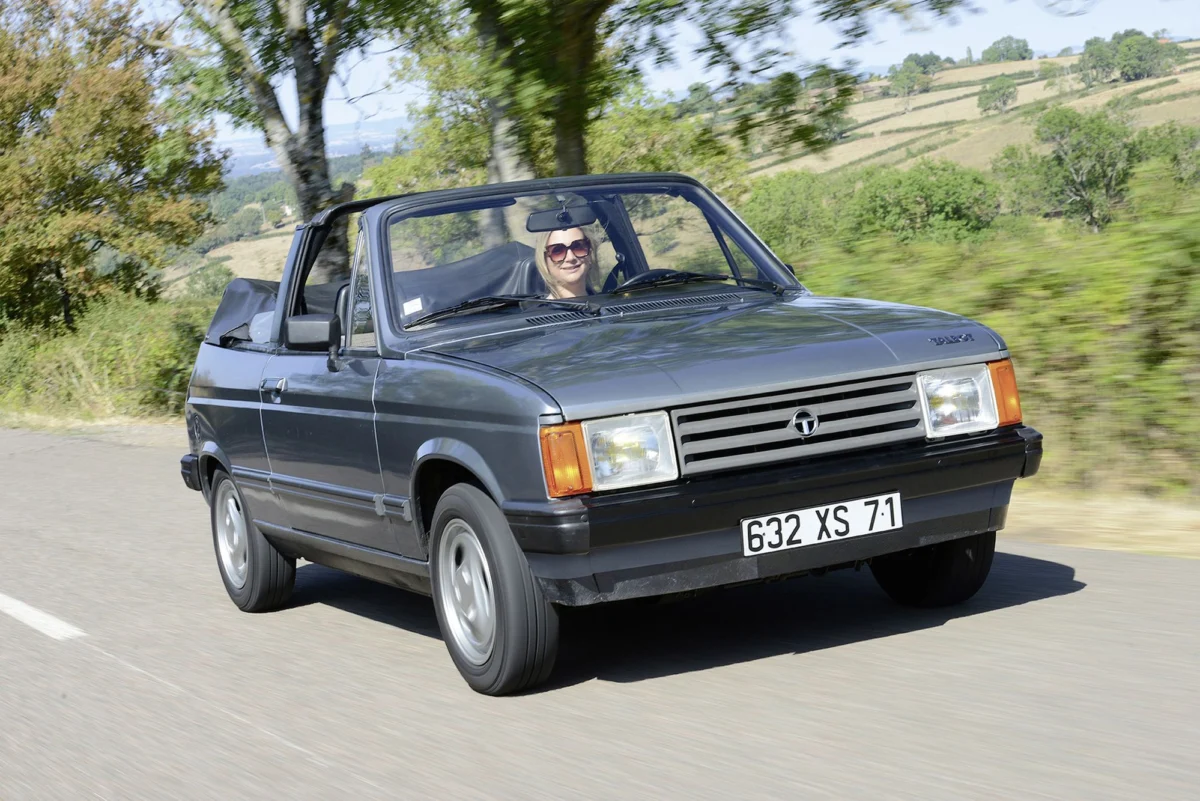
When the Talbot Samba first shed its roof at the dawn of spring in 1982, it did more than just offer a new way to enjoy the sunshine—it injected a much-needed dose of charisma into a brand struggling to find its footing. Designed as a "young car for the young," the Samba was the last major act of a marque inheriting the complex legacy of Simca. It was a vehicle of unbridled optimism and youthful spirit, though history now remembers it with a tinge of melancholy, as it ultimately signaled the closing chapter of the French automaker’s storied existence.
Main Facts: A Bold Attempt at Rejuvenation
The Talbot Samba Cabriolet was a triumph of packaging. At a time when compact convertibles were a rarity, Talbot managed to distill the essence of the hatchback into a top-down experience that felt both accessible and trendy. It was a car that didn’t take itself too seriously, appealing to a demographic that valued style over raw performance.
However, beneath its breezy exterior, the Samba was a masterclass in compromise. It was a tiny vehicle, offering a cabin that felt like a tight-knit cocoon. While the front seats provided adequate comfort for two, the rear bench was, and remains, an exercise in optimism—perfect for children, but a challenge for adults. The luggage compartment was equally idiosyncratic, featuring a minuscule hatch that earned the nickname "glovebox," requiring users to pack their belongings in soft bags rather than rigid suitcases.
Despite these quirks, the car’s mechanical heart was robust. Drawing on the lineage of the PSA Group, it utilized engines that were punchy enough to make the small frame feel nimble on winding country roads. It was a car that encouraged spirited driving, offering a visceral connection between the driver and the asphalt.

A Chronology of Evolution
The life of the Samba Cabriolet was brief, yet remarkably busy. Over its few years of production, the engineers at Talbot were constantly tweaking the formula to maintain relevance in a rapidly changing market.
- 1982: The debut. The Samba Cabriolet arrives on the scene, immediately capturing the imagination of the French youth market.
- July 1983: The engine lineup expands. Alongside the established 72-hp unit, a new 80-hp variant is introduced. This model featured dual single-barrel carburetors, departing from the classic double-barrel setup of its sibling.
- Late 1983: Subtle refinements are added. Tinted windows become standard equipment, a small but significant touch of luxury for an entry-level convertible.
- June 1984: The 72-hp engine is phased out, leaving the 80-hp version as the sole engine offering for the remainder of the model’s life.
- Autumn 1984: The interior receives a refresh. A digital clock replaces the analog one, and the trunk lining is downgraded from a premium carpet to a felt mat.
- 1985 Model Year: The most significant interior overhaul occurs. The dashboard is completely redesigned, taking heavy inspiration from the iconic Volkswagen Golf Mk1, signaling a shift toward more modern, functional ergonomics. The convertible top receives a lining for better insulation, and the decorative side strip and sill trims are deleted, giving the car a cleaner, more minimalist look.
Supporting Data: The 1985 Specification
The specimen recently examined by automotive historian Hugues Chaussin perfectly encapsulates the final "1985" iteration of the Samba. First registered in Nice on October 16, 1985, this particular vehicle likely sat in a dealer’s inventory for several months—a testament to the cooling interest in the Talbot brand as the company faced its final decline.
This specific model is a "fully loaded" version, finished in a distinctive "burnt bread" metallic paint. It rides on elegant three-spoke 14-inch alloy wheels wrapped in Pirelli rubber, giving it a sporty stance that belies its small displacement.
Inside, the ingenuity of the cabin is highlighted by the rear seats, which were borrowed from the Citroën LN. This design allowed for a split-folding mechanism—a revolutionary feature at the time. Talbot boasted a total load volume of 610 cubic decimeters when the seats were configured correctly, though, in practice, the narrow aperture of the rear hatch meant that space was more theoretical than practical.

Driving Impressions: A Legacy of Compromise and Charm
Driving a 1985 Talbot Samba today is a lesson in automotive history. For those accustomed to the sterile, power-assisted driving dynamics of the 21st century, the Samba offers a raw, tactile experience.
The first thing a modern driver notices is the steering wheel, which sits somewhat lower than contemporary standards would dictate. Yet, once you adjust, the car feels remarkably intuitive. The dashboard, while vastly improved over the early series, reveals the structural limitations of the era. One can see materials that have begun to warp or "gondola" over the decades—a gentle reminder of the manufacturing pressures that plagued the final days of the Simca-Talbot merger.
Despite these cosmetic aging signs, the car remains an absolute delight on the winding departmental roads of Burgundy. The engine, though not powerful by modern standards, feels eager. The car’s low center of gravity and lightweight chassis make every corner an opportunity for joy. It is a car that demands engagement; you don’t just sit in a Samba, you operate it.
Official Responses and Market Implications
At the time of its release, the Talbot Samba was intended to be the "savior" of the Talbot brand, a way to anchor the manufacturer in the youth segment. Public reception was, initially, enthusiastic. The car won praise for its bold design and the sheer "fun factor" of driving topless.

However, the internal politics of the PSA Group—which had absorbed Chrysler Europe (the parent of Talbot) in 1978—were working against the model. The brand was being systematically cannibalized to bolster Peugeot and Citroën. Marketing budgets were slashed, and dealer networks were consolidated. By 1985, the Samba was effectively a "zombie" product: a great car with no corporate future.
The implications for the industry were clear. The death of the Samba was the death of the Talbot brand. It served as a cautionary tale about the dangers of brand dilution within large automotive conglomerates. When a manufacturer loses its identity, even a product as charming as the Samba cannot save it.
The Legacy of the Samba
Today, the Talbot Samba Cabriolet is viewed with a mix of nostalgia and respect. It stands as a symbol of a time when manufacturers were willing to take risks on small, specialized vehicles. It wasn’t perfect—the fit and finish were inconsistent, the trunk was a logistical puzzle, and the rear seat was better suited for luggage than passengers—but it possessed a soul.
For collectors, the Samba is increasingly sought after. It represents a "bridge" era in French automotive history, connecting the classic, mechanical feel of the 1970s with the more digitized, ergonomic designs that would dominate the late 80s.

As we look back at the photos of these machines, with their distinctive alloy wheels and sun-faded fabric roofs, we aren’t just looking at a car. We are looking at the final, defiant smile of a brand that knew its days were numbered, yet chose to go out with the top down and the sun shining.
For those interested in the technical specifications and detailed history of this classic, the full investigation can be found in issue #351 of Gazoline magazine. You can secure your copy through the official Gazoline online shop.