

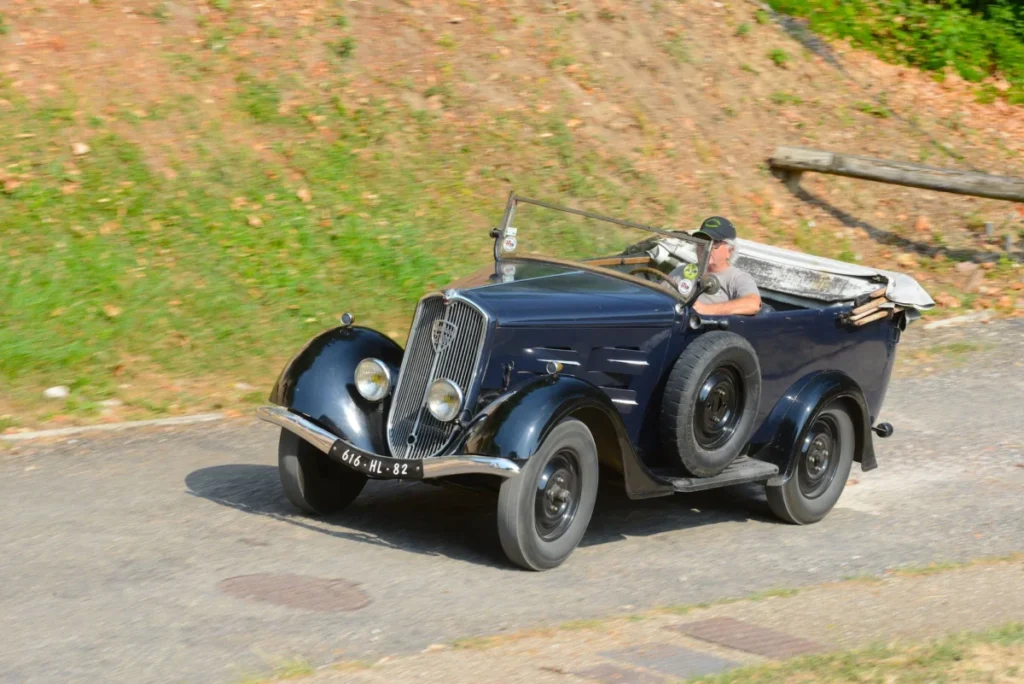
The history of the automobile is paved with machines that defined their eras, but few possess the transformative power of the Peugeot 201. Launched in 1929, it was not merely a new model; it was the vehicle that saved Peugeot from the brink of financial collapse and established the naming convention that has characterized the French brand for nearly a century. With over 140,000 units sold, the 201 solidified Peugeot’s reputation as a manufacturer of accessible, reliable, and modern transportation.
The Genesis of a Savior: Historical Context
By the mid-1920s, the automotive landscape in France was undergoing a radical shift. Peugeot’s product lineup, anchored by the aging Quadrilette and the 5 CV "voiturette," was losing its luster. While these vehicles had served the company well since the early days of the decade, the post-war bourgeoisie and the rising middle class were demanding more. They sought vehicles that offered greater cabin space, improved performance, and a touch of aesthetic elegance.
Peugeot found itself at a crossroads. Financially constrained and facing intense competition, the management in Franche-Comté knew that stagnation was not an option. They needed a "people’s car"—a model that bridged the gap between the rudimentary cyclecars of the past and the luxury vehicles of the era. The result was a bold, highly calculated gamble that would eventually define the company’s DNA.
A Scientific Approach to Design: The 1928 Development Cycle
Unlike the haphazard development processes common in the early 20th century, Peugeot approached the 201 with clinical precision. The company initiated an unprecedented market research effort, surveying their entire dealer network to determine exactly what the customer of 1930 wanted.

The Investment
To turn this vision into reality, Peugeot committed 25 million francs—a staggering sum for the time. The development team was a massive operation, mobilizing over 350 engineers and technicians alongside 750 skilled workers. To ensure the manufacturing capacity could keep pace with anticipated demand, the factory in Montbéliard underwent a radical transformation, including the construction of a new, two-kilometer-long production line.
Torture Testing
By the summer of 1928, just six months after the initial design concepts were finalized, a fleet of 40 prototypes was unleashed. Under the watchful eye of André Boillot—the legendary Peugeot test driver and sports director—these vehicles were subjected to weeks of grueling endurance tests. They were driven across every terrain and in all weather conditions to ensure that the 6 CV engine and chassis could withstand the rigors of daily life. The goal was simple: to create the first truly modern small car that wouldn’t suffer from the mechanical fragility associated with previous "tape-culs" (bone-shakers).
The Launch: October 1929
The Peugeot 201 made its official debut at the Paris Motor Show in October 1929. The public reception was instantaneous and overwhelming. The name itself—"201"—marked the beginning of the iconic "x0x" naming sequence, a system that would go on to categorize the brand’s output for generations.
The market’s hunger for the 201 was so intense that 5,000 firm orders were recorded mere weeks after its unveiling. Within three years, 64,000 units had left the factory floor. To put this in perspective, Peugeot’s total production since its founding in 1886 had barely reached 200,000 units before the 201 arrived. The 201 effectively tripled the brand’s output capacity in a fraction of the time.

Technical Specifications and Innovation
The 201 was a marvel of mid-market engineering. While it was designed to be affordable, it was far from primitive.
- Engine: A 6 CV unit that provided adequate power for urban and suburban travel.
- Suspension: A key innovation for the 201 was its independent front wheel suspension (on later versions), which offered a level of ride comfort that was previously unheard of in the small-car segment.
- Production Philosophy: Peugeot moved away from craft-based production toward mass production. The logistical coordination between the sales network and the factory meant that the 201 was always available to meet the surging demand.
The Impact on Peugeot’s Financial Future
The financial implications of the 201 were immediate and profound. Before the 201, Peugeot was struggling to maintain profitability in a post-WWI economy defined by inflation and shifting consumer habits. The success of the 201 turned the tide, injecting necessary capital into the firm and providing the financial stability required to invest in further innovation.
If the 205 was the car that saved Peugeot in the 1980s, the 201 was the foundational pillar that saved the company in the 1930s. It proved that a manufacturer could scale effectively without sacrificing the quality or the reputation of the brand.
Chronology of Success
- 1924: The decline of the Quadrilette begins; the company recognizes the need for a modern replacement.
- 1927: Planning for the "new model" begins; market research surveys are distributed to the dealer network.
- 1928: 40 prototypes enter active road testing; factory expansion begins.
- October 1929: Official launch of the Peugeot 201 at the Paris Motor Show.
- 1930–1932: Rapid production ramp-up; 64,000 units sold in the first three years.
- 1930s: The "x0x" numbering system is officially adopted for all future models.
Supporting Data: By the Numbers
The data surrounding the 201 tells a story of industrial transformation:

- Total Production: 142,309 units.
- Initial Investment: 25 million francs.
- Workforce: Over 1,100 personnel dedicated solely to the development and manufacturing launch.
- Market Share: Following the 201’s release, Peugeot’s market share in France climbed consistently, establishing the brand as the primary competitor to Renault and Citroën in the small-car segment.
Official Perspective and Legacy
The internal sentiment at Peugeot at the time was one of cautious optimism followed by radical success. Company archives describe the 201 as the "great catalyst." By listening to the customer, investing in factory infrastructure, and rigorously testing the product, Peugeot created a blueprint for success that would serve the company for decades.
The 201 was not merely a machine; it was a psychological turning point. It proved to the workers in Montbéliard and to the shareholders that the company was capable of dominating the market through modern manufacturing techniques. It transformed Peugeot from a regional manufacturer into a national industrial powerhouse.
Implications for Modern Automotive History
The legacy of the 201 is felt today in the very names of the cars on our roads. The "20x" series (202, 203, 204, 205, 206, 207, 208) is a direct lineage to the 1929 model. By standardizing the naming convention, Peugeot created one of the most recognizable brand identities in the world.
Furthermore, the 201 serves as a historical lesson for modern manufacturers: the synergy between customer feedback and industrial scalability is the only way to ensure long-term viability in a competitive market. When times are tough, the most successful companies are those that innovate in their production processes as much as they innovate in their vehicle design.

The Peugeot 201 remains a testament to the resilience of the French automotive industry. It was the right car, at the right time, built with the right strategy. For the automotive historian and the enthusiast alike, it stands as a monument to the moment the "Lion" truly found its roar.
(For further details on the technical evolution of the 201, including specific chassis variants and engine upgrades throughout the 1930s, readers are encouraged to consult the full archives available in Gazoline issue #351.)
