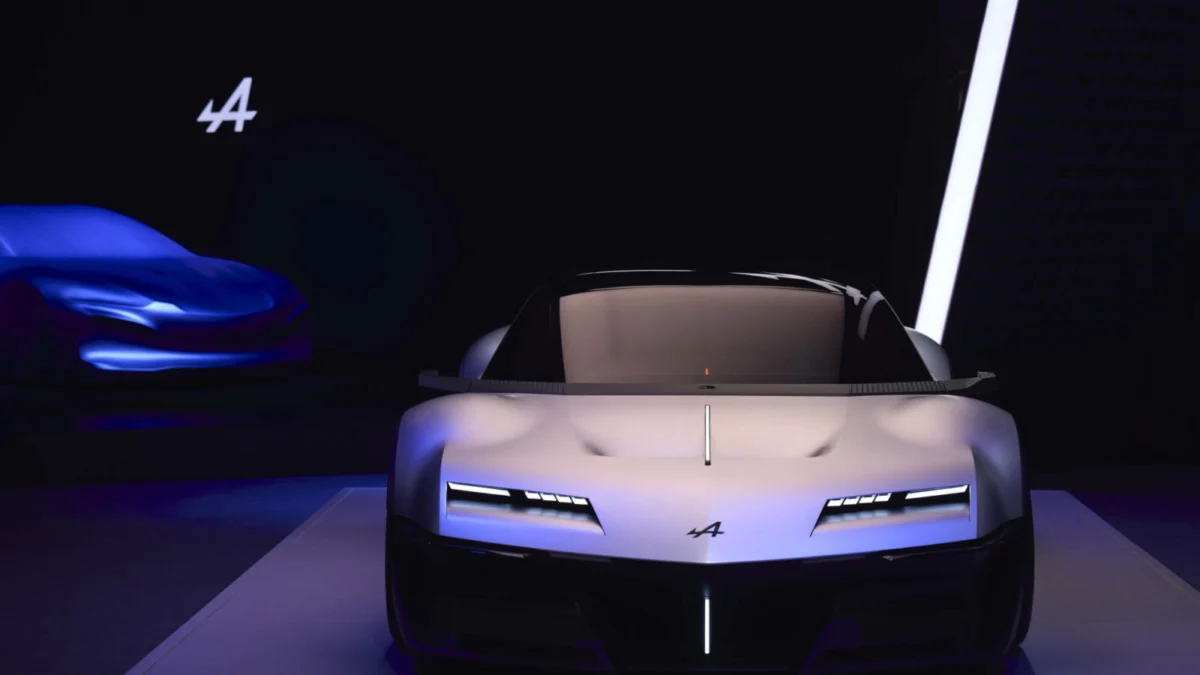
At the Paris Motor Show (Hall 6, Stand A22), Alpine is doing more than merely displaying concept cars; it is conducting a masterclass in industrial hedging. Following the quiet retirement of the internal combustion A110 last June, the Dieppe manufacturing plant has entered a period of transition. To bridge the eighteen-month gap before the arrival of its next-generation electric fleet in 2028, Alpine has unveiled two significant manifestos: the A310 Vision and a draped silhouette of the upcoming A110. Beneath the surface of these designs lies a sophisticated engineering strategy that reveals a brand balancing the inevitability of electrification with a deep-seated pragmatism regarding market volatility.
The Geometry of Doubt: Engineering for the Unknown
The most striking revelation from the Alpine stand is not the aesthetic evolution of the cars, but a calculated "geometric anomaly" in the architecture of the future A110. Antony Villain’s design team has widened the front and rear tracks of the next-generation A110 by six centimeters compared to the current berlinette. While this contributes to a more aggressive, planted stance, it serves a secondary, strategic purpose: the chassis is dimensioned to accommodate a hybrid internal combustion engine should the market or regulatory climate shift away from pure battery-electric vehicles (BEV).
This is a tacit admission of the uncertainty surrounding the high-performance segment. By ensuring that the structural framework can house a turbocharged four-cylinder hybrid powertrain without requiring a complete overhaul of the expensive stamping tooling, Alpine has effectively "future-proofed" its investment. It is a bold insurance policy against the possibility that the target demographic might reject an 80,000-euro electric-only sports car.
A110 2028: Rejecting the "Skateboard" for Purist Dynamics
The engineering team at Dieppe faced a fundamental challenge: how to electrify a strict two-seater sports car without destroying the low-slung, agile soul that defined the A110. The industry-standard "skateboard" platform—which stacks batteries beneath the floor—was rejected immediately. Had they adopted this configuration, the car’s roofline would have been forced above 1.25 meters, and the driver’s seating position would have risen, effectively turning the svelte berlinette into a cumbersome, elevated crossover.
Instead, the engineers opted for a "split-pack" architecture, reminiscent of mid-engine internal combustion supercars. The 71.2 kWh battery pack is divided into two distinct compartments: 25% of the chemical capacity is housed under the front hood, while the remaining 75% is massed vertically behind the seats, in the space typically occupied by the engine block. This configuration is not merely about storage; it is about weight distribution. By mimicking the polar moment of inertia of the outgoing combustion-powered model, Alpine maintains the car’s legendary handling characteristics.
Furthermore, the aerodynamics of the 2028 A110 have been refined to eliminate the need for a traditional rear spoiler. The car features a heavily sculpted underbody and a deep rear diffuser, with flanks inspired by the shock cones of the Concorde. This allows for a clean, elegant profile while maintaining the downforce required for high-speed stability.
A310 Vision: Reinterpreting the 2+2 Grand Tourer
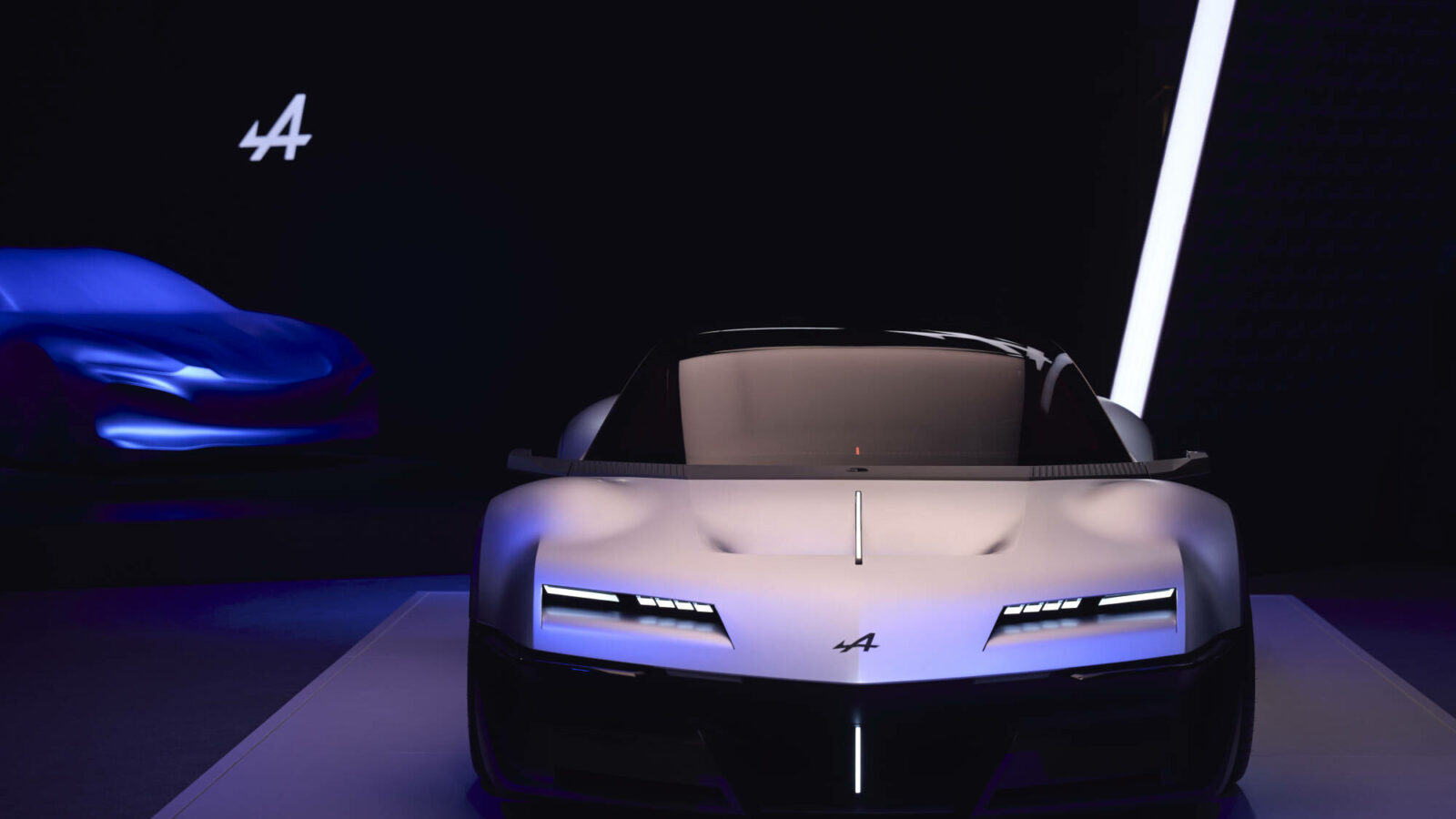
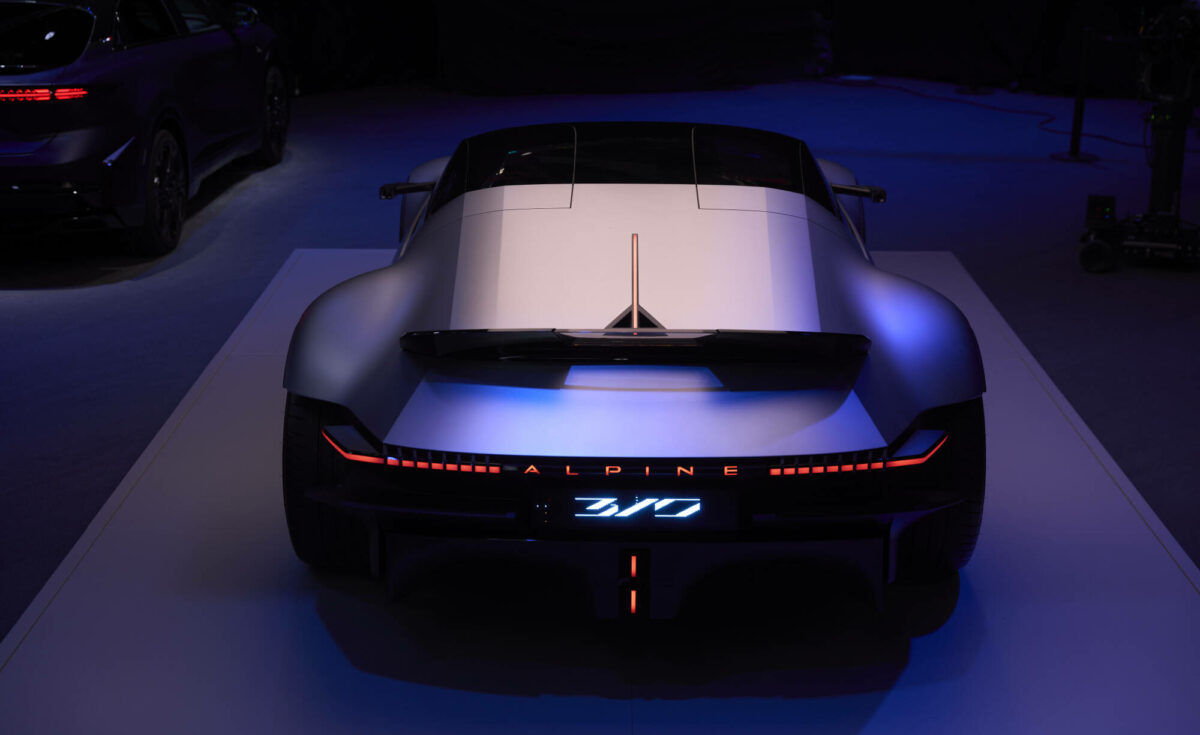
Positioned as the next step in Alpine’s product roadmap, the A310 Vision—slated for release in late 2028—targets a different segment. Unlike the A110, the A310 will be a true 2+2 coupe built on the brand’s proprietary Alpine Performance Platform (APP).
The challenges here were distinct: creating space for rear passengers without compromising the silhouette. The solution involves a 78 kWh battery pack placed under the floor, but with a clever twist: the inclusion of "foot garages." These specific cavities in the battery module allow rear-seat passengers to place their feet in a natural position, avoiding the "frog-like" posture common in smaller electric coupes. This platform is designed to be highly versatile, supporting both rear-wheel drive and dual-motor all-wheel drive configurations.
Stylistically, the A310 is a love letter to the 1970s and 80s. The oversized wheel arches pay homage to the 1982 "Pack GT," housing massive 20-inch front and 21-inch rear wheels. Perhaps the most intriguing feature is the "pop-down" lighting mechanism. Rather than traditional pop-up headlights, the bodywork itself lowers to reveal the lamps, a clever inversion that maintains the car’s sleek frontal area. The front end also features a functional S-Duct, which channels air through the hood to increase front-end grip, further cementing the A310’s status as a serious performance machine.
The Analog Resistance: Why Alpine is Scaling Back Screens
Perhaps the most refreshing aspect of Alpine’s future design philosophy is its rejection of the "digital cockpit" trend. As many competitors turn their interiors into oversized tablet displays that inevitably feel dated within a few years, Alpine is doubling down on tactile, analog-inspired interfaces.
Both the A110 and A310 will utilize a cockpit layout that prioritizes driver focus. The A310 Vision features two simple, round digital gauges that provide essential driving data without the clutter of extraneous software features. Dynamic settings—such as drive modes and suspension stiffness—are controlled by physical switches. This is a deliberate choice made with the long-term collector in mind. Alpine understands that for vehicles intended to be cherished for decades, software bloat is the primary enemy of residual value. By keeping the interface physical and streamlined, they ensure the car remains a timeless machine rather than an obsolete computer on wheels.
Chronology and Development Roadmap
- June 2024: Official cessation of production for the internal combustion A110 at the Dieppe factory.
- October 2026 (Paris Motor Show): Presentation of the A310 Vision and the draped silhouette of the 2028 A110, showcasing the split-battery engineering strategy.
- Spring 2027: Scheduled official unveiling of the production-ready A110, featuring the final interior design and cockpit ergonomics.
- Early 2028: Market launch of the next-generation, electric A110.
- Late 2028: Market launch of the A310 2+2 GT, utilizing the new Alpine Performance Platform (APP).
Implications: A Brand at the Crossroads of Tradition and Innovation
Alpine’s strategy reflects a broader industrial tension. The brand is clearly committed to the electric transition, yet it refuses to sacrifice the driving dynamics that have defined its heritage for over half a century. By rejecting the "skateboard" platform for the A110, Alpine is proving that electrification does not have to mean homogenization.
The decision to retain the possibility of a hybrid powertrain is perhaps the most significant takeaway from the Paris display. It demonstrates that Alpine is not blindly following the industry trend toward 100% electrification; instead, it is listening to its customer base. Should the market demand a return to internal combustion—or should the infrastructure for high-performance electric vehicles fail to mature at the expected rate—Alpine has ensured it has a "Plan B" already baked into the car’s very chassis.
The Engineering Paradigm: Why Split-Batteries Matter
The "info-plus" regarding the split-battery architecture is arguably the most critical engineering breakthrough for the brand. By avoiding a singular, heavy battery pack under the floor, the engineers avoid raising the vehicle’s center of gravity. This has profound implications for the suspension. In a typical EV, the added height requires stiffer anti-roll bars to prevent body roll, which in turn ruins the car’s ability to "breathe" with the road—a hallmark of French sports car engineering.
By placing 75% of the mass behind the cabin, Alpine retains a low "H-point" (hip-point), allowing the driver to sit close to the pavement. This natural balance allows for more supple suspension tuning, providing the comfort and filtration that Alpine owners expect, while still maintaining precise control over the car’s pitch and roll.
As the automotive industry faces its greatest transformation in a century, Alpine is betting that the winning formula for the future is not to mimic the tech-heavy, screen-laden EVs of Silicon Valley, but to refine the fundamental physics of the sports car. Whether the market chooses the electric path or demands a hybrid alternative, Alpine has positioned itself to deliver on both fronts, proving that even in an age of batteries and software, the spirit of the berlinette remains very much alive.