

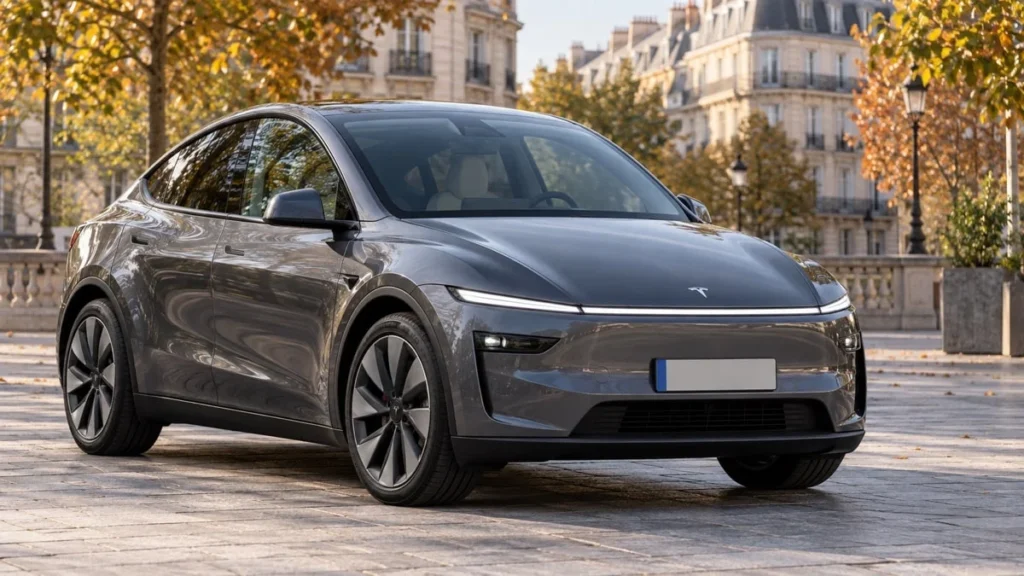
PARIS — In a seismic shift for the European automotive landscape, the all-electric Tesla Model Y captured the number one spot for new passenger car registrations in France in September 2026. Outpacing longtime domestic favorites like the Peugeot 208 and Renault Clio, the American electric SUV achieved a remarkable monthly volume of 8,183 units.
While the feat underscores the accelerating transition toward electrification, industry analysts note that the race for annual supremacy remains fiercely contested. Peugeot’s ubiquitous city car continues to hold the cumulative crown for the first nine months of the year, illustrating a fascinating tug-of-war between traditional mass-market affordability and the surging demand for premium electric mobility.
Main Facts: The September Shockwave
The latest registration data released by Planète Renault and certified by automotive market authority AAA DATA reveals a historic milestone for the French market. In September 2026, the Tesla Model Y reigned supreme across all motorization types, leaving traditional internal combustion engine (ICE) and hybrid city cars trailing in its wake.
The September 2026 Podium
- Tesla Model Y: 8,183 units
- Peugeot 208: [Second position, closely trailing]
- Renault Clio: [Third position]
What makes this performance extraordinary is the sheer vehicle segment disparity. Traditionally, monthly volume charts in France are dominated by compact, affordable B-segment hatchbacks (citadines) due to their lower price points, compact dimensions suited for narrow European streets, and broad consumer accessibility. For a D-segment family SUV—and a purely electric one at that—to top the overall volume chart represents a psychological and commercial watershed moment.
However, market experts urge nuance. Registration figures track vehicles officially registered with the state during a given month; they do not necessarily reflect customer orders placed within that same 30-day window, as logistics, shipping batches, and delivery waves heavily influence monthly spikes for imported vehicles like Tesla.
Chronology: How September Unfolded and the Broader 2026 Trajectory
To fully understand the weight of Tesla’s September victory, it is essential to contextualize the timeline of the French automotive market through the first three quarters of 2026.
The Timeline of Events
- January – August 2026: Peugeot dominates the conversational and registration landscape. Backed by Stellantis’ extensive dealer network and aggressive commercial positioning, the Peugeot 208 maintains a comfortable lead as France’s best-selling car overall, supported by a healthy mix of petrol, hybrid, and electric variants.
- Early September 2026: Shipping vessels carrying North American- or Berlin-produced Tesla Model Ys arrive in European ports. A concentrated delivery push triggers a massive wave of registrations in France.
- October 1, 2026: AAA DATA publishes its comprehensive monthly ledger. It reveals that France recorded 156,629 new passenger car registrations in September alone. Of those, a staggering 65,243 units were fully electric.
- October 1, 2026: Stellantis issues its commercial results press release, confirming that despite Tesla’s stellar September performance, the Peugeot 208 comfortably retains its position as the best-selling vehicle in France for the cumulative January-September 2026 period.
Supporting Data: The Electric Surge and Market Breakdown
The September figures are part of a broader, undeniable structural shift in French consumer habits. Electrified vehicles are no longer a niche market; they are capturing the mainstream.
Key Market Statistics for September 2026
- Total New Car Registrations: 156,629 passenger vehicles.
- Battery Electric Vehicles (BEVs): 65,243 units, capturing nearly 42% of the entire new car market.
- Hybrid Vehicles (all categories combined): Holding a narrow majority at approximately 43%.
- Tesla Model Y vs. Renault 5 EV: Within the purely electric segment, the Model Y heavily outperformed its nearest domestic rival, the newly launched Renault 5 EV, which registered 5,224 units. This leaves an impressive gap of 2,959 vehicles between the first and second place electric models for the month.
The Long-Term vs. Short-Term Split
To clarify the apparent paradox between monthly and cumulative leadership, market observers rely on comparative data periods:
| Observation Period | Market Leader | Key Insight |
|---|---|---|
| September 2026 (Single Month) | Tesla Model Y (8,183 units) | Driven by import logistics waves, high EV adoption rates, and robust quarterly delivery pushes. |
| January – September 2026 (Cumulative) | Peugeot 208 | Reflects steady, year-round volume across diverse powertrain options and traditional buyer segments. |
Official Responses and Economic Drivers
Industry analysts and institutional bodies have pointed to several macroeconomic and governmental catalysts driving this massive influx of electric vehicle registrations.
According to AAA DATA, public support mechanisms have played a vital role in keeping the EV momentum alive. Programs such as France’s heavily discussed "social leasing" scheme (leasing social)—which offers low-cost monthly rentals on electric vehicles to lower-income households—alongside government ecological bonuses, have fundamentally shifted purchasing psychology.
However, market researchers emphasize that while these state incentives provide a supportive ecosystem, they cannot entirely account for the sudden, localized sales explosion of a single premium model like the Model Y in one specific month. Tesla’s aggressive localized pricing strategies, inventory adjustments, and financing incentives also serve as primary levers for its commercial success.
Stellantis executives, while acknowledging Tesla’s formidable monthly performance, remain confident in the deep-rooted strength of their domestic portfolio. Stellantis continues to lead the French market overall across combined passenger cars (VP) and light commercial vehicles (LCV) when viewing the year cumulatively, anchored by the multi-energy platform flexibility of the Peugeot and Citroën brands.
Implications: What Does This Mean for the Future of French Motoring?
The fact that an American electric SUV can outsell traditional French city cars on their home turf carries profound implications for legacy automakers, consumers, and public infrastructure.
1. The Blurring of Segments
Historically, buyers bought small cars because they were cheap and practical for cities, and large SUVs because they needed space and had higher budgets. The success of the Model Y demonstrates that a significant portion of French buyers are willing to pool their resources toward larger, technologically advanced battery-electric crossovers, bypassing traditional segment boundaries.
2. The Domestic Response
For French manufacturers like Renault and Stellantis, the challenge is clear. While vehicles like the Renault 5 are putting up respectable numbers (over 5,200 units in September), domestic automakers must scale up their production of larger electric crossovers to compete directly with Tesla on its home turf. The race to offer affordable yet spacious family EVs will dictate market share for the remainder of the decade.
3. Infrastructure and Grid Pressures
With electric vehicles capturing nearly 42% of monthly registrations, the pressure on France’s public charging infrastructure intensifies. While urban centers boast dense networks, high-volume adoption in suburban and rural areas—accelerated by models like the Model Y—demands continued investment in fast-charging corridors.
Looking Ahead
As the automotive industry looks toward the final quarter of 2026, all eyes will be on the October registration reports. Will Tesla sustain its momentum, or will traditional heavyweights like the Peugeot 208 reassert their dominance as end-of-year fleet renewals take effect?
For now, the September results serve as a vivid snapshot of a changing era: the electric vehicle has officially moved from the margins to the mainstream summit of the French automotive market.
