

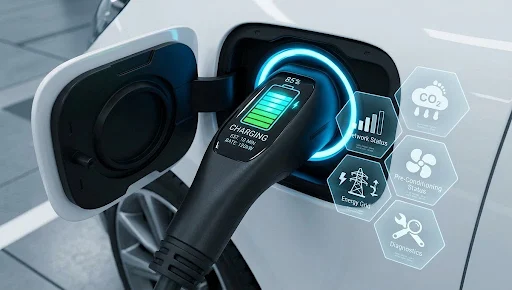
As electric vehicles (EVs) continue to dominate modern roadways, long-distance travel has undergone a fundamental transformation. Gone are the days of mindlessly pumping liquid fuel in a matter of minutes; the contemporary road trip is defined by the strategic, planned pause. Far from being a mere inconvenience, the thirty-minute charging stop has emerged as a unique micro-window of opportunity—a structured break that requires a blend of digital management, practical organization, and personal relaxation.
Main Facts: The Anatomy of an EV Charging Stop
The modern electric vehicle journey is dictated by variables that extend far beyond simple distance. When a driver plugs their vehicle into a rapid DC charger, the charging rate is not a universal constant.
- The Variables of Charge: Charging speed is governed by a complex interplay of factors, including the maximum output of the charging station, the current state of charge (SoC) of the battery, ambient and battery temperatures, and the specific thermal management architecture of the vehicle model.
- The Golden Window: Despite these variables, a standard highway fast-charging session typically hovers around the thirty-minute mark. This duration provides enough time to replenish sufficient range for the next leg of the journey while offering a legitimate mental and physical break for the driver.
- Infrastructure Realities: According to guidelines from entities like the Alternative Fuels Data Center (AFDC), distinguishing between Level 2 public charging (suited for extended, multi-hour stops) and direct current (DC) fast charging deployed along major highway corridors is critical for route planning. Drivers must align their vehicle’s connector compatibility, station availability, and charging speeds before even pulling off the highway.
Chronology of a Charging Stop: From Plug-In to Drive-Off
To ensure a seamless travel experience, seasoned EV drivers treat the charging stop as a chronologically managed event rather than an impromptu pause. A structured timeline prevents common pitfalls, such as inadvertently blocking a station or exceeding battery-capacity sweet spots.
[Arrival & Verification] ➔ [Initial Quick Tasks] ➔ [Leisure / Micro-Activity] ➔ [Session Wrap-Up] ➔ [Departure]Phase 1: Arrival and Verification (Minutes 0–5)
The moment the vehicle is connected and the charging pedestal confirms the handshake, the clock starts. However, seasoned drivers know never to rely solely on an app’s push notification.
- The Three-Way Check: Always cross-reference the vehicle’s dashboard indicator, the charger’s physical meter, and the mobile application to ensure energy is actively flowing into the battery.
- Time Management: Instead of waiting mindlessly for a round percentage figure—which can dramatically slow down charging speeds as the battery reaches 80% to 100%—drivers should calculate the exact range required to reach the next targeted waypoint. Occupying a stall past the necessary threshold creates bottlenecks for fellow motorists.
Phase 2: Administrative and Digital Tasks (Minutes 5–15)
With the energy flowing securely, the driver can address high-focus digital tasks that require internet access or careful attention. This is the ideal window for administrative duties, such as updating travel itineraries, managing digital accounts, or reviewing upcoming logistical details.
Phase 3: Leisure and Micro-Entertainment (Minutes 15–25)
Once essential tasks are concluded, the remaining time is dedicated to rest. Whether it is streaming a pre-downloaded video, catching up on sports scores, or reading a few pages of a book, this window allows the mind to detach from the road.
Phase 4: The Departure Protocol (Minutes 25–30)
As the session approaches its target, the driver must shift focus back to the vehicle. This includes terminating the charging session correctly through the app or vehicle interface, stowing the heavy high-voltage cable securely, verifying that the charging port flap is securely closed, and confirming the energy actually recuperated before programming the next destination into the navigation system.
Supporting Data: Understanding Charging Dynamics and Digital Habits
The psychology of the EV charging stop has spawned entirely new consumer behaviors. Data gathered from mobility and tech platforms reveals that drivers increasingly view their vehicles as mobile living rooms or secondary digital workstations.
- Battery Degradation and Charging Curves: Fast-charging speeds peak early in the charging cycle (typically between 10% and 50% state of charge) and taper off significantly as the battery approaches maximum capacity. Understanding this charging curve saves precious time on long trips; it is often faster to make two shorter 15-minute stops than one prolonged 45-minute stop.
- The Rise of "Parking-Lot Micro-Tasks": Industry analytics indicate that routine digital interactions—such as opening new accounts, verifying identification documents, or checking live entertainment feeds—are increasingly migrated to periods of stationary downtime. Because security protocols, two-factor authentications, and platform registrations require cognitive focus, attempting them while driving is dangerously unsafe. Doing so inside a securely parked, charging vehicle transforms dead time into productive or relaxing intervals.
- Connectivity and Device Management: Streaming video or running high-data applications simultaneously on a smartphone can accelerate thermal heating of the device, particularly if it is simultaneously acting as a hotspot or GPS navigator. Smart drivers utilize the vehicle’s onboard power outlets or infotainment systems to offload digital tasks, preserving phone battery and performance for the road ahead.
Official Perspectives and Industry Responses
Automotive manufacturers, infrastructure operators, and energy regulators are increasingly focusing on the quality of the charging experience, recognizing that hardware reliability alone is no longer enough to satisfy consumers.
- The Charge Point Operator (CPO) Perspective: Major CPOs are investing heavily in app integration to standardize the "plug-and-charge" experience. Industry leaders emphasize that reducing friction at the payment and session-termination phases is paramount. Standardizing how sessions are stopped—whether via RFID card, auto-charge protocols, or app commands—reduces user anxiety.
- Urban and Highway Planning Authorities: Transport departments worldwide are urging developers of charging hubs to incorporate amenities that match the thirty-minute dwell time. Rest stops are evolving to feature micro-cafes, Wi-Fi zones, and green spaces, acknowledging that infrastructure must support the human element of travel, not just the mechanical needs of the battery.
- Grid Operators: With the mass adoption of electric vehicles, grid stability during peak travel seasons remains a focal point. Smart charging initiatives and vehicle-to-grid (V2G) concepts are being studied to ensure that rapid-charging corridors do not destabilize local energy grids, subtly encouraging drivers to optimize their charging windows during off-peak hours when possible.
Implications: The Psychological Shift of the Electric Road Trip
The transition from internal combustion engines to electric mobility is more than a mechanical shift; it is a fundamental alteration of how humans interact with travel, time, and technology.
1. Redefining Travel Patience
Traditional driving conditions conditioned motorists to prioritize non-stop endurance. Driving for four or five hours straight without leaving the seat was once seen as a badge of honor, despite the associated fatigue and safety risks. The necessity of the EV charging stop forces a return to a more natural rhythm of rest and recuperation. Drivers are compelled to take micro-breaks every two to three hours, drastically reducing driver fatigue-related accidents on long routes.
2. The Integration of the Digital Lifestyle
The modern car has officially graduated from a simple transportation box to a connected ecosystem. Whether a driver uses the interval to check sports markets, handle personal admin, or consume digital media, the vehicle acts as a secure terrestrial pod. However, this demands a new form of digital discipline. As highlighted by traffic safety advocates, digital activities must strictly adhere to the boundaries of the parking brake. Once the car is unplugged and the cable is stowed, the digital distraction must cease immediately, allowing the driver to transition back into an attentive pilot.
3. The Need for Infrastructure Resilience
Finally, the reliance on digital infrastructure—apps, remote payment gateways, real-time station availability trackers—places new demands on cellular networks and software reliability. A glitch in an app or a dead cellular zone can turn a smooth charging stop into a logistical headache. Therefore, building robust offline contingencies and clear, intuitive physical instructions at charging stations remains an ongoing challenge for the industry.
Conclusion
Ultimately, mastering the electric pit stop is an art form that blends technology with mindfulness. By approaching the charging session with a structured plan—verifying energy flow, organizing necessary digital tasks within safe bounds, enjoying a brief moment of leisure, and respecting the time limits of the charging stall—the electric road trip ceases to be an exercise in waiting. Instead, it becomes a balanced, harmonious journey where car, driver, and route arrive at their destinations refreshed and ready for the miles ahead.
