

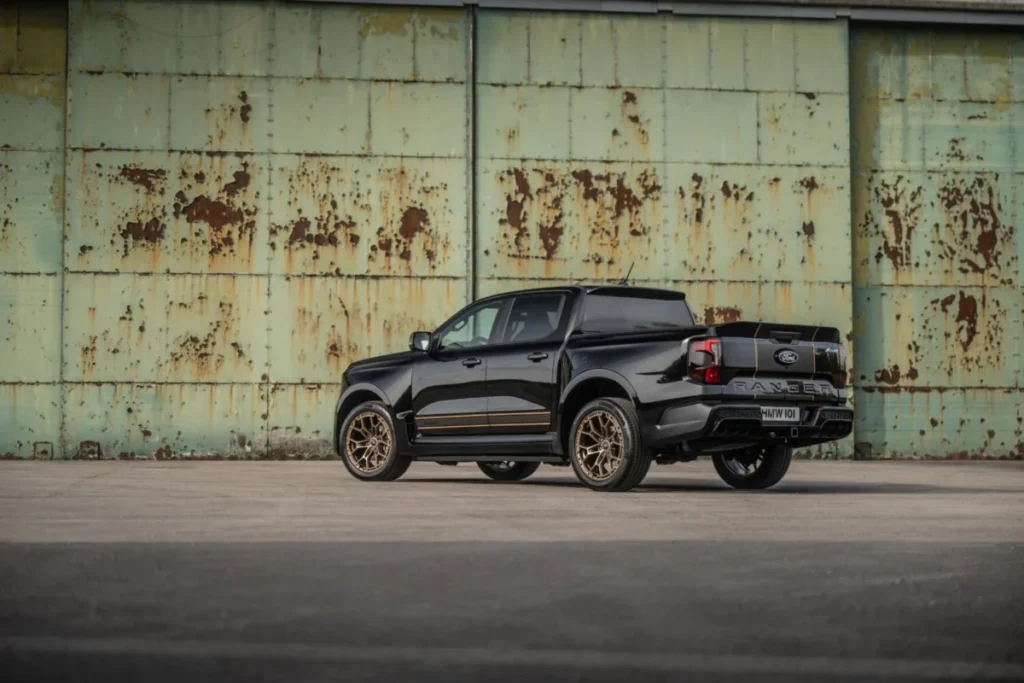
Ford’s dominance in the European pick-up market is not a matter of chance; it is a legacy built on over a decade of consistent performance. Having held the title of Europe’s best-selling pick-up for 11 consecutive years, Ford has decided to elevate its flagship utility vehicle from a mere workhorse to a style icon. Unveiled at the Paris Motor Show on October 12, 2026, the Ford Ranger MS-RT Champion Edition represents a bold fusion of rally heritage and modern utility. While it retains the mechanical soul of the standard MS-RT variant, the Champion Edition is a masterclass in aesthetics, exclusivity, and brand storytelling.
Main Facts: The Intersection of Utility and Performance Styling
The Ranger MS-RT Champion Edition is not designed for the mud-caked obscurity of a traditional construction site, though it remains fully capable of handling such terrain. Instead, it is a statement piece.
The exterior is draped in a striking "Agate Black" paint job, punctuated by dual racing stripes highlighted in gold. This livery is far from random; it is a direct homage to the golden era of Ford’s motorsport history. The vehicle sits on aggressive 21-inch diamond-cut alloy wheels that mirror the gold accents of the bodywork. The silhouette is further enhanced by wider wheel arches, aerodynamic side skirts, and bespoke bumpers that give the truck a planted, athletic stance.
Perhaps the most evocative design feature lies at the rear. The vehicle incorporates dual spoilers—one mounted on the cabin roof and another on the tailgate—a clear nod to legendary performance vehicles like the Ford Sierra RS500 and the Escort Cosworth. These elements serve as a functional bridge between Ford’s contemporary utility fleet and its illustrious history in the World Rally Championship (WRC), a relationship cultivated through the partnership with MS-RT and M-Sport.
Inside, the cabin reflects this sporting ethos. The interior features eco-leather and synthetic suede seats designed for superior lateral support, ensuring comfort during spirited driving. The steering wheel, complete with a 12-o’clock marker and gold stitching, aligns with the exterior theme. A numbered plaque on the center console serves as a constant reminder of the vehicle’s exclusivity, distinguishing it from the mass-produced fleet.
Chronology: From Concept to Paris Debut
The journey of the Ranger MS-RT Champion Edition follows a strategic timeline designed to build anticipation among enthusiasts and professionals alike:
- 1997–2025 (The Heritage Foundation): The long-standing partnership between Ford and M-Sport, the team behind Ford’s WRC success, laid the groundwork for the MS-RT brand. Over these decades, the "Sport" DNA was gradually filtered from the rally stages into the consumer pickup segment.
- 2024 (Market Dominance): Ford solidified its market position, selling 60,400 units in Europe—securing a 43.6% market share, according to S&P Global Mobility data.
- October 12, 2026: The official public unveiling at the Mondial de l’Automobile in Paris. The reveal served to highlight the brand’s pivot toward "lifestyle utility."
- Late 2026: Order books officially opened to the European market.
- Spring 2027: The anticipated window for the first customer deliveries, marking the formal arrival of the Champion Edition on European roads.
Supporting Data: Technical Capabilities and Performance
While the Champion Edition is an aesthetic upgrade, it does not abandon the rugged utility that defines the Ranger line. Ford has opted to maintain the engine configurations found in the standard MS-RT version, focusing the "Champion" upgrades on design and interior ambiance.
Powertrain Options
Buyers have the choice of two distinct power units, each catering to different operational needs:
- 3.0L V6 EcoBlue Diesel: This remains the workhorse of the lineup, producing 240 horsepower and a massive 600 Nm of torque. It is the preferred choice for long-distance haulers and heavy-duty operators who prioritize consistent, high-torque output.
- 2.3L EcoBoost Plug-in Hybrid (PHEV): A modern solution for the urban-focused professional. This system combines a 2.3-liter gasoline engine with an electric motor to generate 281 horsepower and 697 Nm of torque. It offers up to 42 km of pure electric range, making it ideal for daily commutes in low-emission zones.
Efficiency and Utility Metrics
Ford reports a homologated fuel consumption for the PHEV model between 6.4 and 6.5 l/100 km, compared to 10.8 l/100 km for the V6 diesel. However, these figures are heavily dependent on the state of charge (SoC) of the battery. Once depleted, the fuel consumption of the hybrid unit can increase significantly, a factor that potential owners must weigh against their charging infrastructure access.
Despite the "Sport" styling, the Ranger’s core utility remains intact. The vehicle boasts a maximum towing capacity of 3.5 tonnes and a payload capacity of up to one tonne. While these figures represent the upper limits of the platform, they provide the necessary versatility for a vehicle that wears its sporting pedigree as a badge of honor.
Official Responses: Strategy and Brand Positioning
Ford’s marketing strategy for the Champion Edition is centered on the concept of "The Professional’s Athlete." By bridging the gap between the rally-bred M-Sport history and the everyday utility of the Ranger, Ford is attempting to expand its demographic.
"The Champion Edition is about celebrating the heritage of our brand," noted a Ford representative during the Paris unveiling. "We aren’t just selling a pick-up; we are selling the culmination of 11 years of European market leadership. This vehicle is for the professional who demands the utility of a truck but refuses to compromise on the excitement of a performance vehicle."
The decision to avoid mechanical upgrades—unlike the high-performance Ranger Raptor—was intentional. Ford management has clarified that the Ranger Raptor remains the vehicle for those seeking off-road, high-speed performance, whereas the MS-RT Champion Edition targets the "lifestyle utility" sector. It is designed for the business owner who wants their vehicle to stand out in a corporate parking lot as much as it does on a job site.
Implications: The Evolution of the Pick-up Segment
The introduction of the Champion Edition carries significant implications for the automotive market, particularly in Europe.
1. The Normalization of Hybrid Utility
By offering a Plug-in Hybrid variant, Ford is signaling a broader industry shift. As European cities implement increasingly stringent emission standards, the "dirty" image of the traditional diesel pick-up is being replaced by the "cleaner," tech-forward hybrid. The 42 km electric range, while modest, is a crucial step toward future-proofing the utility segment.
2. The Power of "Special Editions"
The success of the Ranger, which accounts for nearly half of its market segment, is being reinforced through these specialized models. By leveraging nostalgia (the Sierra/Escort references), Ford is fostering brand loyalty. These limited runs create a sense of urgency and exclusivity that drives demand even in the absence of new mechanical breakthroughs.
3. Technology as a Utility Tool
The inclusion of advanced driver-assistance systems (ADAS)—such as adaptive cruise control, lane-keeping assist, and a 360-degree peripheral camera system—reflects a transformation in how "utility" is defined. A vehicle is no longer just a frame and an engine; it is a mobile office and a precision tool. These features reduce driver fatigue, thereby increasing productivity for the professional user.
4. The "Lifestyle" Pivot
Perhaps the most profound implication is the shift in the Ranger’s identity. No longer confined to the construction or agricultural sectors, the Ranger has become a vehicle for outdoor enthusiasts and image-conscious professionals. The Champion Edition serves as the spearhead of this movement, proving that a commercial vehicle can possess the soul of a rally car without sacrificing the backbone of a workhorse.
In conclusion, the Ford Ranger MS-RT Champion Edition is a testament to the resilience of the pick-up format. By honoring its past with aesthetic nods to its rally legends while embracing the electrified future of propulsion, Ford has ensured that its best-selling vehicle remains relevant for another decade of growth. For the consumer, it offers a rare opportunity: the ability to own a piece of motorsport history that is ready to work on Monday morning.
