

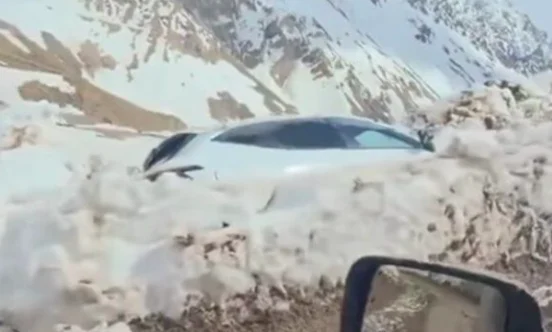
In the vast, unforgiving wilderness of the Chilean Andes, the line between a routine excursion and a life-threatening ordeal is often measured in inches of snowfall. In July 2026, a Jetour SUV, owned by Manuel Orellana—widely known as "El Chino"—became the centerpiece of a surreal spectacle that has since captivated social media users and automotive experts alike. Buried under a crushing weight of snow in the Cajón del Maipo, the vehicle has transformed from a mode of transportation into a stationary monument, a stark reminder of nature’s absolute authority over modern machinery.
As the spring thaw slowly reveals the silhouette of the SUV, the story of its abandonment has sparked a broader conversation regarding human error, the risks of mountain travel, and the mechanical toll of extreme environmental exposure.
A Chronicle of a Winter Disaster
The sequence of events began as a seemingly benign outing. In mid-July 2026, Manuel Orellana and two female educators set out from the bustling metropolitan area of Santiago, seeking the restorative warmth of the Termas Valle de Colina, a popular thermal spa nestled deep within the cordillera.
The Descent of the Storm
The route through the Cajón del Maipo is breathtaking in fair weather, winding through jagged peaks and deep valleys. However, mountain weather is notoriously fickle. Within hours of their departure, the party encountered a ferocious frontal system. The rapid drop in temperature and the sheer volume of snowfall turned the access road into an impassable trap. As visibility plummeted and the track became obscured by heavy drifts, Orellana realized that continuing forward or attempting a retreat was impossible.
The Six-Day Isolation
For six days, the trio remained trapped in a remote mountain refuge. The isolation was absolute. With communication lines strained and the road buried under several meters of fresh, dense snow, the group was forced to wait out the storm. The situation quickly escalated from a logistical inconvenience to a national news story, prompting a massive search and rescue operation.
The GOPE Intervention
The Chilean Carabineros’ GOPE (Grupo de Operaciones Policiales Especiales)—an elite unit specialized in high-mountain rescue—was dispatched to locate the stranded group. The operation was complex, dangerous, and expensive, with costs estimated to exceed 100 million Chilean pesos. On July 23, 2026, the rescue teams successfully reached the refuge, extracting Orellana and his companions. While the lives of the passengers were saved, the Jetour SUV was left behind, a casualty of the impossible terrain.
The Mechanical Toll: When Nature Claims a Vehicle
Following the rescue, the Jetour—a product of the Chinese manufacturer Jetour, a subsidiary of the Chery Group—was effectively abandoned at high altitude. Over the ensuing months, it endured a relentless cycle of heavy snowfall, sub-zero temperatures, and the physical pressure of frozen drifts.
The Anatomy of Long-Term Exposure
When images of the vehicle surfaced in October 2026, revealing it half-buried in the thawing landscape, automotive experts began to analyze the potential damage sustained by the SUV. An abandoned vehicle in such an environment is subject to more than just the weight of the snow; it is a victim of "environmental degradation."
- Electrical Systems: Modern vehicles are saturated with sensors, control units, and complex wiring. Moisture infiltration, caused by the melting and re-freezing of snow, can lead to widespread corrosion of electrical contacts, short circuits, and the eventual failure of the Engine Control Unit (ECU).
- Structural Stress: The weight of several meters of compacted snow exerts massive downward pressure on the roof and body panels. This can cause structural deformation, shattered glass, and the failure of door seals, allowing water to enter the cabin and destroy the upholstery and interior electronics.
- Fluid Degradation: Extreme cold thickens oils and lubricants, while the freeze-thaw cycle can cause coolant expansion, potentially rupturing hoses or causing cracks in the engine block if the system was not winterized for such temperatures.
The "Ghost" of the Andes
The imagery of the Jetour—partially submerged, appearing almost like a geological formation—has become a viral phenomenon. As tourists began returning to the Termas Valle de Colina following the partial reopening of the area, the SUV became a grim landmark. Social media posts have characterized it as a car that "went for a ride and decided to stay," highlighting the surreal nature of seeing a mass-produced consumer product reclaimed by the harsh Andean wilderness.
Official Responses and Public Sentiment
The abandonment of the vehicle has raised questions about liability and the responsibility of drivers in high-risk zones. While the rescue operation was a triumph of public service, the presence of the wreckage on public land remains a point of contention.
The Challenge of Recovery
Recovering a vehicle from such a location is not merely a matter of towing; it requires specialized heavy-duty machinery capable of navigating narrow, unstable mountain paths. To date, there has been no official announcement regarding a recovery date. The costs associated with such an operation, combined with the current state of the vehicle, may make it an unattractive prospect for the owner.
Public Perception
The incident has sparked a debate within the Chilean driving community. Critics argue that the event serves as a warning against over-reliance on technology and the perceived invincibility of SUVs in extreme weather. Despite their marketing as rugged off-roaders, the Jetour and similar vehicles remain fragile systems when faced with the raw force of a mountain winter.
Broader Implications for Mountain Travel
The story of the Jetour in the Cajón del Maipo is a cautionary tale for modern drivers. It serves as a reminder that the environment can change in an instant, and that the preparation required for such a journey goes far beyond checking the fuel tank.
The Myth of "All-Terrain" Capability
Manufacturers often market SUVs with imagery of rugged mountain trails and snow-covered peaks. However, there is a fundamental difference between a vehicle designed for light winter conditions and one capable of surviving a sustained, high-altitude blizzard. Many motorists mistakenly believe that four-wheel-drive (4WD) is a panacea, when in reality, the limiting factor is often ground clearance and the physical limits of the tires against packed, frozen ice.
Future Prevention and Policy
Government agencies in the region have used the incident to reiterate the importance of mandatory mountain safety protocols. These include:
- Weather Monitoring: Encouraging the use of real-time meteorological reports before attempting mountain passes.
- Emergency Kits: Ensuring that vehicles are equipped with emergency supplies, including food, blankets, and communication devices that function independently of cellular towers.
- Stricter Access Controls: Implementing more aggressive road closures during periods of high avalanche risk or severe weather warnings to prevent civilians from becoming trapped.
Conclusion: A Monument to Caution
The Jetour SUV remains, for now, a silent inhabitant of the Andes. It is a striking visual paradox—a symbol of modern mobility left immobile by the ancient, indifferent power of the mountains. As the season progresses and the snow continues to recede, the car will eventually be either recovered or perhaps stripped and removed as scrap.
Until that time, it stands as a testament to the fact that no matter how sophisticated our machines become, the mountains remain the final arbiter. For Manuel Orellana, the event was a lucky escape from a life-altering disaster. For the public, it serves as an enduring, haunting, and deeply viral lesson on the fragility of our machines and the importance of respecting the immense, unpredictable power of the natural world. The "ghost" of the Cajón del Maipo will continue to attract photographers and curious passersby, a cold, metallic reminder of what happens when the road ends and the winter begins.
