By The Editorial Staff | June 30, 2026
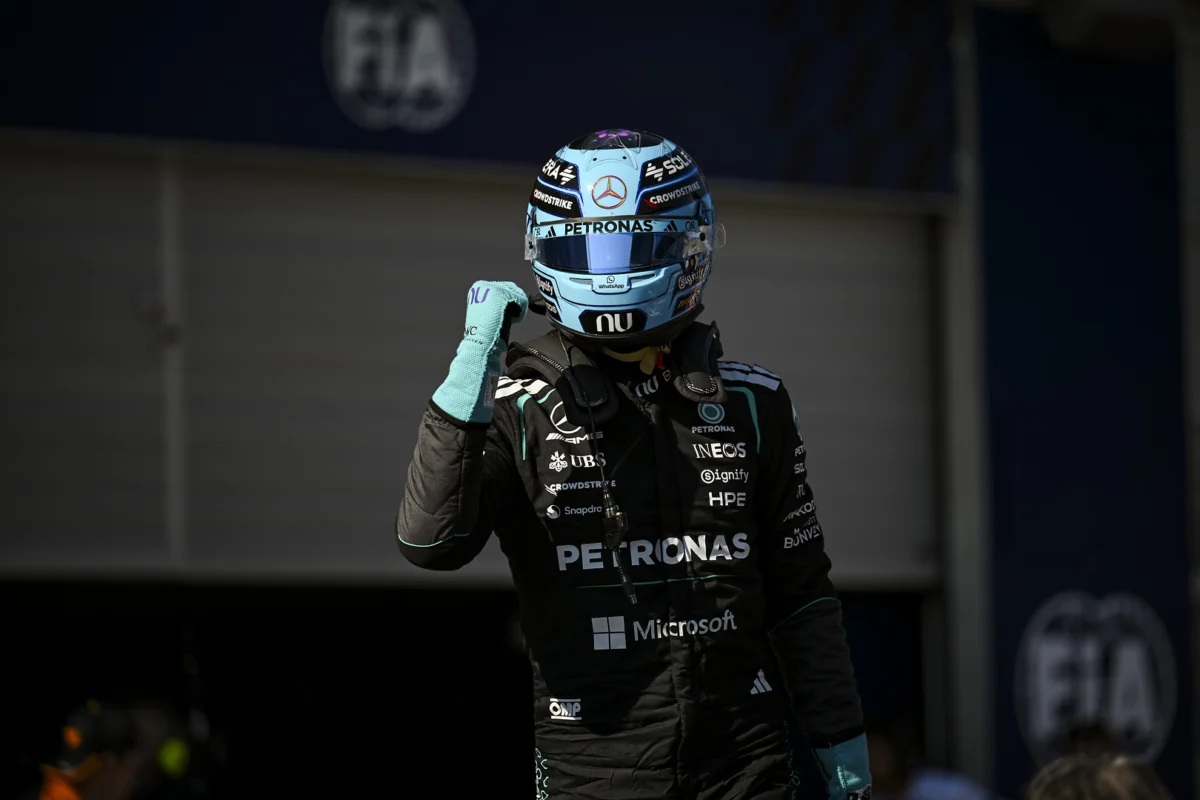
The Red Bull Ring has long been a theater of intensity, but the qualifying session for the 2026 Austrian Grand Prix scaled new heights of drama, uncertainty, and pure, unadulterated tension. In a session defined by razor-thin margins and a late-stage calamity, it was George Russell who emerged from the smoke and shadows to secure a crucial pole position for Mercedes.
Under the Styrian sun, the championship narrative shifted once again. While the spotlight had been firmly fixed on the meteoric rise of Kimi Antonelli throughout the weekend, it was the seasoned precision of Russell that snatched glory in the dying embers of Q3, clocking a blistering 1:06.113.
The Anatomy of a Pole: A Tactical Masterpiece
The margins at the Red Bull Ring are notoriously microscopic. With a lap time hovering just above the one-minute-six-second mark, every millisecond gained—or lost—in the technical sectors translates into positions on the starting grid. As the final minutes of Q3 ticked down, the track evolved into a pressure cooker.
Ferrari had looked poised to steal the show, with Charles Leclerc and Lewis Hamilton both finding impressive late-session pace. Yet, Russell’s final run was a masterclass in composure. By carving out a gap of 0.236 seconds over Leclerc and 0.295 seconds over Hamilton, Russell demonstrated exactly why he remains a cornerstone of the Mercedes operation. His performance was not merely a result of raw speed, but of timing—finding the perfect window on a track that was rapidly shifting in grip and temperature.
Chronology of a High-Stakes Saturday
Q1: The Tightest Field in Recent Memory
The opening session set the tone for the day. The field was remarkably compact, emphasizing that in 2026, the gap between the front-runners and the midfield is thinner than ever. Kimi Antonelli, the championship leader, set an early marker with a 1:07.083, asserting his dominance after topping both practice sessions.
However, it was not all smooth sailing for the Silver Arrows. George Russell radioed his engineers early on, complaining that his car felt like it was "sliding on all four wheels," a testament to the tricky wind conditions that often plague the Spielberg circuit. Meanwhile, the elimination zone claimed some high-profile scalps. Carlos Sainz, hindered by a significant slide in the final corner, could only manage 17th, while the Cadillac team suffered a catastrophic afternoon, failing to extract any pace from their latest aerodynamic package, leading to the early exits of Sergio Perez and Valtteri Bottas. Aston Martin’s struggles continued, with Fernando Alonso and Lance Stroll locking out the back row.
Q2: Wolff’s Ultimatum and the Near Misses
The second session saw Antonelli continue his imperious form, topping the timesheets with a 1:06.763. Russell, however, found himself on the back foot after an excursion at Turn 3. The tension was palpable, prompting Mercedes Team Principal Toto Wolff to deliver a blunt, no-nonsense directive over the radio: "George, just drive."
The message hit home. Russell responded with a clinical 1:06.979 to secure his spot in the final shootout. The drama was equally intense at the cutoff line, where Pierre Gasly pushed Max Verstappen to the absolute limit. The Dutchman barely scraped into Q3, leaving Gasly to settle for a frustrating 11th, leading a group of eliminated drivers that included Gabriel Bortoleto, Ollie Bearman, and Esteban Ocon.
Q3: The Turning Point
The final session was where the script was violently rewritten. Antonelli set the initial pace, but the session was interrupted by the incident that would define the afternoon. Max Verstappen, pushing his Red Bull to the absolute limit in a bid to overcome the Mercedes pace, lost the rear end of his car entering Turn 9.

The resulting crash was violent, sending the Dutchman sliding across the gravel and into the tire barriers at high speed. While Verstappen walked away unscathed, the incident triggered a flurry of yellow flags that effectively ended the qualifying hopes of the rest of the field.
The Controversy of the Yellow Flag
The aftermath of the Q3 session was marked by confusion. As the yellow flags waved following Verstappen’s accident, Kimi Antonelli notably lifted off the throttle, believing the rules mandated an immediate reduction in speed. Russell, however, kept his foot down, later claiming he had complied with the necessary speed reductions in the relevant zones.
The stewards spent the post-qualifying hours pouring over telemetry and video evidence. Ultimately, they ruled in favor of the Mercedes driver, clearing Russell of any breach of the yellow flag regulations. While the decision confirmed his pole, it sparked a flurry of debate across the paddock. Critics pointed to the discrepancy between Antonelli’s cautious approach and Russell’s aggressive pursuit of the clock. For his part, Antonelli was measured, explaining that his decision to lift was a precautionary measure based on his perception of the flags, an admission that highlights the maturity—and perhaps the hesitation—of the young championship leader.
Data and Performance: A Look at the Grid
The final standings reveal a grid that promises a tactical battle on Sunday.
- The Front Row: Russell (Mercedes) and Leclerc (Ferrari) lead the charge. The Ferrari duo of Leclerc and Hamilton have shown incredible race pace, and their ability to challenge the Mercedes from the start will be the primary narrative of the race.
- The Midfield Squeeze: The presence of both Racing Bulls in the top ten, with Liam Lawson and Arvid Lindblad, indicates that the "B-team" of the Red Bull stable is extracting maximum performance from their current configuration.
- The McLaren Factor: Lando Norris (6th) and Oscar Piastri (7th) are perfectly positioned to capitalize on any mistakes from the top five. McLaren has been the dark horse of the 2026 season, and their race strategy will likely be aggressive.
Official Responses and Implications
Max Verstappen’s Frustration
For the local crowd, the sight of the Red Bull in the barriers was a sobering moment. Verstappen, usually the model of consistency, admitted he could not fully explain the loss of control. "I was on the limit, and the car just snapped," he noted. Despite the heavy impact, the Red Bull engineering team confirmed the car could be repaired for the race, though starting from 5th on a circuit where overtaking is difficult will force a change in strategy.
The Mercedes Internal Battle
The dynamic between Russell and Antonelli is rapidly becoming the most compelling story of the 2026 season. With Antonelli holding the championship lead and Russell claiming the pole, the internal pressure at Mercedes is at an all-time high. Toto Wolff now faces the delicate task of managing two drivers who are clearly at the peak of their performance but have differing approaches to race management and rule interpretation.
Looking Toward the Grand Prix
Sunday’s race is set to be a tactical chess match. With the Red Bull Ring’s short lap, the start will be crucial. Mercedes will look to use their front-row advantage to break the tow, while Ferrari will look to utilize their superior tire management to stretch the stint lengths.
Behind them, the midfield remains a volatile mix of hungry drivers looking to prove their worth. The championship is not just about the points scored at the front; it is about the consistency of the entire grid. As the sun sets on a chaotic Saturday in Austria, one thing is certain: the 2026 Grand Prix will be decided by those who can keep their heads when the rest of the field is falling to pieces.
George Russell has earned his place at the front of the pack, but with Leclerc, Hamilton, and a wounded but dangerous Verstappen breathing down his neck, the road to the podium will be anything but simple. The stage is set for a historic encounter.