

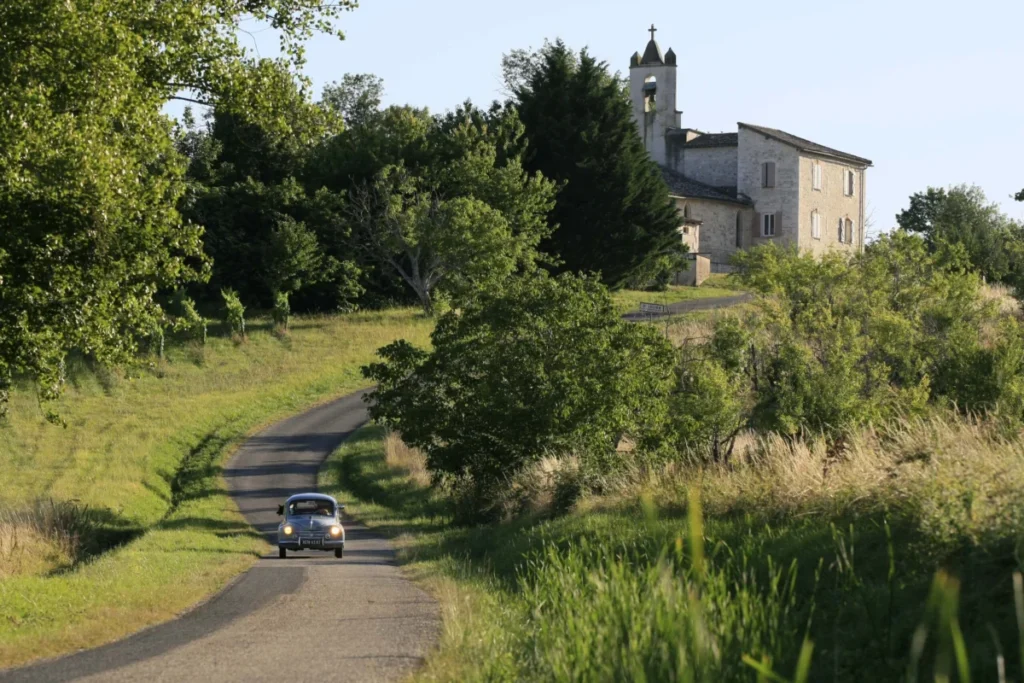
CAUSSADAIS REGION, FRANCE – Nestled at the crossroads of Quercy, Albigeois, and Rouergue, the Caussadais region unfurls a tapestry of sun-drenched landscapes, where rolling hills give way to fertile orchards and vineyards. Here, the Aveyron River carves dramatic gorges, revealing monumental cliffs that stand as silent sentinels to centuries of history. This wild, captivating beauty, coupled with a rich architectural heritage, offers an intoxicating allure to any traveler. It is into this enchanting panorama that Jean-Claude Lavergne, a local classic car enthusiast, invites us for a poignant escapade, his iconic Renault 4 CV serving as our trusty steed, accompanied by his beloved canine mascot, Princesse. This journey is more than just a drive; it’s a deep dive into the soul of a land shaped by nature, history, and the indomitable spirit of its people.
From the moment the wheels of the vintage Renault 4 CV hit the winding roads, the promise of discovery hangs in the air. The Caussadais, a lesser-known gem of Occitanie, beckons with its unique blend of bucolic charm and rugged grandeur. The "onctueux soleil" – a creamy, gentle sun – bathes the landscape, ripening fruits and vines that have sustained communities for millennia. Our guide, Jean-Claude, with his deep knowledge of the region and an infectious passion for classic automobiles, embodies the spirit of local ambassadorship, offering a personal and authentic perspective on this extraordinary corner of France.
Main Facts: A Classic Car Odyssey Through Occitanie’s Hidden Treasures
This remarkable journey, expertly documented by Rodolphe Goupil, embarks from the gentle foothills of Quercy, bordering the Lot département to the north. It’s a region where the human imprint stretches back to the late Neolithic period, evidenced by the numerous megalithic dolmens that dot the landscape, silent testaments to ancient civilizations. These natural bounties, a veritable "corne d’abondance" – horn of plenty – have long provided wine, fruits, truffles, saffron, and lamb, fostering the growth of countless medieval villages whose charm remains undimmed by time.
The itinerary unfolds like a carefully crafted story, leading us through picturesque locales such as Guillau, where typical regional architecture can be admired from the roadside. A pivotal moment arrives at the suspended bridge of Cazals, which gracefully spans the Aveyron River, bathed in the soft glow of an early morning light. This idyllic scene soon gives way to a profound historical narrative as the route ascends towards the Aveyron Gorges, a landscape of breathtaking beauty intertwined with a powerful legacy of French Resistance during World War II.
Our ambassador, Jean-Claude Lavergne, a former coach painter with an unwavering dedication to classic cars, is a familiar figure in Tarn-et-Garonne. His knack for organizing rallies for fellow enthusiasts speaks volumes about his passion for sharing the joy of vintage motoring and the beauty of his home region. The journey is not just about the scenic vistas but also about immersing oneself in local life, with a recommended stop at the Guinguette du Manjo-Carn, a timeless local institution. This riverside eatery offers a delightful pause for refreshment, with the added luxury of a private beach for a refreshing dip in the clear waters of the Aveyron.
The culmination of this expedition is Saint-Antonin-Noble-Val, aptly dubbed the "jewel of the valley." This medieval city, dominated by the majestic limestone ramparts of Roc d’Anglars, sits strategically at the confluence of the Aveyron and Bonnette rivers, marking the historical intersection of Rouergue, Quercy, and Albigeois. Founded in the 8th century around a Benedictine abbey, Saint-Antonin-Noble-Val is renowned for its vibrant Sunday market, considered one of the finest in Occitanie, a bustling hub for artisanal crafts and local produce. Beyond its market, the town boasts an array of architectural wonders, from the venerable Maison Romane to the former Genovefains convent, the charming Maison de l’Amour, the historic Maison du Roy, and the ancient Tanneries. For those with a geological inclination, the nearby Grotte du Bosc offers a subterranean marvel, a testament to millennia of water erosion, revealing a stunning diversity of concretions and mysterious underground secrets.
Chronology: Echoes of the Past in a Living Landscape
The Caussadais region’s narrative is deeply etched into its very foundations, a chronology spanning millennia that continues to inform its present-day character.

Ancient Roots: From Neolithic Settlements to Roman Influence
The presence of human activity in Quercy dates back to the late Neolithic period, a fact powerfully underlined by the numerous dolmens scattered across the landscape. These megalithic structures, often shrouded in local legend, speak of early communities who chose this fertile land for settlement, drawn by its abundant resources. These ancient inhabitants were not merely surviving; they were building, creating a cultural legacy that would endure. While the article focuses on the Neolithic, it’s worth noting that the region later fell under Roman influence, leaving behind traces of their engineering and administrative prowess, though often overshadowed by subsequent medieval developments.
Medieval Grandeur: The Birth of Villages and Abbeys
The medieval period truly saw the flourishing of the Caussadais. As the Roman Empire receded, local power structures emerged, leading to the construction of fortified villages and towns. Saint-Antonin-Noble-Val, founded in the 8th century around a powerful Benedictine abbey, exemplifies this era. Abbeys like the one in Saint-Antonin were not just religious centers but also economic and intellectual hubs, fostering agricultural development, trade, and learning. The strategic location of Saint-Antonin at the confluence of two rivers made it a significant commercial and defensive point, leading to its rapid growth and the development of its distinctive medieval urban fabric, complete with narrow streets, half-timbered houses, and impressive public buildings. The region became a patchwork of seigneuries and bastides, each contributing to the unique architectural and cultural tapestry visible today.
A Dark Chapter: The Maquis d’Ornano and the French Resistance (1943-1944)
The gentle beauty of the Aveyron Gorges belies a poignant and heroic chapter from World War II. It was here, on August 23, 1943, at the Garrhan farm, that the first "réfractaire" – a young man refusing the forced labour of the Service du Travail Obligatoire (STO) – arrived, seeking refuge in an 18th-century manor between Penne and Saint-Antonin-Noble-Val. This act of defiance sparked the formation of the 4th Section of the Corps Francs de Libération du Tarn-et-Garonne, bravely named the Maquis d’Ornano.
Composed of young patriots who chose clandestinity over collaboration, their mission was perilous yet vital: to receive crucial parachute drops of weapons, men, and provisions on the Vinchet plateau. These supplies, often from Allied forces, were essential for sustaining the resistance movement against the Nazi occupation. The Maquisards operated under constant threat, navigating a treacherous landscape of surveillance and betrayal.
The inherent dangers of their mission tragically culminated on March 21, 1944. On that sombre day, these courageous "enfants du pays" – children of the land – fell in the heart of the causse, struck down by enemy bullets. Their sacrifice, made in the pursuit of liberty, resonates deeply within the landscape, transforming the serene gorges into a hallowed ground. As Jean-Claude contemplates the sweeping views from the Corniche road today, a profound sense of freedom undoubtedly mingles with the memory of those who paid the ultimate price. The dense, inaccessible vegetation that now covers parts of the Aveyron valley serves as a silent shroud for the heroic struggles that unfolded there, reminding us of the human cost of liberty.
Supporting Data: A Rich Tapestry of Nature, Culture, and Gastronomy
The Caussadais region, and particularly the area surrounding Saint-Antonin-Noble-Val, is a treasure trove of sensory experiences, offering a wealth of supporting data that enriches the narrative of this classic car journey.
Natural Wonders: Gorges, Rivers, and Protected Species
The Gorges de l’Aveyron are a geological marvel, sculpted over millennia by the river. The "falaises monumentales" – monumental cliffs – rise dramatically, creating a landscape of breathtaking scale and wild beauty. The "route de la Corniche" offers unparalleled panoramic views, allowing one’s gaze to wander over the winding "méandres" (meanders) of the Aveyron and Vère rivers, their banks often cloaked in "végétation dense et inaccessible." This ecological richness is not merely aesthetic; it supports a delicate ecosystem. The cliffs are home to rupestrian species, birds and plants adapted to rocky habitats, many of which are "rares et protégées" (rare and protected). These species are "très sensibles aux dérangements en période de nidification" (very sensitive to disturbances during nesting season), hence the stern warning to climbers, highlighting the region’s commitment to biodiversity conservation. The clarity of the Aveyron’s waters is also noteworthy, indicative of a relatively pristine environment.

Architectural Heritage: Stones that Speak Volumes
The architectural journey through the Caussadais is a captivating one. Guillau presents typical regional structures, showcasing the traditional building materials and styles that define the area. In Saint-Antonin-Noble-Val, the density and quality of medieval architecture are exceptional. The Roc d’Anglars, a natural limestone formation, serves as a dramatic backdrop and natural rampart, enhancing the town’s defensive character. The Maison Romane, often cited as one of the oldest civil buildings in France, dates back to the 12th century and exemplifies Romanesque architecture with its distinctive arcades and carvings. The former Couvent des Génovéfains speaks to the town’s religious history, while the aptly named Maison de l’Amour and Maison du Roy hint at local legends and significant historical residents. The Tanneries, situated by the river, are a tangible link to the town’s industrial past, where animal hides were processed using the abundant water supply, contributing significantly to the local economy for centuries. Each building tells a story, collectively forming a living museum of architectural evolution.
Cultural Vibrancy: Markets, Cuisine, and Community
The Sunday market of Saint-Antonin-Noble-Val is not just a market; it’s a social institution and a vibrant expression of Occitan culture. Sprawling from the Place des Tilleuls to the Place de la Mairie, it transforms the historic center into a bustling tableau of local life. Its reputation as "l’un des plus beaux d’Occitanie" (one of Occitanie’s finest) is well-deserved, offering a cornucopia of "belles créations artisanales" (beautiful artisanal creations) – from pottery and textiles to jewelry – and a bounty of local provisions. This includes the very products mentioned earlier: truffles, saffron, regional cheeses, cured meats, fresh produce from the orchards and vineyards, and succulent lamb. It’s a place where visitors can truly "flâner" (stroll aimlessly), engage with local producers, and soak in the authentic atmosphere.
The Guinguette du Manjo-Carn represents another facet of local culture – the simple, convivial pleasure of riverside dining. Guinguettes are traditional French open-air establishments, often with dancing, located by a river or lake. The Manjo-Carn, described as an "institution locale et hors du temps" (a timeless local institution), offers delicious food and drinks in a fresh, friendly setting, embodying the relaxed pace of life in the region. The opportunity for a "tête dans l’eau" (a dip in the water) from its private beach perfectly encapsulates the informal, refreshing experience it provides, especially on a sunny day along the Corniche route.
Geological Marvels: The Grotte du Bosc
Beyond the surface, the Grotte du Bosc offers a glimpse into a "monde souterrain mystérieux" (mysterious underground world). Carved by water over millennia, this cave system is celebrated for its "grande diversité de concrétions" – stalactites, stalagmites, columns, draperies, and other unique formations that captivate with their intricate beauty and the sheer geological time they represent. It’s a reminder of the powerful, unseen forces that have shaped this region’s landscape from below.
Official Responses: Preservation and Promotion of a Rich Heritage
While the original article does not feature direct quotes from government officials or specific institutional statements, the existence and description of the sites and activities within the Caussadais region implicitly reflect official and communal responses to its unique heritage.
Environmental Protection and Management:
The explicit warning to alpinists regarding "espèces rupestres, rares et protégées, très sensibles aux dérangements en période de nidification" in the Aveyron Gorges strongly indicates the involvement of environmental agencies and local authorities in conservation efforts. This typically falls under the purview of regional natural parks (Parcs Naturels Régionaux), local municipalities, and national environmental regulations. Such warnings imply designated protected zones, possibly with seasonal restrictions on access, and public awareness campaigns aimed at minimizing human impact on vulnerable wildlife. These bodies are responsible for ecological monitoring, habitat preservation, and ensuring that tourism and recreational activities are conducted sustainably. The emphasis on these protected species highlights a conscious effort to balance visitor access with ecological imperative.
Cultural and Historical Heritage Preservation:
The meticulous preservation of medieval towns like Saint-Antonin-Noble-Val, with its "sublimes bâtisses" like the Maison Romane, the former Genovefains convent, Maison de l’Amour, Maison du Roy, and the Tanneries, speaks volumes about the commitment of local municipalities and regional cultural departments. These entities often work in conjunction with national bodies like the Monuments Historiques (Historic Monuments) or Direction Régionale des Affaires Culturelles (DRAC) to classify, restore, and maintain historical buildings. Funding for such projects often comes from regional councils, the national government, and sometimes the European Union. The very existence of a "jewel of the valley" implies ongoing restoration, maintenance, and promotion efforts to ensure these architectural treasures endure for future generations.

Memory and Commemoration:
The detailed account of the Maquis d’Ornano and the tragic events of March 21, 1944, reveals a collective "official response" to the memory of the French Resistance. Local communities and municipalities across France are deeply invested in commemorating acts of heroism and sacrifice from World War II. This includes maintaining memorials, organizing remembrance ceremonies, and educating younger generations about their local history. While not explicitly stated, the poignant description suggests that the story of the "enfants du pays" is actively preserved and honoured, likely through local museums, plaques, and annual events that ensure their courage and commitment to liberty are never forgotten. These acts of remembrance serve not only as tributes but also as educational tools, reinforcing civic values.
Tourism Promotion and Infrastructure:
The provision of downloadable roadbooks and GPX itineraries by Gazoline, the publication featuring this article, implies a broader collaborative effort with local tourism boards. These "offices de tourisme" play a crucial role in promoting the region, developing tourist routes, and providing essential information to visitors. Their "official response" is to create an accessible and enjoyable experience, showcasing the best of what the Caussadais has to offer, from natural sites to cultural events like the renowned Sunday market. They often work with local businesses, like the Guinguette du Manjo-Carn, to ensure quality experiences and to spread the economic benefits of tourism throughout the community. The careful curation of a route that blends scenic beauty, historical depth, and local gastronomy is a direct outcome of these promotional strategies.
Implications: Sustainable Tourism, Historical Legacy, and Regional Identity
The journey through the Caussadais, as presented in the article, carries significant implications across various domains, from the future of regional tourism to the enduring legacy of its past.
Sustainable and Heritage-Focused Tourism:
The emphasis on a classic car journey through picturesque villages and natural sites points towards a model of sustainable and heritage-focused tourism. Unlike mass tourism, this approach encourages slower travel, deeper engagement with local culture, and appreciation for authentic experiences. The Renault 4 CV, an icon of French motoring, adds a nostalgic and charming dimension, attracting enthusiasts who value the journey as much as the destination. This type of tourism benefits local economies directly by encouraging visitors to frequent small businesses, artisanal markets, and traditional eateries like the Guinguette du Manjo-Carn. It promotes a respectful interaction with the environment and local communities, ensuring that the natural beauty and cultural integrity of the Caussadais are preserved rather than exploited. The provision of detailed roadbooks and GPX files further empowers independent travelers to explore responsibly.
Preserving and Honoring a Profound Historical Legacy:
The article’s detailed account of the Maquis d’Ornano and the tragic events of 1944 underscores the critical importance of preserving historical memory. The Aveyron Gorges are not just a beautiful landscape; they are a site of sacrifice and heroism. By recounting these stories, the article contributes to ensuring that the legacy of the French Resistance, and the values of liberty and courage it represents, continue to resonate. For visitors, traversing these roads becomes a pilgrimage, offering moments of reflection on the profound human cost of freedom. This historical dimension enriches the travel experience, transforming a scenic drive into a journey of remembrance and appreciation for the region’s enduring spirit. It also serves as an educational tool, particularly for younger generations, about the complexities and sacrifices of past conflicts.
Shaping Regional Identity and Pride:
The Caussadais region, situated at the historical confluence of Quercy, Albigeois, and Rouergue, possesses a multifaceted identity. This article helps to solidify and celebrate that identity, showcasing how Neolithic history, medieval splendor, and 20th-century heroism all contribute to its unique character. The blend of natural abundance (wine, truffles, saffron), architectural beauty (Saint-Antonin-Noble-Val), and vibrant local life (the Sunday market) fosters a strong sense of regional pride. For residents like Jean-Claude Lavergne, their deep connection to the land and its history is evident, and by sharing his passion, he reinforces this collective identity. Such narratives are vital for regional development, attracting new residents and businesses, and instilling a sense of belonging among its inhabitants.
Ecological Awareness and Conservation:
The mention of "espèces rupestres, rares et protégées" and the warning to alpinists highlights a growing ecological awareness and commitment to conservation. As natural spaces face increasing pressures from human activity, articles like this play a role in educating the public about the fragility of ecosystems and the need for responsible recreation. The explicit warning implies ongoing efforts by environmental organizations and local authorities to protect biodiversity, ensuring that the wild beauty of the Aveyron Gorges remains intact for future generations. This contributes to a broader understanding of the interconnectedness between human activity and environmental health.

In conclusion, this journey through the Caussadais is far more than a simple road trip. It is an invitation to explore a region where every winding road, every ancient stone, and every breathtaking vista tells a story. From the prehistoric echoes in the dolmens to the medieval grandeur of Saint-Antonin-Noble-Val, and the profound sacrifices of the Resistance, the Caussadais offers an enriching tapestry of experiences. Through the eyes of Jean-Claude and his charming Renault 4 CV, we are reminded of the enduring appeal of slow travel, the richness of local heritage, and the powerful narratives etched into the very landscape of Occitanie. It is a testament to a land that, while steeped in history, continues to thrive, welcoming visitors to discover its timeless charm and profound spirit.
Text and Photos by Rodolphe Goupil
Download the roadbook here: https://www.gazoline.net/wp-content/uploads/2026/04/Roadbook-346.pdf
Download the itinerary for your smartphone or GPS here: https://www.gazoline.net/wp-content/uploads/2026/04/Gazoline-346.gpx.zip
Find the full article in Gazoline n°346.
Order this issue on the official Gazoline shop: https://cutt.ly/gHCkJb4
