
The anticipation surrounding the 2026 edition of the 24 Hours of Nürburgring has reached a fever pitch, driven almost entirely by one name: Max Verstappen. As the quadruple Formula 1 World Champion prepares for his highly anticipated endurance debut on the legendary "Green Hell," the event organizers have been forced to implement unprecedented security measures. In a move that highlights the immense, almost uncontrollable global celebrity status of the Dutch driver, it has been confirmed that Verstappen will not participate in the traditional opening festivities, including the iconic Adenau parade, nor will he engage in public autograph sessions.
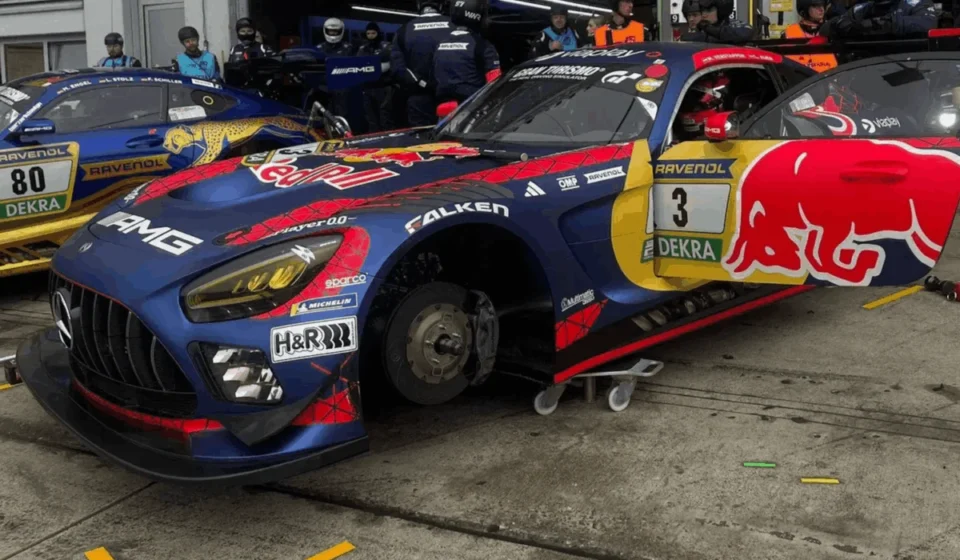
This decision serves as a stark reminder of how the gravitational pull of a modern sporting icon can reshape the logistics of even the most established motorsport events. While fans have traveled from across the globe to witness the F1 titan tackle the Nordschleife, they will have to be content with seeing him solely behind the wheel of his Mercedes-AMG GT3.
The Core Facts: A Strategy of Containment
The 24 Hours of Nürburgring is more than a race; it is a cultural phenomenon that transforms the Eifel mountains into a pilgrimage site for motorsport enthusiasts. Typically, the week is punctuated by the traditional parade through the streets of Adenau, where drivers mingle with fans in an intimate, festival-like atmosphere.
However, for the 2026 edition, Verstappen and his teammates—Jules Gounon, Dani Juncadella, and Lucas Auer—will be noticeably absent from these public-facing ceremonies. According to reports from RacingNews365, this is not a choice made by the Verstappen camp, but a mandatory directive issued by the event organizers. The rationale is simple but sobering: the potential for a "crush" scenario or uncontrolled fan movement is simply too high. With thousands of supporters expected to flood the circuit perimeter and surrounding villages, the organizers have prioritized crowd safety over the traditional promotional activities that usually define the buildup to the race.
Chronology: From F1 Paddock to the Green Hell
The path leading to this moment of high security began several months ago, marked by a deliberate and calculated transition for Verstappen into the world of GT endurance racing.
- Early 2026: Verstappen announces his intention to compete in the 24 Hours of Nürburgring, marking his first serious foray into endurance racing outside of his virtual sim-racing commitments.
- Spring 2026: The Dutchman begins an intensive testing program on the Nordschleife. Unlike many guest drivers, Verstappen commits to multiple NLS (Nürburgring Endurance Series) events to familiarize himself with the unique, unforgiving nature of the 20.8-kilometer circuit.
- Mid-Spring 2026: During his initial competitive outings, Verstappen shocks the paddock by clinching pole position. While a subsequent technical infringement stripped him of a race win, his pace remained undeniable, cementing his status as a legitimate contender for the 24-hour race.
- Early Race Week: As the entry lists are finalized, the sheer volume of ticket sales—driven by the "Verstappen Effect"—becomes apparent. Organizers observe the logistics of the fan influx and determine that the traditional parade, which usually hosts around 50 cars, would become a safety liability if the Dutch superstar were to attend.
- The Announcement: Organizers confirm the restriction on public appearances for Verstappen, extending the "no-go" policy to autograph sessions and fan meets throughout the weekend.
Supporting Data: The "Verstappen Effect" on Ticket Sales
The impact of Max Verstappen on the Nürburgring’s commercial success is difficult to overstate. In the world of endurance racing, which often relies on a loyal but niche fanbase, the sudden infusion of F1-level interest has caused a spike in demand for tickets that the Nürburgring organizers have rarely encountered in the modern era.
Data suggests that the 2026 event has seen a record-breaking rate of ticket absorption. Industry analysts note that for every one percent increase in social media engagement surrounding Verstappen’s participation, there is a corresponding spike in ticket inquiries and hospitality bookings. This "Verstappen Premium" has essentially turned the 24-hour race into a sold-out blockbuster event months in advance.
However, this commercial success has a logistical flip side. The infrastructure of the Nürburgring—a circuit surrounded by forests, narrow access roads, and small local villages—is not designed to accommodate the type of massive, surging crowds typical of a Formula 1 Grand Prix at a purpose-built circuit like Silverstone or Spa. The decision to keep the driver shielded from the public is an admission that the sport’s popularity has outpaced the venue’s capacity for crowd control.
Official Responses and Safety Protocols
The silence from the Verstappen camp regarding these restrictions is, in itself, a testament to the professionalism of his team. There have been no complaints or public disputes; rather, there is a mutual understanding between Red Bull, the driver, and the event organizers that the primary goal is the successful completion of the race.
A spokesperson for the race organizers noted: "We are honored to host a driver of Max’s caliber. However, our first responsibility is the safety of our fans and the security of our competitors. Given the overwhelming interest, we have collectively decided that minimizing public-facing interactions for Max is the only way to ensure the weekend remains focused on the sporting competition."
This approach aligns with the stringent security measures seen in other high-profile sports. By treating the situation as a security protocol rather than a celebrity preference, the organizers have effectively neutralized potential criticism from fans who might otherwise feel "snubbed."
Implications: The Future of Star Power in Endurance Racing
The events at the 2026 24 Hours of Nürburgring raise broader questions about the evolution of endurance racing. Historically, the charm of events like the 24 Hours of Le Mans or the Nürburgring 24 has been the accessibility of the drivers. Fans could walk through the paddock, see the cars up close, and get an autograph from legends of the sport.
With the entry of F1 superstars, that culture of accessibility is being tested. If global icons continue to compete in these events, organizers may have to move toward a tiered-access model.
The "F1-ization" of Endurance
The arrival of a figure as influential as Verstappen signals a shift in the status of GT racing. It is no longer just a hobbyist’s playground or a manufacturer’s marketing exercise; it is now a stage for the world’s best drivers to prove their versatility. However, as this "F1-ization" continues, the industry must grapple with:
- Crowd Management: Can historic tracks like the Nürburgring handle the "mega-star" crowd? Future events may require dedicated fan-zones with ticket-only access for meet-and-greets to prevent the mass surges currently feared.
- Driver Welfare: If a driver is constantly being mobbed, their ability to rest and prepare for the physically taxing task of driving for 24 hours is compromised. Protecting the driver is a competitive necessity.
- Media Accessibility: The shift away from public autograph sessions might see a move toward more controlled, digital-first media interactions, where fans can see the driver via broadcasts or exclusive interviews rather than in person.
The Sporting Context: Can the Star Live Up to the Hype?
Beyond the security concerns, there remains the sport itself. Verstappen’s transition to the Nordschleife is one of the most intriguing technical stories in recent years. The Nordschleife is notoriously difficult to learn, requiring hundreds of laps to master the nuances of its elevation changes, weather patterns, and blind corners.
Verstappen’s decision to pair with heavyweights like Jules Gounon—a multiple-time winner of the event—shows that he is not treating this as a vanity project. He is aiming for the podium. The Mercedes-AMG GT3, a car known for its balance and drivability, appears to be the perfect weapon for a driver who favors a sharp, responsive front end.
His performance in the qualifying sessions will be the first true indicator of whether he has managed to internalize the "rhythm" of the track. While he is widely regarded as the fastest man in motorsport, the 24 Hours of Nürburgring demands a different set of skills: managing traffic, avoiding the "lap-time trap" in the dark, and maintaining focus while the car begins to suffer from the stresses of 24 hours of abuse.
Conclusion
The 2026 24 Hours of Nürburgring will be remembered as the race where Max Verstappen turned endurance racing into a global headlines-maker. While the lack of public appearances may disappoint those hoping for a signature or a selfie, it is a necessary compromise to protect the integrity of the event.
As the cars line up on the grid, the focus will shift from the crowds to the cockpit. Whether or not Verstappen stands on the top step of the podium, his presence has already fundamentally altered the landscape of the race. For now, the "Green Hell" remains a place where speed and strategy reign supreme—and for this weekend, even the biggest star in the world must play by the rules of the track.