

In the pantheon of sports car history, few transitions were as scrutinized, debated, and ultimately vindicated as Porsche’s shift from air-cooled to water-cooled engines with the introduction of the 996 generation in the late 1990s. Today, nearly three decades after it first rolled off the assembly line in Stuttgart, the early-build 1999 Porsche 911 Carrera Cabriolet has transitioned from a controversial newcomer to a celebrated modern classic.
A prime example of this automotive turning point—a California-grown, 71,000-mile 996.1 convertible finished in timeless Arctic Silver Metallic over black leather—has surfaced in the collector market. Equipped with the coveted six-speed manual transaxle and a naturally aspirated 3.4-liter M96 flat-six engine, this drop-top icon encapsulates the analog-meets-digital sweet spot of late-90s sports car engineering. Offered with a clean California title and a documented history that includes recent preventative maintenance, this early 996 provides an accessible entry point into pure-bred Porsche ownership.

Main Facts: Specifications and Equipment
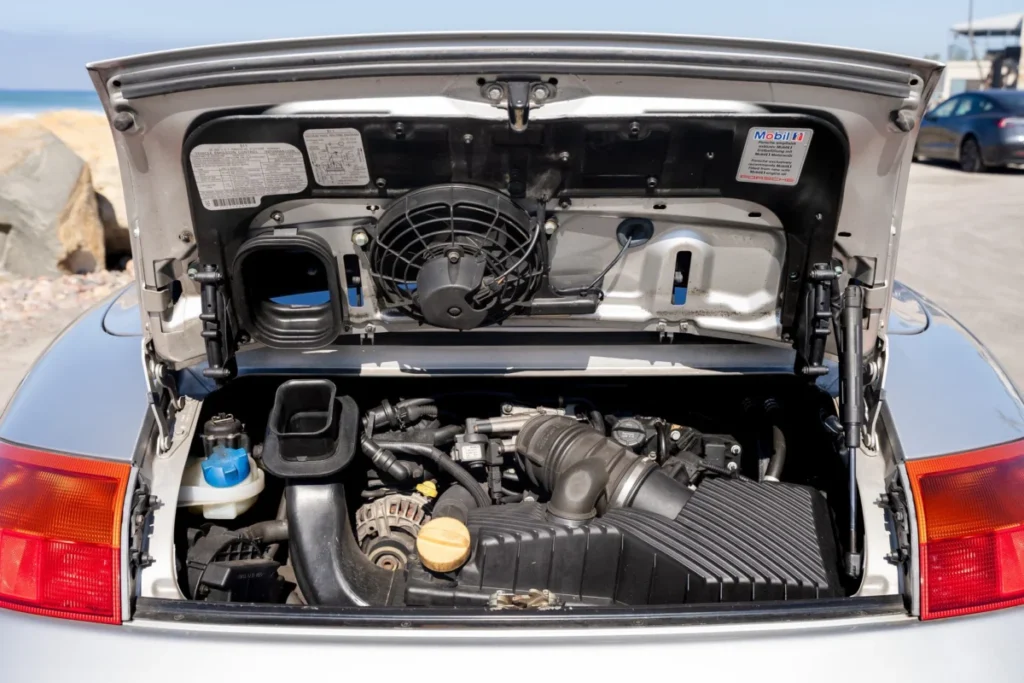
At the heart of this 1999 Porsche 911 Carrera Cabriolet lies the revolutionary M96 engine architecture. As the first water-cooled flat-six to power the iconic 911 line, the 3.4-liter powerplant represented a monumental engineering leap forward for the German marque, delivering improved thermal efficiency, tighter emissions compliance, and higher specific power outputs than its air-cooled predecessor.
Powertrain and Performance
- Engine: 3.4-liter M96 dual-overhead-cam (DOHC) flat-six.
- Horsepower: Factory-rated at 296 hp.
- Torque: 258 lb-ft.
- Transaxle: 6-speed manual transmission sending power exclusively to the rear wheels.
- Differential: Equipped with a limited-slip differential, enhancing traction and cornering dynamics.
Exterior Presentation
The car is painted in its factory-correct Arctic Silver Metallic (L92U), a hue that accentuates the fluid, aerodynamic lines of the 996 body style.

- Soft Top: A contrasting manual/power-operated black convertible soft top that stows neatly beneath a hard tonneau cover.
- Aero and Lighting: Integrated front fog lights, a speed-activated deployable rear spoiler that rises at highway speeds to reduce lift, and dual exhaust outlets finished with polished tips.
- Wheels and Tires: Staggered 17-inch five-spoke alloy wheels wrapped in Falken Ziex ZE950 A/S tires, providing reliable grip across varied driving conditions.
Cabin Comforts and Electronics
Inside, the cabin is swathed in black leather upholstery, blending driver-focused ergonomics with grand-touring amenities.
- Seating: Power-adjustable front sport seats featuring pronounced side bolstering (with notable wear visible on the driver’s outer bolster, reflecting its 71k-mile pedigree).
- Audio and Climate: A period-correct Becker-Porsche CDR-210 stereo head unit paired with automatic climate control.
- Convenience: Cruise control, power windows, and central locking.
- Instrumentation: Centered around a traditional analog tachometer, flanked by a 180-mph speedometer and auxiliary gauges monitoring coolant temperature, oil pressure, voltage, and fuel level.
Chronology: A California Life
The history of this specific 996.1 Cabriolet is deeply rooted in the Golden State, having spent its entire operational life registered in California since new.

- Late 1998 / Early 1999: As an early-build variant of the 996 generation, this vehicle was manufactured during the initial production ramp-up for the 1999 model year, making it an intriguing specimen for purists interested in early production runs.
- December 2008: According to historical vehicle records, the Carfax report notes an incident involving "very minor" damage to the front end of the vehicle. Subsequent inspections indicate that the structural integrity remained uncompromised, and the car continued its regular operation in California without interruption.
- Recent Maintenance (2026): Preparing the car for its next custodian, servicing performed earlier this year included a comprehensive engine oil and filter change, alongside the installation of a brand-new battery and a replacement serpentine belt.
- May 2026: Demonstrating its compliance with strict regional environmental regulations, the sports car successfully passed a mandatory California emissions test, verifying that its emissions control systems remain in optimal working order.
Supporting Data: Safety, Mechanics, and Options
While purists often celebrate the 996 for its raw driving connection, Porsche heavily integrated advanced safety and driving-aid technologies into the chassis to tame the rear-engine layout for everyday drivers.
Chassis Dynamics and Braking
Stopping power is managed by four-piston, monobloc Porsche-branded brake calipers painted in black, clamping down on cross-drilled and vented rotors at all four corners. To ensure confident braking performance, the brake pads were entirely replaced earlier this year.

Furthermore, the vehicle is equipped with sophisticated active safety systems for its era:
- Automatic Braking Differential (ABD): Works in tandem with the braking system to optimize traction during acceleration on varying surface grips by automatically braking a spinning wheel.
- Anti-Slip Regulation (ASR): Traction control designed to prevent wheelspin under heavy throttle application, keeping the rear-wheel-drive platform stable in slippery conditions.
Official Responses and Industry Context
The legacy of the 996 generation has undergone a profound reassessment over the past decade. When Porsche introduced the 996 in 1998, traditionalists lamented the departure from the air-cooled 993, the adoption of "fried egg" headlights shared with the entry-level Boxster, and the water-cooled engine’s early mechanical reputation.

However, automotive historians and market analysts note that the 996 was the vehicle that ultimately saved Porsche from financial ruin, modernizing production processes and introducing a level of everyday usability previously unseen in the 911 lineage.
Industry experts point out that early-build 1999 models hold a special place in enthusiast circles. Notably, the 1999 Carrera featured a cable-operated throttle (E-Gas electronic throttles were introduced later), which many driving enthusiasts prefer for its direct, mechanical throttle response. Market tracking shows that clean, well-maintained 996 manuals—particularly cabriolets with documented regional histories—have steadily rebounded in value as enthusiasts recognize the model’s bargains-to-performance ratio in the classic Porsche market.

Implications: The Verdict on the 996.1 Cabriolet
For collectors and weekend warriors alike, acquiring a 1999 Porsche 911 Carrera Cabriolet represents an opportunity to experience analog sports car engineering without breaking the bank.
The Pros:
- The Pure Driving Experience: Featuring a six-speed manual transaxle, a cable-actuated throttle, and a limited-slip differential, this car delivers an unfiltered mechanical connection missing in modern, heavily computerized sports cars.
- Open-Air Thrills: The cabriolet configuration allows drivers to fully appreciate the mechanical symphony of the 3.4-liter M96 flat-six engine echoing behind the cabin.
- Verified Maintenance & Compliance: With fresh fluids, a new battery, new belts, fresh brake pads, and a recent California smog check, the car is turnkey and ready to be enjoyed on winding coastal roads.
Considerations:
- Cosmetic Patina: The visible wear on the driver’s leather seat bolster serves as a reminder of its 71k miles, though it tells the honest story of a driven driver’s car rather than a sterile museum piece.
- Historical Record: The minor 2008 front-end incident noted on the Carfax report should be vetted via pre-purchase inspection, though common consensus views minor cosmetic incidents over two decades ago as negligible for a driver-quality classic.
Ultimately, this Arctic Silver 996.1 stands as a testament to Porsche’s engineering resilience. It bridges the gap between vintage air-cooled charm and modern reliability, offering its next owner an authentic slice of Stuttgart’s most transformative era.
