

By Hugues Chaussin
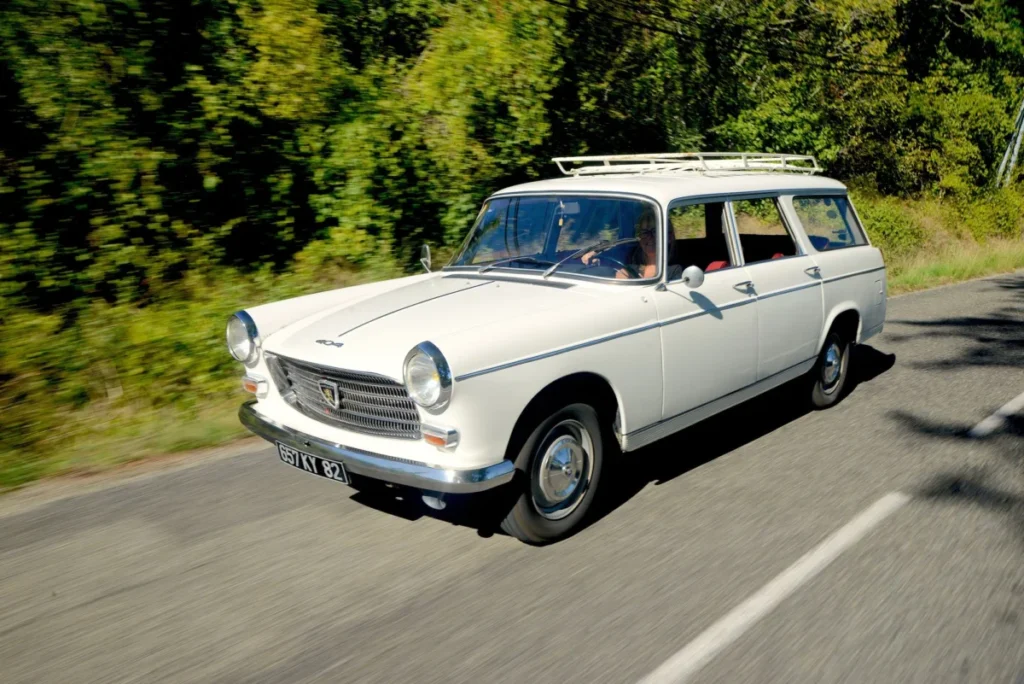
Rest assured, Gazoline is not about to become "Gazoiline." While diesel—a fuel rarely associated with the romanticism of classic car collecting—might not seem synonymous with pure automotive passion at first glance, heavy oil is woven into the very fabric of motoring history. Certain iconic vehicles, most notably the Peugeot 404 Break, are forever linked to the rhythmic, industrious clatter of the diesel engine. What better way to tackle this smoky, fascinating subject than by exploring a splendid, highly original 404 Familiale in its purest preserved state?
1. Main Facts: The Rise of the Peugeot 404 "Long" Variants
The monumental success of the Peugeot 404, whose earliest customer deliveries began in May 1960, galvanized the French manufacturer into building a comprehensive, diversified model lineup. Following the successful platform expansions seen previously with the 203 and 403, Peugeot pushed the 404 range both upward and outward.
In September 1961, the brand introduced a stunning cabriolet designed and built by Pininfarina in Italy, optionally available with fuel injection. This exclusive open-top model was joined in October 1962 by a matching coupe. At the Paris Motor Show that same year, Peugeot unveiled a triple threat:

- A luxury fuel-injected sedan (Super Luxe);
- A commercial utility variant (Limousine Commerciale Luxe);
- A massive, eight-passenger estate (Familiale Grand Luxe).
The latter two models belonged to the "long" (longue) body style. Developed by Peugeot’s styling department in La Garenne-Colombes, engineers stretched the standard sedan platform significantly. They increased the wheelbase by 19 centimeters and extended the rear overhang to a full meter, creating an imposing vehicle with a 2.13-meter usable floor length, 2.60 square meters of interior surface area, and 2.30 cubic meters of cargo volume.
Unlike the more eccentric or fragile station wagons of its French contemporaries—such as the utilitarian Simca breaks or the complex hydropneumatic Citroën DS breaks—the Peugeot 404 long struck a pragmatic balance. It fused signature Peugeot elegance with rugged utility, creating a multi-purpose machine designed to serve tirelessly, even if it meant sacrificing a few stylistic vanities on the altar of pure reason.
2. Chronology: Milestones in Peugeot and Indenor’s Diesel History
The trajectory of the Peugeot 404 diesel is inextricably linked to the history of Indenor, the pioneering engine-building subsidiary that placed diesel passenger cars on the map in France.
- 1898: The Compagnie Lilloise de Moteurs (CLM) is founded in Lille, laying the industrial groundwork for what would eventually become a powerhouse of heavy-oil engine design.
- 1928: CLM engineers successfully develop their very first heavy-oil engine, marking the true conceptual dawn of the enterprise’s diesel expertise.
- 1955: CLM is reorganized and renamed the Compagnie Générale de Moteurs.
- 1958: Peugeot launches its first mass-produced passenger car diesel engine: the TMD, producing 48 horsepower. Simultaneously, the manufacturing entity is officially branded as Indenor (Société Industrielle de l’Est et du Nord), operating as a dedicated Peugeot subsidiary.
- Late 1930s – 1940: Just before the outbreak of World War II, experimental heavy-oil engines are fitted into a small fleet of Peugeot 402 taxis. Plans are laid to commercialize diesel-powered passenger cars for the general public by 1940, but the conflict abruptly halts the project, freezing the "pre-history" of Sochaux and Lille diesel development.
- May 1960: Deliveries of the standard Peugeot 404 petrol sedan commence, paving the way for the sweeping rollout of the expanded model range.
- October 1962: Debut of the long-wheelbase 404 variants (Commerciale and Familiale) at the Paris Motor Show, offering dependable diesel powerplants alongside traditional carbureted and injected petrol engines.
- 1967: A watershed year for the 404 family, marking its peak production volume with nearly 220,000 units manufactured in a single calendar year.
- Mid-1970s: Indenor diesels transition from a clever niche alternative to becoming an absolute powerhouse of the European automotive industry, cementing Peugeot’s reputation for indestructible oil-burners.
3. Supporting Data: Specifications and Production Metrics
To understand why the Peugeot 404 long-wheelbase variants earned such a sterling reputation among fleet operators, rural families, and taxi drivers alike, one must examine the engineering metrics behind the iron curtain of the bonnet.

Dimensional and Structural Specifications
- Wheelbase: Extended by 19 cm over the standard sedan.
- Rear Overhang: Exactly 1 meter.
- Usable Floor Length: 2.13 meters with rear seats stowed.
- Interior Floor Area: 2.60 square meters.
- Cargo Volume: 2.30 cubic meters.
- Interior Height: 90 centimeters at the rear cargo bay.
- Tailgate Design: Articulated above the lateral gutter line, featuring a raised, cap-style roof peak for optimized loading clearance.
- Payload Capacity (Commerciale): 500 kilograms, featuring two rows of benches (the rear bench being fully foldable).
- Passenger Capacity (Familiale): Up to 8 occupants, including two passengers seated on a transverse auxiliary bench equipped with an articulated backrest placed adjacent to the third side window.
Production Milestone
- 1967 Calendar Year Output: Surpassed 220,000 units globally, driven heavily by the multi-body strategy introduced in the early 1960s.
4. Official Perspectives and Engineering Philosophy
From an industrial standpoint, Peugeot’s embrace of diesel technology was a calculated gamble that paid off beyond expectations. While competitors viewed diesel engines as loud, sluggish, and unworthy of refined passenger cars, Peugeot’s engineering arm recognized that durability, low fuel consumption, and high torque were paramount for commercial and long-distance users.
In period corporate communications, Peugeot emphasized that the Indenor-powered 404 did not compromise on reliability. The decision to house a compression-ignition engine inside an elongated, elegant shell was defended as a masterclass in utility.
"Our goal," noted a contemporary Peugeot engineering memo from the La Garenne-Colombes design bureau, "is not to build sports cars that sip fuel, but to construct tireless beasts of burden that carry families and freight across continents without complaint. The integration of the heavy-oil engine transforms the 404 long from a simple estate car into an economic institution."
By leaning into the industrial heritage of the Compagnie Lilloise de Moteurs and streamlining production through Indenor, Peugeot insulated itself from fuel price volatility decades before the oil crises of the 1970s made diesel a household term in Europe.

5. Implications: The Legacy of the Oil-Burning Classic
The historical footprint of the diesel-powered Peugeot 404 Familiale and Commerciale extends far beyond assembly line tallies. By proving that a compression-ignition engine could live harmoniously within a stylish, highly functional passenger vehicle, Peugeot laid the groundwork for the diesel passenger car boom that dominated European roads for the next half-century.
Today, finding a pristine, highly original survivor like the one photographed by Hugues Chaussin is an exercise in automotive archaeology. These cars were rarely bought as weekend toys; they were worked to the bone, loaded down with merchandise, pressed into taxi service across sun-baked African and European cities, and driven hundreds of thousands of miles before meeting their demise in scrapyards.
As a result, a preserved, matching-numbers 404 diesel break in original condition represents a rare chapter of automotive history. It reminds modern collectors that passion is not restricted to high-revving petrol carburetors or screaming sports coupes. Sometimes, true reverence belongs to the steady, unglamorous thrum of an Indenor diesel engine—a mechanical heartbeat that helped build modern industrial mobility.
For the complete, unabridged feature, discover Gazoline issue #352, available for order on the official Gazoline store.
