

PARIS, FRANCE — In an era dominated by heavy crossover SUVs, digital minimalism, and hybrid powertrains that weigh as much as small chalets, the golden age of the lightweight French hot hatch feels like a distant memory. Yet, for a dedicated subculture of automotive enthusiasts, the 1990s and early 2000s remain the undisputed high-water mark of accessible driving thrills.
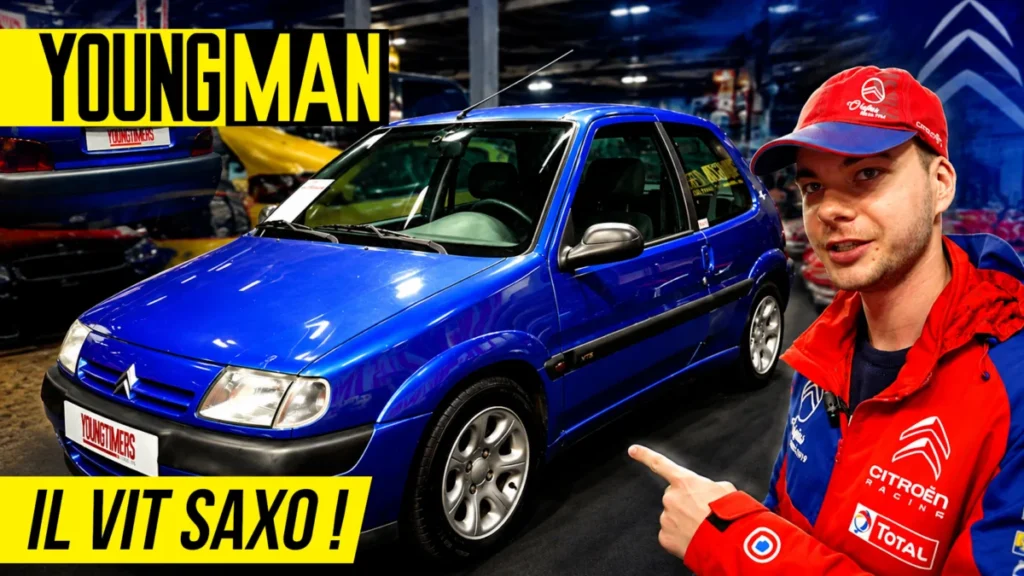
Enter the Citroën Saxo VTS 16v—a car that, in its heyday, was the undisputed terror of B-roads and city streets alike. Recently, the automotive community on YouTube, specifically via the channel Youngtimers La Chaîne, turned its lens toward one exceptionally well-preserved example of this modern classic. In a feature interview, owner Jordan proudly showcases his pristine Citroën Saxo VTS 16v finished in the iconic Bleu Grand Pavois.
This comprehensive profile explores Jordan’s journey with his pocket-rocket, the cultural legacy of the Saxo VTS, crucial buying advice for prospective youngtimer collectors, and the enduring appeal of analog French performance cars.
1. Main Facts: The Legend of the Citroën Saxo VTS
To understand why Jordan is so fiercely protective of his Saxo VTS, one must first understand the vehicle’s pedigree. Released in the mid-1990s as a successor to the AX, the Citroën Saxo arrived at a time when PSA (Peugeot Citroën) was a masterclass in producing lightweight, high-revving, dynamically brilliant small cars.
While lesser Saxo models were grocery getters, the VTS—especially the 16-valve (16s) variant powered by the legendary 1.6-liter TU5J4 engine—was something entirely different. Weighing in at just under 950 kilograms, the Saxo VTS punched well above its weight class. Pushing out roughly 120 horsepower in standard trim, its power-to-weight ratio made it devastatingly quick on twisty backroads, frequently embarrassing machinery with twice its displacement and triple its price tag.
Jordan’s car, coated in the vibrant Bleu Grand Pavois, represents the pinnacle of this era. It is not merely a mode of transport; it is a rolling time capsule of a period when hot hatches relied on razor-sharp handling, communicative steering, and high-revving naturally aspirated engines rather than electronic torque vectoring and computerized dampening.
2. Chronology: From Family Roots to a Four-Wheeled Dream
The video feature on Youngtimers La Chaîne takes viewers through a structured timeline of Jordan’s automotive life, mapping out how a passion for motorsport and family influence culminated in his ownership of the Saxo VTS.
00:00 – 01:22: The Genesis of a Passion
Jordan’s journey begins with his early exposure to the automotive world. Like many French enthusiasts of his generation, his love affair with cars was forged in the passenger seat of everyday French hatchbacks, listening to the induction roar of tuned engines and watching rallying on television.
01:23 – 03:29: The Hunt for the Right Spec
Finding a clean, unmolested Saxo VTS today is akin to finding a needle in a haystack. Most were modified poorly, tracked hard, or succumbed to structural rust and accidents during their depreciation trough. Jordan details the rigorous search process he undertook to locate his vehicle, weeding through neglected examples, overpriced tuner specials, and cars with dubious histories before finally securing his dream specification.
03:30 – 04:39: A Family Affair with Motorsport
Citroën’s rich heritage in the World Rally Championship (WRC)—dominated later by legends like Sébastien Loeb in the Xsara and C4, but built on the grassroots success of AX and Saxo kit cars—played a massive role in Jordan’s brand loyalty. For him, owning a Saxo isn’t just about the badge; it’s about connecting with Citroën’s golden era of motorsport dominance.
04:40 – 06:05: The Moment of Temptation
What makes a driver finally pull the trigger on a 1990s hot hatch? Jordan explains the visceral emotional trigger: the analog connection, the lack of filters between driver and road, and the sheer nostalgia of an era when cars possessed distinct personalities.
3. Supporting Data: The Buyer’s Guide and Ownership Realities
One of the most valuable segments of Jordan’s interview (spanning from 06:06 to 12:19) is his deep dive into the practicalities of owning and maintaining a Saxo VTS today. As values for clean youngtimers continue to appreciate, prospective buyers need to know what they are walking into.
Common Mechanical and Structural Weaknesses
- The Rear Axle: Like its cousin the Peugeot 106 S16, the Saxo is notorious for rear axle wear. Needle bearings fail over time, leading to negative camber on the rear wheels and expensive rebuilds if ignored.
- Rust Inspection: While galvanization helped, early models are susceptible to rust in the rear chassis legs, floorpans, and around the sunroof seals (if equipped).
- Electrical Gremlins: French electronics from the turn of the millennium can be temperamental. Buyers must check the airbag warning lights (a notoriously common MOT/Control Technique failure point), central locking, and window regulators.
- Engine Maintenance: The TU5J4 engine is robust, but it demands strict adherence to timing belt replacement intervals (every 5 years or 60,000 km) and quality oil changes. Valve clearances should also be monitored.
Interior and Ergonomics (12:20 – 18:14)
Step inside Jordan’s Saxo, and you are greeted by quintessential 90s cabin architecture: dark plastics, semi-bucket seats upholstered in a mix of cloth and leather/alcantara (depending on the phase), and simple, orange-lit instrument clusters. It is Spartan by modern standards, lacking touchscreen infotainment or multi-zone climate control, but this simplicity is precisely what modern drivers find liberating. There are no menus to navigate—just a steering wheel, a short-throw shifter, three pedals, and dials that tell you precisely what the engine is doing.
4. Official Perspectives and Cultural Impact
To contextualize Jordan’s experience, automotive historians and classic car market analysts have increasingly pointed toward 90s hot hatches as the next big frontier in collector car investment.
Speaking broadly on the phenomenon of modern classics, French automotive market analysts note a distinct shift in consumer sentiment:
"We are witnessing a generational handoff," explains a leading European youngtimer appraiser. "Booster-generation collectors are moving away from 1960s and 70s grand tourers because the driving experience feels too disconnected from modern realities. Millennials and younger Gen-Xers want the cars they posters of as teenagers—cars they can actually service in their garages, cars that communicate through the steering wheel at legal highway speeds."
Citroën itself, while currently focused on electric mobility and comfort-oriented crossovers like the C4 and C5 X, occasionally nods to its spirited past. However, company representatives acknowledge that the strict safety and emissions regulations of the 21st century make the creation of a direct, ultra-lightweight spiritual successor to the Saxo VTS an impossibility in the modern regulatory climate. This realization only serves to elevate the status of surviving original examples like Jordan’s.
5. Implications: The Battle of the 90s B-Road Kings
Jordan’s deep dive into his Saxo VTS opens up a broader cultural debate that rages across online forums, car meets, and YouTube comment sections. The video poses two critical questions to the enthusiast community:
- Would you buy one today?
- Are you team Saxo VTS, Peugeot 106 S16, or Renault Clio RS?
The Eternal Rivalry: Saxo VTS vs. 106 S16 vs. Clio RS
This trinity of French hot hatch royalty defines the late 90s and early 2000s performance landscape:
- The Peugeot 106 S16: Mechanically nearly identical to the Saxo VTS, the 106 is often viewed as slightly sharper in its styling and marginally more exclusive, though purists endlessly debate whether there is any real-world dynamic difference between the two PSA siblings.
- The Renault Clio RS (172/182): Stepping up a class in size and power, the Clio RS offered a larger 2.0-liter engine with significantly more punch on straightaways, though some purists argue the Saxo offers a more delicate, kart-like handling balance due to its lighter curb weight.
Jordan’s unwavering loyalty to his Bleu Grand Pavois Saxo highlights a growing sentiment: ownership of these vehicles is no longer just about transportation or even weekend track days—it is about preserving a vanishing philosophy of automotive engineering.
Conclusion: A Dream That Extends Beyond Four Wheels
As the interview draws to a close around the 18:15 mark, Jordan shares his ultimate automotive aspirations—his dream garage and his future goals on four wheels. Yet, despite whatever exotic machinery may populate his daydreaming, it is abundantly clear that the Citroën Saxo VTS holds a permanent, unshakeable parking spot in his heart.
For anyone considering taking the plunge into the world of 90s hot hatches, Jordan’s advice is clear: do your homework, inspect the rear axle, verify the service history, and buy the best example you can afford. Because once you experience the raw, unfiltered mechanical symphony of a high-revving French sixteen-valve engine on a winding country road, you, too, will understand why Jordan refuses to ever let his Saxo go.
To watch the full feature and immerse yourself in the vibrant exhaust notes and detailed walkaround of Jordan’s Citroën Saxo VTS 16v, check out the video above provided by Youngtimers La Chaîne, and don’t forget to subscribe to catch future episodes celebrating automotive nostalgia.
