

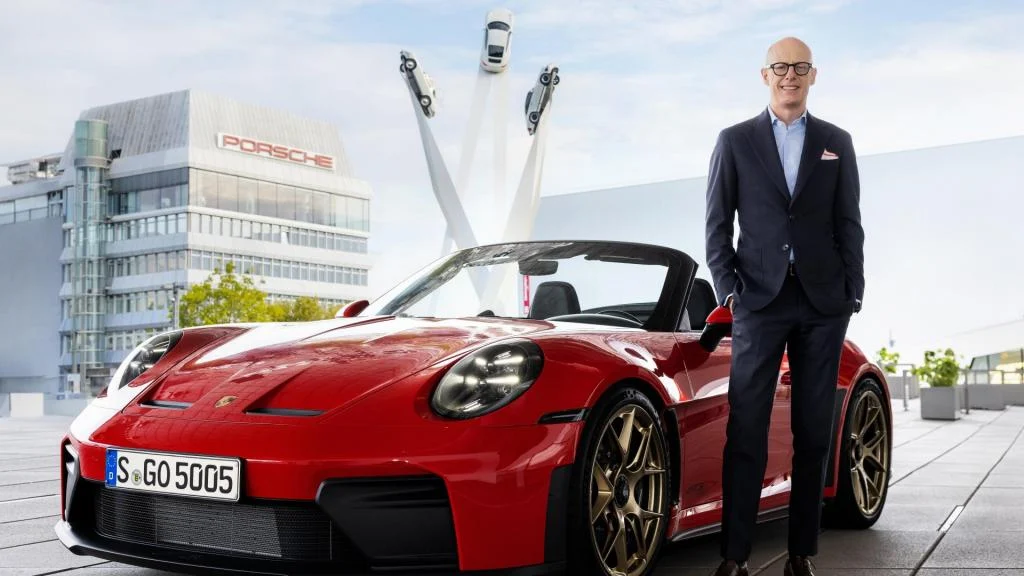
October 7, 2026 — In a move that signals a profound realignment of the global automotive hierarchy, Porsche AG has unveiled its definitive long-term roadmap through 2035. During a highly anticipated Capital Markets Day presentation, the iconic German sports car manufacturer introduced “Sportwagenschmiede ’35” (Sports Car Forge ’35), a comprehensive strategic blueprint that effectively brings to a close two decades of relentless volume-chasing.
Rather than striving to build a larger corporate footprint, Stuttgart has made a decisive commitment to prioritize value over sheer production numbers. By pivoting aggressively toward hyper-exclusivity, ultra-personalization, and rigorous structural cost-cutting, Porsche is charting a course that mirrors the elite business models of low-volume exotic marques like Ferrari.
This comprehensive analysis examines the core pillars of the "Sportwagenschmiede ’35" plan, detailing the product chronology, financial mechanics, multi-energy powertrain strategies, and structural workforce reductions that will redefine Porsche for the next decade and beyond.
1. Main Facts: The End of Volume and the Rise of "Value Over Quantity"
The cornerstone of the "Sportwagenschmiede ’35" strategy is a conceptual philosophy Porsche defines simply as "Value over Volume." For the past twenty years, the brand enjoyed immense commercial success by expanding its lineup into mainstream luxury segments, notably through the introduction of the Cayenne and Macan SUVs. While these vehicles generated critical mass and funded extensive engineering programs, Porsche’s executive board has concluded that chasing annual unit milestones has diluted the brand’s exclusivity and left it vulnerable to market volatility.
Under the new directive, Stuttgart is intentionally suppressing production ceilings to cultivate greater scarcity and pricing power. The overarching objective is to lower the company’s financial break-even point to fewer than 200,000 vehicles annually. By decoupling profitability from raw volume, Porsche aims to insulate itself against economic downturns and fluctuations in regional EV adoption rates.
To achieve this higher margin per vehicle, the brand is consolidating its high-performance, heritage, and ultra-exclusive operations under a newly minted banner: the "Home of Sports Cars." This organizational shift places a heavy emphasis on elite personalization programs. Porsche will heavily accelerate the deployment of its Exclusive Manufaktur and Sonderwunsch (special request) divisions, targeting the world’s most affluent clientele. Specifically, the company aims to scale revenues generated through the Sonderwunsch bespoke program by a staggering factor of six, while lifting average transaction prices across its top-tier portfolio by approximately 20%.
2. Chronology: The Product Roadmap Through 2030
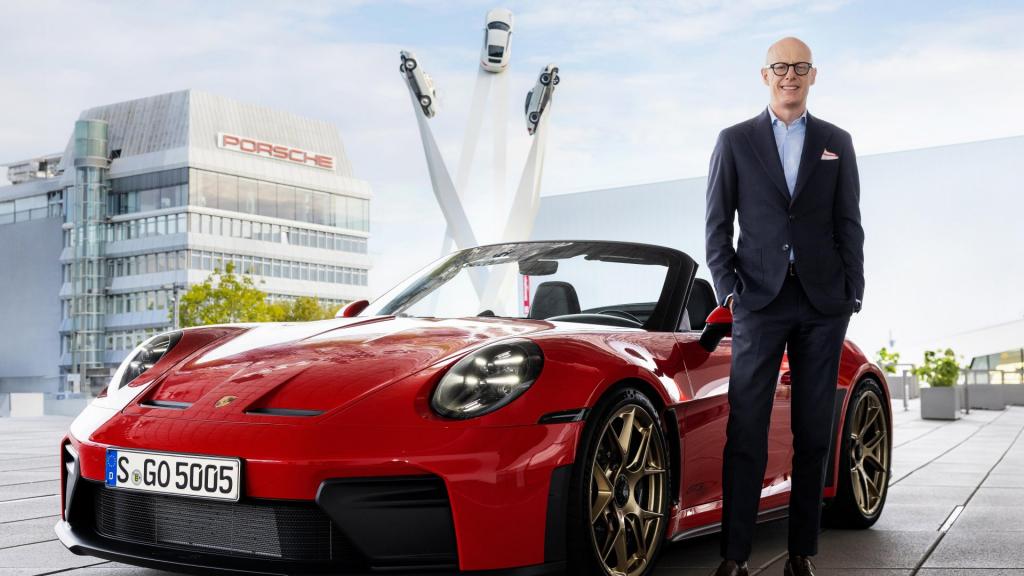
Porsche’s product pipeline between now and the end of the decade represents one of the most aggressive and diverse offensive strategies in the company’s history. Eschewing a simplistic, single-minded transition to battery-electric vehicles (BEVs), the marque has scheduled at least one major vehicle launch every single year leading up to 2030.
2026–2027: Refining the Core and Special Editions
Porsche is immediately focusing on protecting the emotional equity of its core lineup, led by ongoing updates to the immortal 911. The introduction of exclusive variants anchors the brand’s near-term sales while priming collectors for upcoming structural shifts. Concurrently, heritage-inspired models and specialized coachbuilt projects—such as the recent high-end restorations and low-volume tributes—keep enthusiast engagement at a fever pitch.
2028: The Electric Entry-Level Era and Thermal Expansion
The year 2028 marks a watershed moment for Porsche’s entry-level sports car offerings.
- The 718 Electric Duo: The long-awaited, pure-electric successors to the 718 Boxster and Cayman will hit global markets in earnest, expected to contribute meaningfully to commercial volume. Despite uneven adoption curves for luxury EVs in certain global territories, Stuttgart is pressing forward with its battery-powered sports car bet.
- The New ICE/PHEV Macan: In a pragmatic pivot acknowledging diverse global demands, Porsche will launch an all-new compact internal combustion engine (ICE) and plug-in hybrid (PHEV) SUV designed to complement, rather than completely replace, the existing electric Macan.
2029–2030: The Supercar Comeback and High-End Expansion
The back end of the decade introduces headline-grabbing halo cars destined to crown the "Home of Sports Cars" division:
- The "Super Cayenne": Porsche is actively studying an ultra-luxury, full-size SUV positioned firmly above the current Cayenne, targeting ultra-high-net-worth buyers in North America, China, and the Middle East.
- The "Type 994" 911: The backbone of Porsche’s emotional and financial stability will receive its next-generation architecture, carefully engineered to preserve the timeless rear-engine silhouette while adopting cutting-edge electronic and hybrid architectures.
- The New Flagship Supercar: For purists and investors alike, the most thrilling revelation of the Capital Markets Day is the official confirmation of a dedicated, mid-engine supercar platform positioned directly above the 911. Set to serve as a technological and emotional tour de force, this vehicle aims to recapture the legendary aura of the Carrera GT and the 918 Spyder, cementing Porsche’s status at the absolute apex of the automotive food chain.
3. Supporting Data: Unprecedented Cost Cutting and Restructuring
A dramatic ascent into ultra-luxury cannot be funded by top-line revenue growth alone; it requires a lean, highly resilient operational foundation. To achieve its target of lowering the break-even threshold below 200,000 units, Porsche is initiating a severe, multi-faceted structural cost-reduction program.
The company has confirmed the following operational adjustments:
- Workforce Downsizing: The execution of a previously announced reduction of 9,000 positions, contributing to an anticipated medium-term reduction of total headcount by 25%.
- Management Streamlining: A dramatic flattening of corporate hierarchy featuring a 40% reduction in management roles.
- R&D Efficiencies: Up to a 20% reduction in development costs, achieved through modular platform sharing and advanced digital simulation tools.
- Production Optimization: Up to a 30% reduction in production costs, driven by manufacturing automation and optimized plant footprints in Stuttgart-Zuffenhausen and Leipzig.
- Commercial Rationalization: Approximately a 20% reduction in commercial and marketing overhead, shifting focus from broad media advertising to targeted, high-touch experiential marketing for VIP clientele.
4. Official Responses and Multi-Energy Strategy
Refusing to Choose: The Multi-Energy Philosophy
While several legacy luxury competitors staked their corporate futures on rigid, all-electric deadlines, Porsche is intentionally adopting a flexible, multi-energy strategy similar to that of fellow German titan BMW.
Porsche’s leadership emphasizes that consumer demand varies wildly across geographic regions. Consequently, the company will maintain simultaneous, parallel investments across four distinct propulsion methodologies:
- High-Efficiency Internal Combustion Engines (ICE): Continually refined to meet tightening global emissions standards while preserving acoustic and mechanical engagement.
- Advanced Plug-In Hybrids (PHEV): Serving as a bridge for performance-oriented drivers seeking daily electric usability paired with unrestricted long-distance range.
- Battery Electric Vehicles (BEV): Spearheaded by the Taycan lineage and the upcoming 718 sports cars.
- Synthetic Fuels (eFuels): Porsche continues to pioneer green eFuels through its heavily publicized investments in industrial-scale production facilities (such as the Haru Oni project in Chile). This technology offers a viable pathway to keep millions of legacy combustion-engine Porsche vehicles on the road in a carbon-neutral manner long after regulatory shifts discourage fossil-derived gasoline.
Leadership Commentary
Speaking to analysts and investors during the Capital Markets Day, executive board representatives stressed that the "Sportwagenschmiede ’35" framework is an evolutionary necessity.
"We are not retreating; we are focusing," noted a senior corporate strategist during the Q&A session. "For two decades, our volume expansion proved our operational competence. Today, true competence means proving our restraint. By building fewer cars, building them better, and offering levels of personalization that no mass-market luxury brand can touch, we secure Porsche’s independence and unmatched profitability for generations to come."
5. Implications for the Market, Competitors, and Enthusiasts
The implementation of "Sportwagenschmiede ’35" carries profound ripple effects across the global automotive ecosystem:
- For Competitors: Rivals in the high-performance and ultra-luxury sectors—ranging from Aston Martin and McLaren to Ferrari and Lamborghini—must now contend with a leaner, hyper-focused Porsche. By entering the mid-engine supercar space and drastically expanding its Sonderwunsch bespoke operations, Porsche is directly encroaching on territory historically dominated by Italian boutique manufacturers.
- For Enthusiasts and Purists: The announcement delivers mixed but largely reassuring news. While fears of total electrification have been tempered by Porsche’s multi-energy stance and continued development of manual and hybrid drivetrains, the cars themselves will inevitably become more expensive and harder to acquire. The push toward ultra-exclusivity means standard production allocations will tighten, transforming modern Porsches into even more potent collector assets.
- For the Industry Workforce: The bitter pill of the strategy is the significant restructuring and job losses. The reduction of up to 25% of the workforce and 40% of management underscores the brutal economic realities facing European legacy manufacturers as they navigate the costly transition toward software-defined vehicles and sustainable manufacturing.
Ultimately, Porsche is drawing a definitive line in the sand. By shedding the skin of a volume-driven manufacturer and embracing the artisan spirit of a boutique sports car forge, Stuttgart is betting its storied legacy on a single, compelling premise: in an increasingly automated and homogenized automotive world, true value lies in rarity, emotion, and uncompromised engineering.
Related Porsche Archives & News
-
[Collector Spotlight] 1990 Porsche 928 Gemballa Wide Version II Surfaces
An exceptionally rare, vibrant yellow Porsche 928 Gemballa Wide Version II has reappeared in Germany ahead of an upcoming high-profile collector car auction, reminding enthusiasts of the wild tuning culture of the late 20th century. Read full article -
Porsche Developing a Manual Transmission Derived from the PDK?
Following Ferrari’s controversial release of the 12 Cilindri Manuale, patent filings indicate that Porsche is actively exploring a specialized manual transmission derived from its dual-clutch PDK unit, aiming to preserve tactile driver engagement in future models. Read full article -
[Collector Spotlight] The Elusive Porsche 928 Cabriolet by Straman
Crafted around 1990 by California coachbuilder Straman, the open-top 928 conversion remains one of the most sought-after and elusive custom variants of Porsche’s legendary grand tourer. Read full article
For ongoing updates, community discussions, and comprehensive technical breakdowns of upcoming Stuttgart releases, visit the official Automobile Sportive Forum.
