

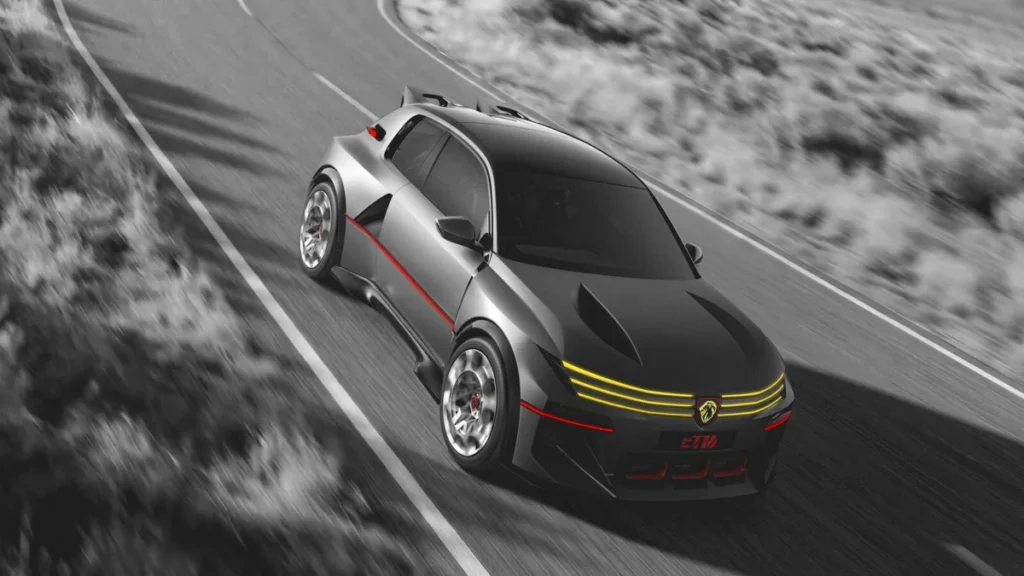
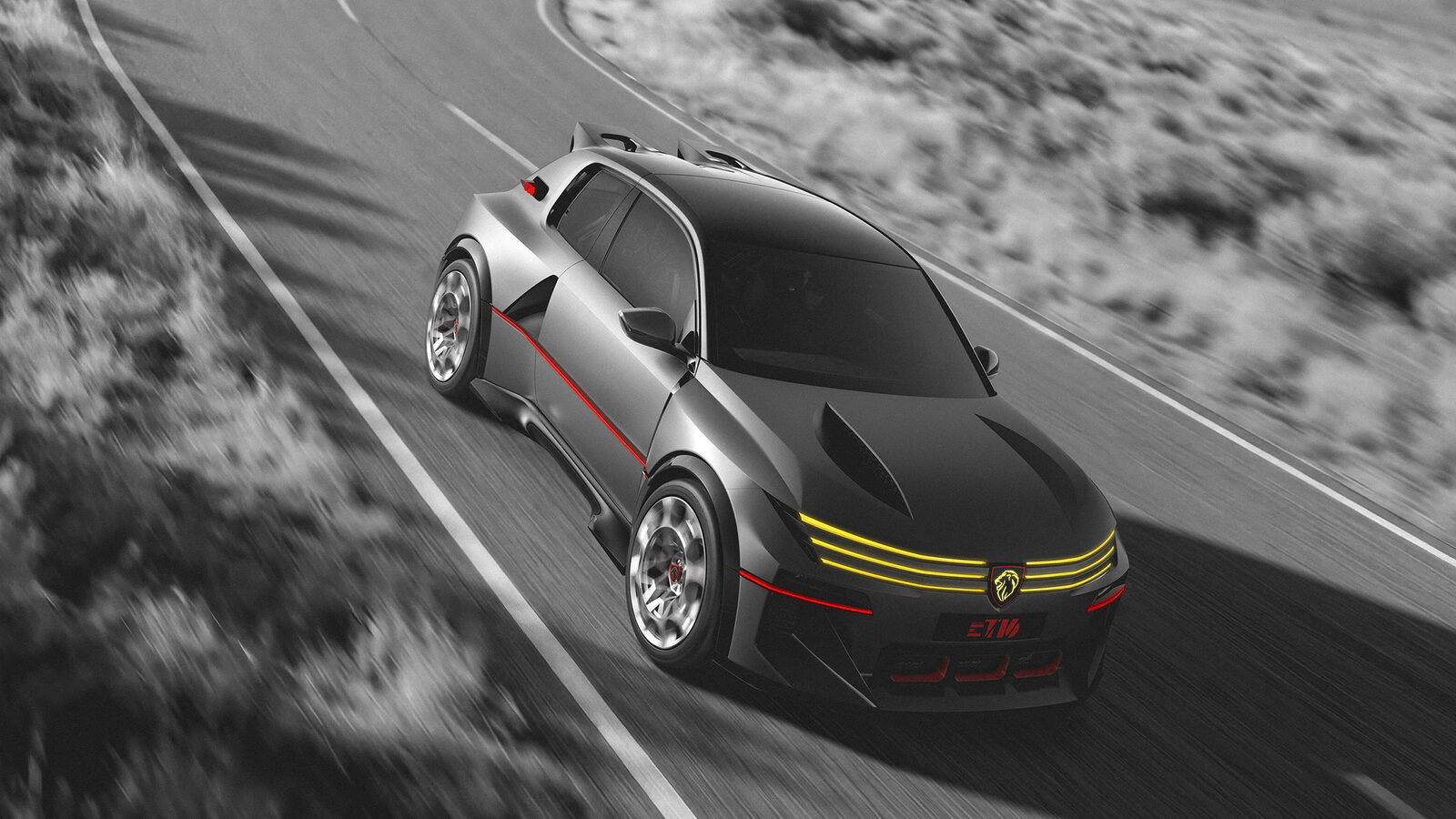
At the 2026 Paris Motor Show, the hallowed halls of the Porte de Versailles are vibrating with more than just the hum of electric motors. Amidst the sea of sensible crossovers and utilitarian EVs, Peugeot has unleashed a ghost from the golden era of motorsport: the E-T16 Concept. Painted in the iconic "Winchester Grey" that once adorned the original homologation "Serie 200" specials, this wide-bodied, tri-motor monster is a direct love letter to the 205 Turbo 16—the car that conquered the World Rally Championship in 1985 and 1986.
With 816 horsepower, an 800-volt architecture, and a silhouette that pays homage to the Group B legends, the E-T16 is a technical marvel. Yet, as the crowds gather to admire its tilting rear bodywork and aggressive stance, a bitter question hangs in the air: why is this masterpiece destined to remain a museum piece while its rival, the Renault 5 Turbo 3E, prepares to hit the streets?
The Genesis of an Icon: A Legacy Revisited
To understand the E-T16, one must look back forty years. In the mid-1980s, Jean Todt’s Peugeot Talbot Sport team redefined what a car could be. The 205 Turbo 16 was not merely a hatchback; it was a mid-engined, all-wheel-drive laboratory that demolished the competition. To meet FIA regulations, Peugeot was forced to produce 200 road-going versions—the "Serie 200." These cars were loud, temperamental, and obscenely expensive, priced at the cost of two Porsche 911s.
Today, Peugeot is using that history to craft a narrative. By recreating the "Serie 200" aesthetic—the rear-mounted engine bay that tilts fully open, the stubby, muscular stance—Peugeot is attempting to anchor its future EV identity in its most glorious past. However, there is a stark difference between the 1980s and the Stellantis era: in 1984, the company needed to sell these cars to race. Today, the E-T16 is a marketing tool designed to prime the public for the upcoming e-208, while the actual production of such a performance machine is deemed "not part of the roadmap."
Engineering the Beast: Under the Composite Skin
While the exterior is a nod to the past, the architecture is pure, futuristic ambition. Developed within the hallowed workshops of Peugeot Sport in Satory, the E-T16 abandons the modular e-CMP platform found in the group’s mass-market city cars. Instead, it sits atop a bespoke tubular chassis.
The powertrain is a masterclass in modern propulsion. The E-T16 utilizes three electric motors: one driving the front axle and two independent units at the rear. This setup allows for precise, millisecond-level torque vectoring, replacing the heavy, mechanical differentials of the past with digital intelligence. The result is a machine with a power-to-weight ratio of less than 2 kg/hp, capable of sprinting from 0 to 100 km/h in a staggering 2.5 seconds, and pushing toward 300 km/h in just 16 seconds.
The Thermal Challenge
The most significant engineering hurdle was not power, but heat. To ensure the vehicle could withstand three consecutive laps of the Nürburgring Nordschleife—a punishing 60-kilometer test—Peugeot engineers developed a bespoke "side cooling" system for the 85 kWh NMC battery. By placing cooling exchangers directly against the sides of the battery cells, they successfully prevented the thermal throttling that plagues most high-performance electric vehicles. Operating under 800 volts, the system supports ultra-fast charging, capable of a 10% to 80% charge in under 15 minutes, offering a practical range of 400 km (WLTP) when driven in a more "civilized" manner.
Aesthetic Mimicry: Functionality as Art
The design team at Peugeot has achieved something rare in the modern automotive world: they have balanced nostalgia with aerodynamic necessity. The rear air intake, which once fed the KKK turbocharger of the 1980s, has been cleverly repurposed. It now hides the CCS charging port and the electronic door release.
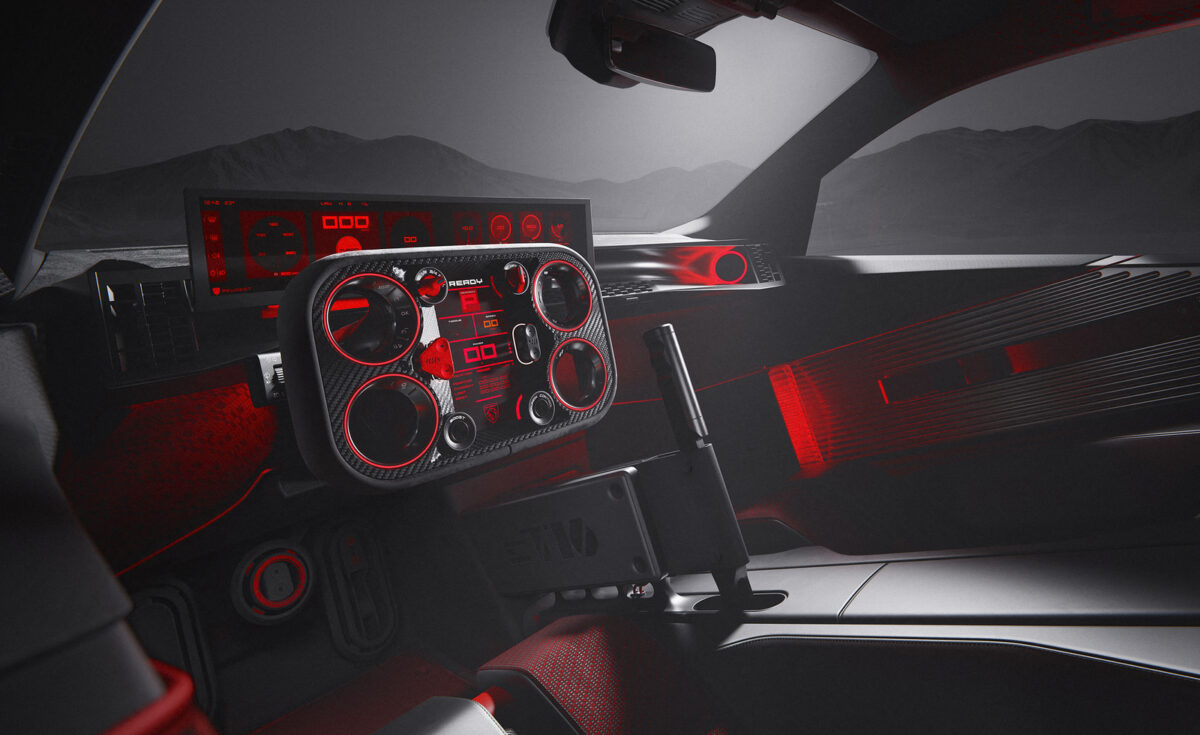
The interior is equally uncompromising. Gone is the traditional dashboard, replaced by an ergonomic layout centered around the "Hypersquare" steering wheel—a rectangular, tactile unit that uses steer-by-wire technology to eliminate the steering column. A 21-inch curved display provides all necessary telemetry. The two carbon-fiber bucket seats are structurally integrated into the central console, adding rigidity to the survival cell, while the cabin is finished in technical grey mesh and red carpeting—a direct nod to the legendary 205 GTI.
The Strategic Divide: Peugeot vs. Renault
The disparity between the E-T16 and the Renault 5 Turbo 3E highlights a fundamental shift in how French manufacturers view their heritage. Renault has treated the Turbo 3E as an industrial project, preparing it for production and track use, engaging the enthusiast community with pre-orders and real-world development.
Peugeot, conversely, has opted for "Stellantis-style" fiscal prudence. The E-T16 is a show-stopper, designed to saturate the media space and boost the brand’s "cool factor" ahead of the 2027 e-208 launch. However, there is no intention to put the E-T16 into production. Once the Paris Motor Show concludes, the car will be crated and moved to the Peugeot museum in Sochaux.
This approach leaves a bitter taste for purists. While the car features elements that will influence future production models—such as the three-claw lighting signature and the Hypersquare wheel—the soul of the E-T16 is effectively being kept under glass.
Supporting Data: The 205 T16 Heritage
The historical context of the "Serie 200" is a testament to the difficulty of producing such machines. In the 1980s, the 205 T16 was a commercial struggle. Priced at 290,000 francs, it was a hard sell to the public, who were often intimidated by the engine’s roar and the car’s raw, uncompromising nature. It required significant discounts to clear the factory stock. Today, Peugeot’s reluctance to repeat this history is arguably a result of those old scars. The company prefers the safety of high-volume, mass-market electric vehicles over the high-risk, low-volume "halo" cars that defined its golden age.
Technical Specifications Summary
| Feature | Data |
|---|---|
| Motorization | 3 Electric Synchronous Motors |
| Total Power | 816 hp (600 kW) |
| 0-100 km/h | 2.5 seconds |
| Battery Capacity | 85 kWh (NMC) |
| Voltage | 800V Architecture |
| Charging | 10-80% in < 15 mins |
| Tires | Michelin Pilot Sport Cup 2 R |
| Weight/Power | < 2.0 kg/hp |
Implications: A Future Without Passion?
The E-T16 Concept is a brilliant reminder of what Peugeot Sport is capable of when unshackled from the constraints of mass production. It proves that the "Lion" still has sharp claws and the engineering prowess to dominate the digital age of motoring.
However, the decision to keep this project as a one-off concept speaks volumes about the current state of the automotive industry. In the transition to electrification, the "sports car" is increasingly becoming a luxury or a museum piece, rather than an accessible dream for the enthusiast.
By refusing to green-light a production run, Peugeot is choosing to play it safe. They are using the ghost of the 205 T16 to sell the future, but they are not willing to let the spirit of that future actually race on the track. As Renault pushes forward with the R5 Turbo 3E, the question remains: will the market remember the brand that made the best concept, or the brand that actually built the car? For now, the E-T16 remains a beautiful, powerful, and deeply frustrating monument to a past that Peugeot is not yet ready to fully embrace again.
