

PARIS — At the recent Mondial de Paris (Paris Motor Show), Stellantis made a resounding statement of intent. The colossal franco-italo-american automotive group arrived at the capital’s premier automotive showcase backed by no fewer than nine striking concept cars. Beyond the visual spectacle and the massive financial investment, this showcase served a deeper purpose: reaffirming the vital strategic importance of European heritage brands within the group’s global matrix.
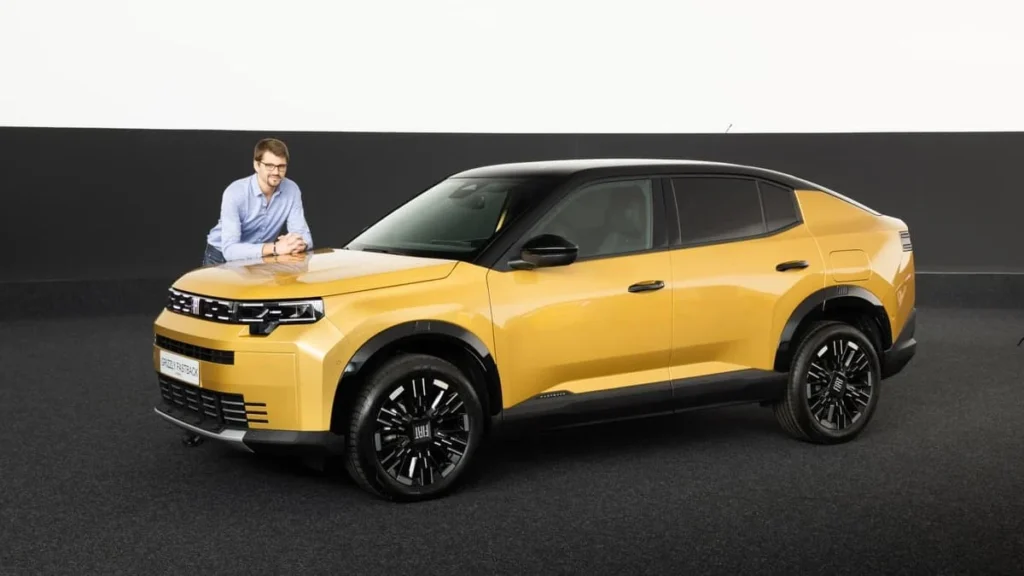
Among the shining stars of the Stellantis pavilion, Fiat commanded considerable attention. The iconic Italian manufacturer not only unveiled two promising design studies—the Multiplina and Multiplay—but also hosted the highly anticipated, first-ever public debut of the all-new Fiat Grizzly and Fiat Grizzly Fastback. With these aggressive new entries, Fiat has firmly locked its crosshairs onto formidable regional rivals, putting both corporate cousin Citroën and budget heavyweight Dacia squarely on notice.
Main Facts: The New Fiat Lineup Taking Shape
The core revelation of Fiat’s Paris presentation revolves around its aggressive expansion into the compact SUV and ultra-accessible micro-mobility segments.
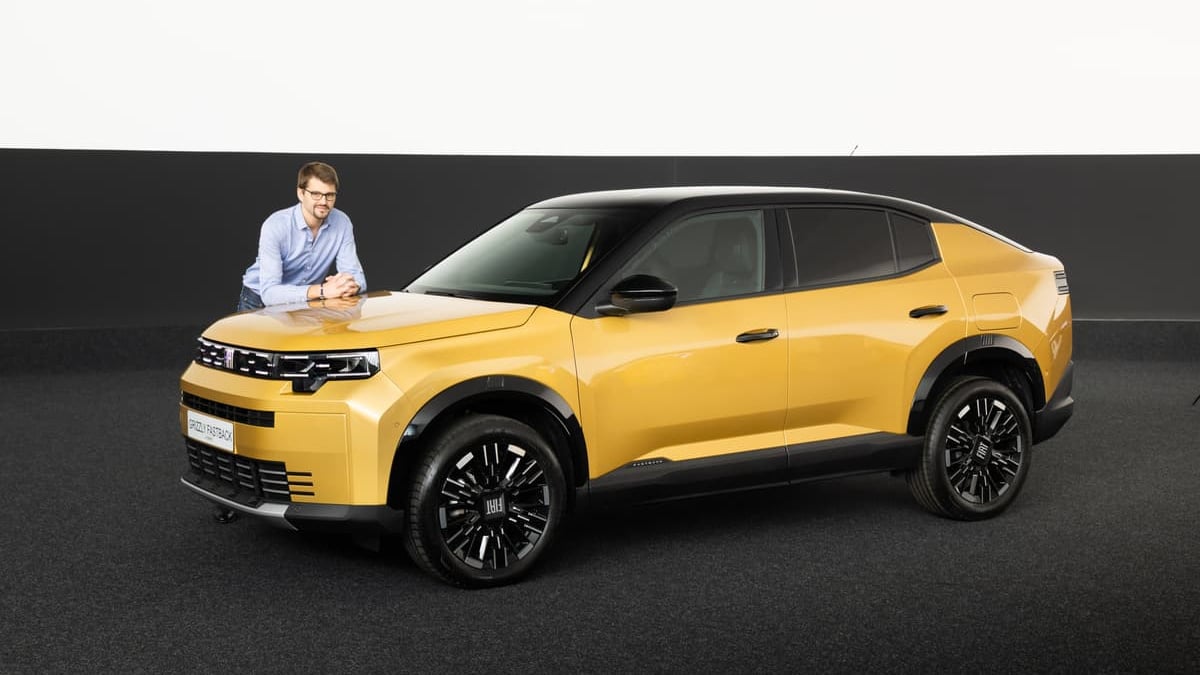
- The Grizzly Duo: Slated for a spring 2027 market launch, the Fiat Grizzly (standard SUV format) and Grizzly Fastback (coupe-SUV profile) represent the brand’s fresh assault on the lucrative compact family segment.
- Shared Architecture: Both models are built upon Stellantis’s versatile Smart Car platform, sharing roughly 85% of their parts. The standard Grizzly measures 4.40 meters in length, while the Fastback stretches to 4.50 meters due to a deliberately extended rear overhang.
- Aggressive Pricing: Fiat has targeted an entry-level starting price of around €20,000 for the baseline 100-horsepower petrol variants of both models.
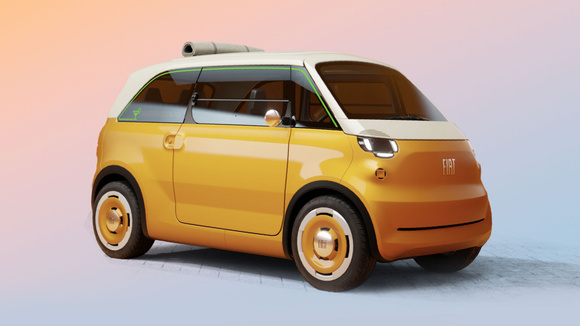
- The Multiplina Concept: Below the SUV tier, Fiat teased the Multiplina, a conceptual revival of the legendary Multipla formula. Aimed at the quadricycle market (L7 category), it promises a 100% electric, 4-seater, 3-meter-long mobility solution accessible to drivers as young as 16, with an estimated price tag around €12,000.
Chronology of the Strategy: From Concept to Production
To understand how Fiat reached this pivotal moment at the Paris Motor Show, one must examine the brand’s rapid restructuring under the Stellantis umbrella over recent years.
Phase 1: Re-establishing the Foundation (2021–2024)
Following the merger that created Stellantis, Fiat was designated as one of the group’s four core global volume brands. Initial efforts focused on modernizing the portfolio with localized hits like the electric 500, the 600, and the introduction of the Grande Panda. However, executives quickly realized that these urban-centric models were insufficient to capture broader European market share, particularly against value-driven powerhouses like Dacia.
Phase 2: Platform Leverage and Global Expansion (2024–2026)
Utilizing Stellantis’s scalable Smart Car platform—initially designed for low-cost emerging markets and entry-level European cars—Fiat’s design teams, led by François Leboine, began developing larger family-oriented architectures. This period saw the engineering of the Grizzly project, designed simultaneously for European markets and international arenas such as Latin America and Africa.
Phase 3: The Paris Motor Show Reveal (October 2026)
The Mondial de Paris marked the crystallization of these efforts. By parading the Grizzly, Grizzly Fastback, and the Multiplina concept side-by-side, Fiat transitioned from a boutique urban carmaker back into a mainstream volume competitor capable of challenging established family haulers. Production variants of the Grizzly duo are scheduled to hit European dealerships in the spring of 2027.
Supporting Data and Technical Specifications
A closer examination of the engineering behind Fiat’s new models reveals a careful balance between cost-cutting measures and practical family utility.
Dimensions and Practicality
- Fiat Grizzly: Traditional SUV silhouette focusing on headroom and cargo volume. Boot capacity ranges up to 545 liters.
- Fiat Grizzly Fastback: Coupe-SUV silhouette featuring a 10 cm longer rear overhang, pushing cargo capacity up to an impressive 608 liters.
- Interior Ergonomics: Despite cost-conscious construction—evident in the simplified, durable plastics—the cabins avoid feeling barren. They feature dual-screen layouts (including a 10.25-inch infotainment display) and incorporate roughly 25 liters of cleverly concealed interior storage spaces. Rear passenger legroom remains remarkably spacious for the vehicle’s footprint.
Powertrain Options
Unlike Dacia—which heavily relies on petrol-LPG and hybrid systems while completely bypassing pure electric options in certain budget categories—Fiat leverages the full breadth of Stellantis electrification technology:
- Petrol: 100-hp entry-level engine.
- Micro-Hybrid: 110-hp and 145-hp configurations.
- Pure Electric (BEV): A 54-kWh battery pack paired with a 113-hp electric motor, targeting a practical range of approximately 400 kilometers (approx. 250 miles).
The Multiplina Specifications
Targeting the L7 quadricycle category to bypass traditional homologation costs while retaining maximum utility:
- Length: Approximately 3 meters.
- Capacity: 4 distinct seats (a major engineering challenge to keep vehicle weight under the category’s 450 kg limit excluding batteries).
- Performance & Price: Fully electric, accessible from age 16, with a projected market price of €12,000.
Official Responses and Executive Insights
Fiat’s product leadership has been remarkably transparent regarding the brand’s aggressive positioning. Guillaume Clerc, Fiat’s Product Boss, addressed the economic realities of budget-conscious European consumers during the Paris showcase.
Discussing the pricing strategy of the upcoming Multiplina against forthcoming ultra-compact rivals from Citroën and Dacia (slated for 2028), Clerc emphasized the psychological and financial barrier of entry-level car ownership:

"€12,000 is not €15,000, and a great many people simply do not have the financial elasticity to absorb an additional 25% cost increase for their mobility needs."
Furthermore, Stellantis executives highlighted that Fiat’s global footprint gives it a distinct advantage over Citroën. While Citroën remains heavily anchored in Europe, Fiat operates as a globally recognized high-volume brand across South America, the Middle East, and Africa. This global scale allows Stellantis to amortize the development costs of platforms like the Smart Car much faster, directly enabling the aggressive €20,000 pricing point for the Grizzly family.
Implications for the European Automotive Market
The arrival of the Fiat Grizzly, Grizzly Fastback, and the potential production model of the Multiplina sends shockwaves through the European budget and compact SUV segments.
1. Pressure on Citroën
By building the Grizzly on the exact same underlying architecture as the Citroën C3 Aircross and Opel Frontera, Fiat has effectively created an internal corporate rivalry. The Fiat models boast a more distinct, boxy aesthetic and warmer interior presentations than their French cousin, potentially siphoning away style-conscious buyers who might otherwise have chosen Citroën.
2. A Direct Challenge to Dacia
For years, the Dacia Duster has reigned supreme as the undisputed king of affordable, no-nonsense family SUVs in Europe. However, Dacia’s lack of a competitive, low-cost pure electric powertrain option in that specific size class leaves a glaring vulnerability. With the Grizzly offering petrol, hybrid, and a 400-km EV range starting at €20,000, Fiat presents a deeply compelling alternative—though Dacia still retains a key competitive differentiator in its renowned all-wheel-drive (AWD) transmissions.
3. Redefining Urban Quadricycles
If Fiat successfully homologates the 4-seater Multiplina within the L7 quadricycle constraints at a €12,000 price point, it will effectively capture a completely vacant niche. Offering true four-passenger versatility below the cost and complexity of a traditional city car provides an unprecedented mobility solution for urban families and younger drivers alike.
As the automotive landscape hurtles toward 2027, Fiat’s aggressive offensive proves that affordable motoring does not have to mean an absence of character. The historic Italian marque is back on the warpath, and Europe’s budget-segment leaders have every reason to look over their shoulders.
