

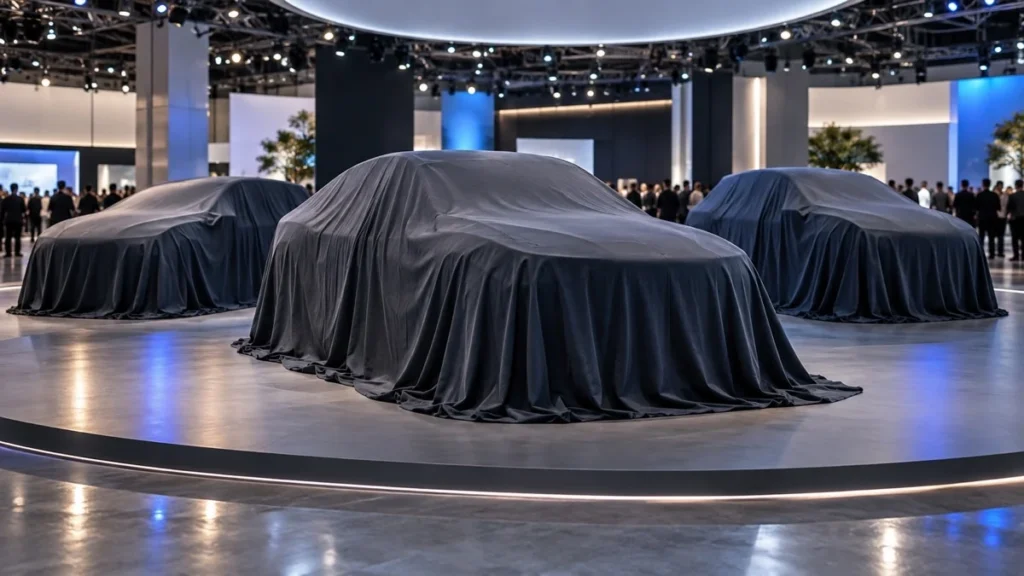
PARIS — As the automotive world turns its gaze toward the French capital, Renault Group is preparing a commanding presence for the upcoming Mondial de l’Auto 2026. Demonstrating a dual commitment to industrial pragmatism and visionary design, the French automotive conglomerate has announced a staggering lineup of 50 vehicles and concepts spread across its dedicated exhibition spaces. Among these, attendees will discover six major world premieres—highlighted by four visionary concept cars that promise to redefine the group’s stylistic and technological trajectories for the coming decade.
The stage is set in Hall 6 of Paris Expo Porte de Versailles, where Renault Group will assemble its core ecosystem under one roof, reaffirming the vitality of its multi-brand strategy encompassing Renault, Dacia, Alpine, and its dedicated professional division, Renault Pro+.
Main Facts: The 2026 Showcase at a Glance
Renault Group’s strategy for the 2026 Mondial de l’Auto rests on a delicate balance between immediate market realities and speculative design explorations. Of the 50 total vehicles on display, the spotlight will inevitably fall on the six headline-grabbing novelties. However, industry analysts and prospective buyers alike are being urged to exercise discernment: four of these six introductions are pure concept cars.
While concept vehicles serve as invaluable testbeds for advanced aerodynamics, cutting-edge software ecosystems, sustainable materials, and radical design languages, they do not inherently translate into showroom-ready commodities. For consumers evaluating their next vehicle purchase, the distinction between a theatrical design study and a commercial production model remains critical. True purchasing decisions will rely on definitive metrics: confirmed pricing structures, homologated specifications, trim levels, and strict manufacturing timelines.
Anchoring this year’s narrative of heritage meeting the electric future is the newly confirmed Renault 8 Gordini Concept. Blending the evocative nomenclature of a legendary motorsport icon with modern battery-electric architecture, this low-slung, wide-stanced, two-seat electric coupe churns out an impressive 270 horsepower via a rear-wheel-drive layout. Despite generating immense enthusiasm among purists since its late-September reveal, Renault has categorized the vehicle strictly as a stylistic exercise—a respectful nod to the brand’s glorious competition past rather than a harbinger of an imminent commercial revival for the Gordini badge in dealerships.
Chronology: A Packed Opening Day and Visitor Schedule
The organizational rhythm of the 2026 Paris Motor Show follows a traditional structure, drawing a sharp line between media curation and public exhibition.
The Press Day: Monday, October 12, 2026
The operational curtain rises on Monday, October 12, reserved exclusively for accredited media and industry insiders. Renault Group has structured a rapid-fire sequence of press conferences in Hall 6, allowing international journalists to absorb the brand’s overarching strategy within a compressed morning window:
- 08:30 AM: Renault Brand Presentation
- 09:00 AM: Dacia Brand Presentation
- 09:20 AM: Alpine Brand Presentation
The Public Exhibition: October 13–18, 2026
General public access commences on Tuesday, October 13, running through Sunday, October 18, 2026. To accommodate the expected influx of automotive enthusiasts, organizers have implemented flexible operating hours, including late-night openings (nocturnes) to ease crowd congestion.
| Day of the Week | Operating Hours |
|---|---|
| Tuesday, October 13 – Thursday, October 15 | 9:30 AM – 8:00 PM |
| Friday, October 16 | 9:30 AM – 10:00 PM |
| Saturday, October 17 | 9:00 AM – 10:00 PM |
| Sunday, October 18 | 9:00 AM – 6:30 PM |
Note: Final entry to the exhibition halls is strictly enforced one hour prior to closing time. Visitors planning to attend the Friday and Saturday evening sessions will benefit from extended access until 10:00 PM.
Supporting Data: Spatial Organization and Brand Synergy
Occupying a dominant footprint within Hall 6, Renault Group has partitioned its presence into four distinct, highly specialized stands. This layout allows each brand to project a distinct identity while benefiting from shared technological platforms and corporate synergies.
- Renault: Positioned as the technological and volume spearhead, focusing on mainstream electrification, software-defined vehicle architectures, and nostalgic design reinterpretations.
- Dacia: Continuing its disruptive value-for-money ethos, showcasing robust, accessible mobility solutions that resonate with cost-conscious, pragmatic consumers.
- Alpine: Flying the flag for high-performance electrification, motorsport heritage, and bespoke sports car engineering.
- Renault Pro+: Dedicated entirely to business customers, fleet operators, and commercial vehicle buyers, highlighting innovations in light commercial vehicles (LCVs) and professional mobility services.
With half a hundred vehicles spanning vintage classics, current production flagships, and avant-garde concepts, the exhibition represents one of the most comprehensive displays mounted by a European manufacturer in recent years.
Official Responses and Corporate Strategy
Speaking ahead of the event, Renault Group executives have emphasized that the 2026 showcase is designed to put "technological innovation at the service of the customer." This philosophy underpins the entire Hall 6 presentation.
By integrating carbon-neutral manufacturing narratives, next-generation battery chemistries, and artificial intelligence into its vehicle interfaces, the group aims to demonstrate that its transition toward complete electrification does not necessitate a loss of driving passion or brand identity. The juxtaposition of utilitarian workhorses on the Pro+ stand, rugged family transport from Dacia, emotive sports cars from Alpine, and genre-bending concepts from Renault illustrates a mature, diversified industrial group capable of addressing every segment of the modern automotive market.
Furthermore, corporate communications have stressed transparency regarding the six novelties. By explicitly clarifying that four of these vehicles are exploratory concepts, Renault Group seeks to manage consumer expectations, ensuring that show-goers understand the timeline required to transition an idea sketched on a digital tablet into a road-legal automobile rolling off a factory assembly line.
Implications: What the 2026 Mondial Means for the Industry and Consumers
The strategic choices made by Renault Group for the 2026 Mondial de l’Auto carry profound implications for both the wider automotive sector and individual buyers.
For the Automotive Industry
As legacy automakers navigate a turbulent economic landscape marked by fierce competition from new global players—particularly in the affordable electric vehicle segment—events like the Paris Motor Show serve as critical battlegrounds for consumer mindshare. Renault Group’s ability to marshal four distinct brands under one expansive roof in Hall 6 demonstrates organizational resilience. The heavy emphasis on concept cars signals that European manufacturers are not merely reacting to regulatory pressures regarding decarbonization, but are actively striving to redefine the emotional resonance of the automobile in an increasingly digital and automated age.
For Prospective Car Buyers
For the average consumer visiting the exhibition hall between October 13 and 18, navigating the fine line between fantasy and reality is paramount. The allure of show-stopping concepts like the Renault 8 Gordini Concept—with its thrilling 270-hp rear-wheel-drive electric layout—demonstrates that automakers recognize the emotional equity bound up in internal-combustion history, translating it into zero-emission formats.
However, visitors must maintain a strategic approach. While studying the design language of tomorrow can be deeply inspiring, purchasing decisions require grounding in the tangible. Attendees are encouraged to cross-reference the glittering displays of concept cars with the hard data provided by brand representatives regarding production feasibility, expected pricing brackets, and showroom availability dates.
Ultimately, the 2026 Mondial de l’Auto promises to be a masterclass in brand storytelling. Whether visitors are drawn to the rugged utility of Dacia, the track-bred pedigree of Alpine, or the bold evolutionary steps of the Renault bow, the exhibition will offer a fascinating lens through which to view the immediate and long-term future of European mobility.
