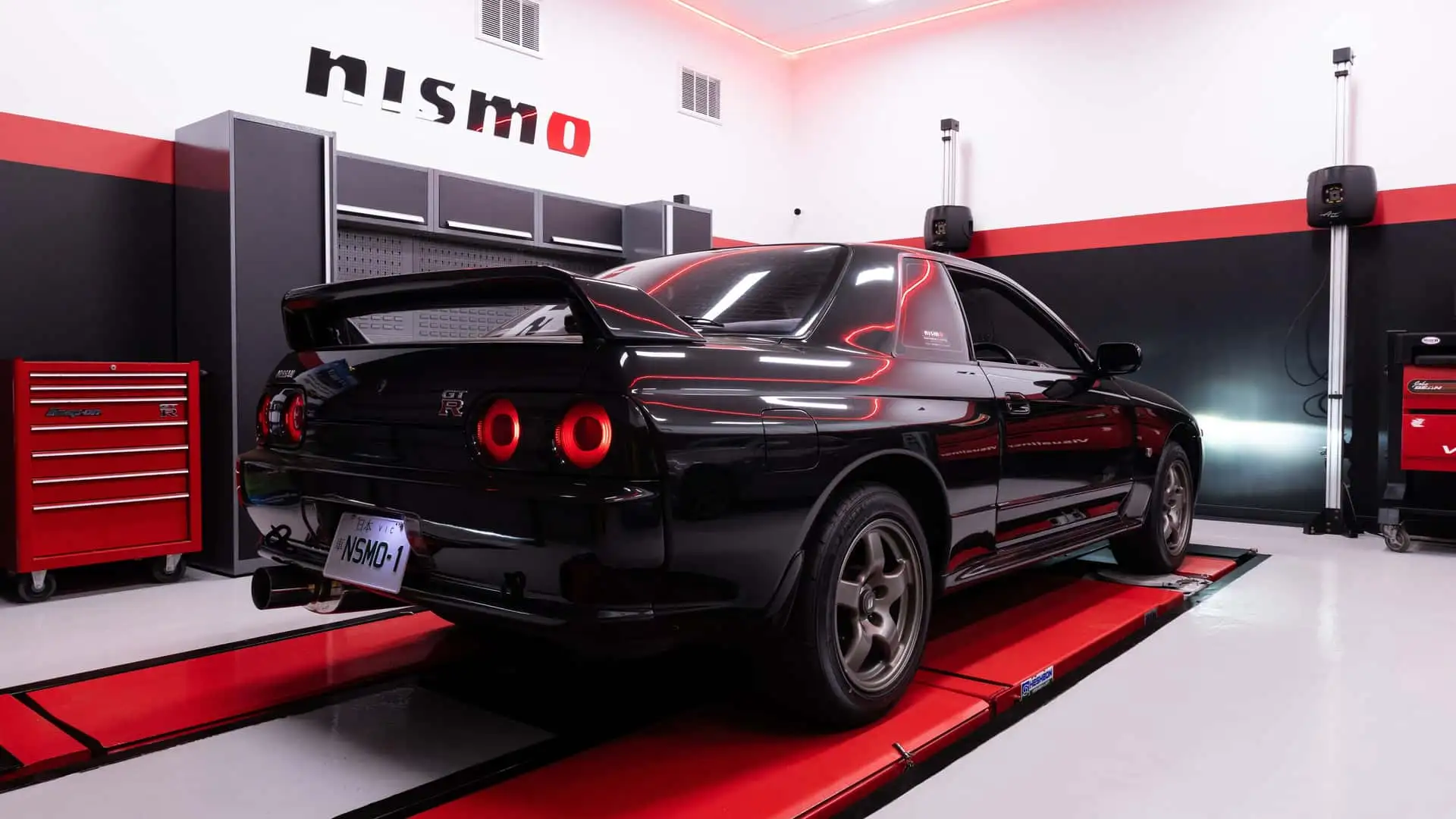
For decades, the name "Nismo" (Nissan Motorsports) has been synonymous with the sacred halls of the Omori Factory in Japan. It was a pilgrimage destination for enthusiasts, a legendary facility where the most iconic machines in JDM (Japanese Domestic Market) history were born, refined, and resurrected. However, the paradigm shifted on October 4, 2026. In a landmark move, Nismo officially inaugurated its first-ever Performance Center outside of Japan, choosing Melbourne, Australia, as its global beachhead. This development marks a pivotal transition for Nissan’s performance division, signaling a shift from a centralized, Japan-exclusive operation to a global network of specialized centers designed to preserve the heritage of the Skyline GT-R and the Nissan Z.
The Genesis of a Global Network
The decision to establish a footprint in Australia was not arbitrary. The Oceania region boasts one of the most fervent, dense, and technically knowledgeable communities of JDM enthusiasts in the world. For years, Australian owners of the R32, R33, and R34 Skyline GT-R generations—as well as the newer Z models—have navigated a complex landscape of international shipping, language barriers, and the constant threat of counterfeit parts.
The new facility, located at Ferntree Gully Nissan in the suburbs of Melbourne, represents the first step in a broader, ambitious expansion strategy. By bringing "Omori-grade" service to the Southern Hemisphere, Nismo is effectively decentralizing its expertise. While the Melbourne site serves as the pilot project, the company has explicitly announced plans for a wider rollout of Performance Centers starting in 2027.
Chronology of the Expansion
- 1984–2025: Nismo maintains a strictly centralized service and parts model based entirely out of the Omori Factory in Tokyo, Japan. Overseas owners rely on third-party importers and the secondary market.
- Mid-2025: Rumors surface regarding a potential international service hub as Nismo seeks to capitalize on the surging collector value of "youngtimer" Japanese sports cars.
- October 4, 2026: Official opening of the Nismo Performance Center at Ferntree Gully Nissan, Melbourne. This marks the first time Nismo technicians, trained directly by the factory, operate outside Japan.
- Late 2026: Evaluation phase begins for the Melbourne site, focusing on throughput, parts logistics, and local certification standards.
- 2027 and Beyond: Scheduled expansion of the Performance Center network to additional global markets, contingent on the success of the Australian pilot.
Technical Excellence: The "Nismo Meister" Standard
The core value proposition of the new Performance Center lies in the presence of "Nismo Meisters." These are not merely dealership mechanics; they are specialists who have undergone rigorous certification processes, mirroring the training protocols of the Omori Factory.
Bridging the Supply Chain Gap
For decades, the "restoration paradox" has plagued GT-R owners: how to restore a vehicle to factory specifications when the original parts are no longer in mass production. Previously, owners were forced to rely on "new-old stock" discovered on auction sites, reproduction parts of dubious quality, or expensive custom fabrication.
The Melbourne Performance Center changes the equation by providing a direct, verified link to the Nismo supply chain. By stocking authentic performance parts and heritage components directly from the source, the center eliminates the need for owners to act as their own logistics managers. This ensures that every nut, bolt, and engine component installed meets the exacting safety and performance standards established by Nissan’s engineers. Whether it is a partial restoration of a worn-out R32 drivetrain or a full, frame-up rebuild of an R34, the facility offers a level of provenance that was previously impossible to obtain locally.
Official Perspectives: Passion Meets Strategy
The inauguration of the center was met with enthusiasm from both corporate executives and local stakeholders, highlighting a unique synergy between brand heritage and community engagement.
Yutaka Sanada, the global head of Nismo, characterized the launch as a "defining milestone" in the brand’s history. "Our mission has always been to push the boundaries of performance," Sanada noted. "However, true performance is also about longevity. By establishing these centers, we are ensuring that the cars that built our reputation continue to perform at the highest level, regardless of where they are in the world."
From the dealership side, the tone is grounded in the reality of the local market. Michael Banjanin, Director of Ferntree Gully Nissan, views the center as a service to a pre-existing community rather than a marketing exercise. "This is not about selling new cars; it is about honoring the enthusiasts who have kept the flame alive for thirty years. We aren’t just a dealership anymore; we are a custodian of the Nismo brand in Australia."
Michael Hill of Nissan Oceania echoed these sentiments, emphasizing that the brand’s identity transcends mere lap times. "Nismo is about the visceral connection between the driver and the machine. By providing this level of support, we are validating the passion of our customers and ensuring that the authenticity of the vehicle remains untarnished throughout its lifetime."
Implications for the Future of JDM Ownership
The establishment of this center carries significant implications for the global JDM collector market.
Economic and Valuation Impacts
The availability of authorized, factory-backed restoration services is likely to have a stabilizing effect on the values of GT-Rs and Z cars. When a vehicle has a documented service history from a certified Nismo Performance Center, its provenance increases, potentially leading to higher valuations in the collector market. This shift away from the "gray market" of parts sourcing creates a more transparent, predictable environment for investors and enthusiasts alike.
The "Service-as-a-Product" Model
This expansion suggests that Nissan is evolving its business model to view vehicle maintenance as a high-value service product. By monetizing the restoration of heritage vehicles, Nissan is creating a sustainable revenue stream that bridges the gap between modern electric mobility and the internal combustion legacy.
The Question of Global Access
While the Australian launch is a triumph for that region, it leaves enthusiasts in Europe and North America wondering when, or if, they will see similar facilities. While Nissan has not provided a specific timeline for these regions, the success of the Melbourne model will be the primary metric for future investment.
There is, however, a cautionary note regarding cost. Authentic Nismo parts and the labor of a factory-trained "Meister" come at a premium. While this ensures quality, it raises questions about accessibility. Will these centers remain exclusive playgrounds for the ultra-wealthy collector, or will they provide services that the "average" enthusiast can utilize to keep their weekend car on the road? The balance between premium branding and practical accessibility will be the ultimate test for the program.
Conclusion: A New Era for the Skyline Legacy
As the automotive industry pivots toward electrification, the preservation of the internal combustion era’s finest specimens becomes an act of cultural conservation. By launching its first Performance Center in Australia, Nismo has signaled that it is committed to its history as much as its future.
For the Australian owner who has spent years waiting for a backordered part from Japan, the opening in Melbourne is a dream realized. For the global community, it is a sign of hope—a proof-of-concept that suggests the legendary machines of the 1990s will continue to roar for decades to come. Whether this model can be successfully scaled to other continents remains to be seen, but for now, the path from the Omori Factory to the rest of the world has officially been cleared.