

By Mael Pilven
Automotive Journalist
Main Facts: A Crucial Turning Point for European Motorists
After four consecutive weeks of relentless price surges that broke historical records across the continent, the average price of diesel in the European Union has finally begun to recede. According to data published by the European Commission, the average price of a liter of diesel dropped by 9 cents over a single week, settling at €2.15. While this downward trend offers a much-needed psychological and financial breather, the relief is relative: compared to February’s pre-crisis baseline of €1.59 per liter—before the outbreak of geopolitical conflicts in the Middle East—diesel remains significantly elevated, carrying a lingering premium of 56 cents per liter.
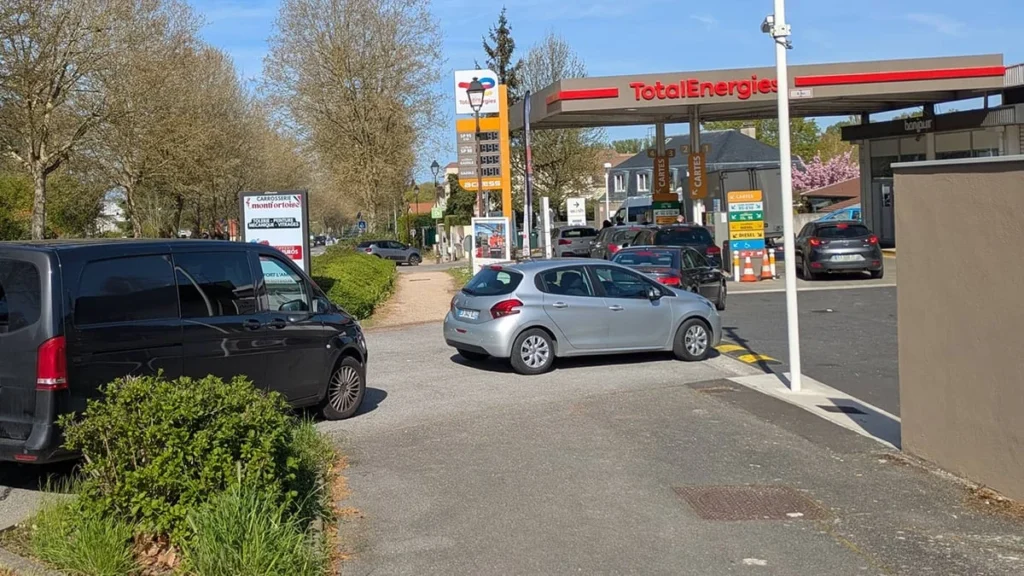
In France, the deceleration is mirrored at the pumps, though prices remain stubbornly high. Data collected from more than 9,000 service stations across the country indicates that the average price of diesel hovers just above €2.35 per liter. This follows a painful peak on September 20, when prices brushed against the €2.41 threshold. For the average French motorist, a standard 50-liter tank still costs nearly €118—roughly €3 less than during the absolute height of the crisis.
To accelerate this downward momentum, the French government has unveiled a bold intervention plan: mobilizing 10 million barrels of diesel from national strategic reserves. Scheduled to run for a three-month period from November through January, this strategic release aims to drive pump prices down by an additional 12 to 18 cents per liter.

Chronology of a Crisis: From Winter Stability to Autumn Relief
To understand the gravity of the current situation, one must trace the timeline of the European fuel market over the past year:
- February 2026 (The Pre-Crisis Baseline): Before the escalation of hostilities in the Middle East and subsequent disruptions to global refining capacity, the European fuel market enjoyed relative stability. Diesel averaged a modest €1.59 per liter within the EU.
- Late Summer 2026 (The Surge): Persistent tensions regarding global crude supply and refining bottlenecks triggered a severe market shock. For four straight weeks, diesel prices climbed uninterrupted, dragging nearly all EU member states into uncharted territory. At its peak, twelve member states simultaneously reported all-time high fuel prices.
- September 20, 2026 (The French Peak): In France, the crisis reached its zenith. Driven by high taxation, distribution costs, and acute supply chain pressures on middle distillates, the average price of a liter of diesel hit a staggering €2.41.
- October 2, 2026 (G7 Intervention Announcement): In response to soaring energy costs, the G7 announced a coordinated release of 100 million barrels of strategic petroleum stocks, encompassing both crude oil and refined products.
- October 7, 2026 (France’s Targeted Move): Going a step further than its international peers, the French government announced the specific mobilization of 10 million barrels of already refined diesel from its domestic strategic inventory, targeting a direct reduction at the pump for winter drivers.
- October 8, 2026 (The First Official Correction): The European Commission released figures confirming the first aggregate price drop in a month, with the EU average falling 9 cents to €2.15 per liter. Cyprus remained the sole member state still registering record highs in the weekly report.
Supporting Data: Breaking Down the Numbers
The mechanics behind the current fuel market volatility and the government’s proposed solution are best understood through hard economic data.
Comparative Pricing across Fuels
Diesel has borne the brunt of the recent energy crunch due to global shortages in refining capacity for middle distillates. In France, the widening gap between fuels is stark:
- Diesel (Gazole): > €2.35 per liter
- Gasoline (SP95-E10): ~ €2.15 per liter
Because commercial transport, agriculture, and a vast portion of the private passenger fleet still rely heavily on diesel, this price differential places a disproportionate burden on household budgets and professional logistics.

The Anatomy of the Strategic Reserve Release
The French government’s plan relies on a unique fiscal arbitrage involving older, heavily discounted state inventories:
- Volume Released: 10 million barrels of ready-to-use diesel.
- Volume in Liters: Approximately 1.6 billion liters, representing nearly one-fifth (20%) of total French diesel consumption over a three-month period.
- Historical Acquisition Cost: The diesel being tapped was acquired years ago when market prices were a fraction of today’s rates. Its estimated cost price to the state sits at roughly 28 centimes per liter (excluding taxes and distribution), compared to a current wholesale market value of approximately €1.10 per liter.
By injecting this low-cost fuel into the commercial distribution channels, the state hopes to compel fuel suppliers and station operators to pass the windfall savings directly down to consumers.
Official Responses and Strategic Challenges
While the announcement of a 12 to 18-cent reduction has been welcomed by motorist associations, energy analysts and policymakers remain cautiously pragmatic.
Theoretical vs. Realized Savings
On paper, a reduction of 12 to 18 cents would push the average price of diesel down to a range between €2.17 and €2.23 per liter based on current market conditions. For a standard 50-liter fill-up, this translates to a tangible saving of €6 to €9. However, government officials acknowledge that these figures are strictly theoretical. The actual pass-through rate depends heavily on complex distribution agreements and the unpredictable trajectory of international crude oil prices between now and November.

Lessons from Past Failures
Skepticism surrounding government-engineered price cuts is not unfounded. During a similar international energy intervention in March, France announced the mobilization of 14.5 million barrels of emergency stock. By the end of April, however, only 1.7 million barrels had actually been released into the market due to logistical bottlenecks and shifting market dynamics.
This time, the Ministry of Economy has pledged strict oversight. Officials have promised to closely monitor major distributors and retail networks to ensure that the economic benefits generated by the release of cheap historical reserves are fully reflected on price boards rather than absorbed into corporate margins.
Market Implications: What Motorists Should Expect
The intersection of organic market corrections and state intervention creates a complex outlook for the months ahead. Experts warn that the 9-cent European drop and the promised 12-to-18-cent French reduction cannot be simply added together. The former reflects natural, albeit fragile, downward pressure on global wholesale markets, while the latter represents a targeted, temporary administrative shock designed to cushion the winter months.
Several key factors will dictate whether motorists see lasting relief:
- Geopolitical Stability: Any renewed escalation in the Middle East could instantly nullify the European Commission’s recent gains by driving up Brent crude and refined product benchmarks.
- Refining Margins: The bottleneck is not merely a shortage of crude oil, but a global deficit in refining capacity capable of turning crude into diesel. Until new refining output comes online globally, diesel will remain structurally more expensive than gasoline.
- Distribution Compliance: The success of the French plan hinges entirely on the cooperation of oil majors and supermarket fuel distributors. Without transparent monitoring and punitive measures for non-compliance, state-subsidized relief risk evaporating before reaching the pump.
For now, European drivers are experiencing their first collective breath of relief in over a month. Yet, as winter approaches, the journey back to pre-crisis fuel affordability remains long, uncertain, and heavily dependent on the execution of government promises.
