

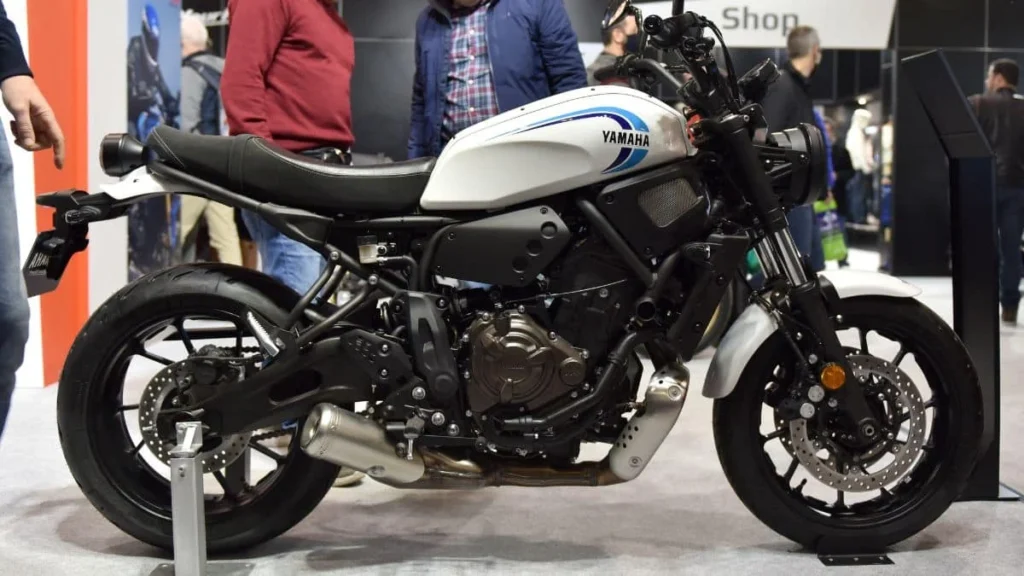
Introduction: The Symphony of Speed and Sound
When Torakasu Yamaha established his fledgling enterprise in 1887, his vision was centered entirely on the delicate, precise mechanics of reed organs and pianos. He sought to capture pure, resonant sound and translate it into a physical, emotional experience for the listener and the player. Little did he know that the acoustic DNA established within those nineteenth-century Japanese workshops would ultimately give birth to one of the most revered, dynamic, and emotionally evocative internal combustion empires the world has ever seen.
Today, Yamaha stands as a masterclass in industrial diversification and engineering integrity. While the corporate entity split into Yamaha Corporation (focused on instruments and audio) and Yamaha Motor Co. in 1955, the intrinsic soul of the brand remains unbroken. Whether it is a grand concert piano or a championship-winning MotoGP prototype, every Yamaha machine shares a common heartbeat: a relentless pursuit of harmony between machine and operator. This is the story of how an instrument maker became a titan of the two-wheeled world, forging an identity defined by performance, precision, and an unmistakable mechanical rhythm.
Main Facts: The Pillars of the Yamaha Legacy
To understand Yamaha’s enduring dominance in the global marketplace, one must examine the core pillars that define its manufacturing philosophy. Unlike competitors who rely solely on utilitarian efficiency or purely cold metrics, Yamaha has consistently prioritized rider engagement, acoustic resonance, and technical audacity.
The Musical Heritage
Yamaha’s origin as a purveyor of fine musical instruments is not merely a historical footnote; it is the cornerstone of its mechanical philosophy. The precision required to tune a piano action—where tolerances are measured in fractions of a millimeter—directly translated to the fabrication of high-performance engine components. The company views engines not just as metal chambers for controlled explosions, but as instruments capable of generating a distinct, emotive acoustic signature.
The Racing Crucible
For Yamaha, motorsport has never been a superficial marketing exercise. It is a rigorous, unforgiving laboratory for mass production. From the Isle of Man TT to the elite echelons of the MotoGP World Championship, competition acts as the ultimate filter for durability, weight distribution, and power delivery. Lessons learned on the racetrack routinely find their way into showroom floors within years, ensuring that retail consumers experience pure racing DNA.
Diverse Engineering Excellence
Yamaha’s portfolio spans a breathtaking breadth of mobility solutions. From nimble 125cc scooters designed for urban congestion to monstrous crossplane-crankshaft liter bikes built for the track, versatile trail bikes, marine engines, and autonomous mobility concepts, the company refuses to be pigeonholed. Yet, across all these platforms, the underlying handling characteristics remain unmistakably "Yamaha": intuitive, balanced, and communicative.
Chronology: A Timeline of Transformation
The trajectory of Yamaha from a regional instrument workshop to a global industrial superpower is defined by bold milestones, legendary machines, and calculated technological leaps.
- 1887: Torakasu Yamaha successfully repairs a broken reed organ in Hamamatsu, Japan, sparking a passion for acoustic engineering that leads to the founding of Nippon Gakki Co., Ltd. (later Yamaha Corporation).
- 1900: The company produces its first upright piano, establishing a reputation for meticulous craftsmanship and material selection that sets the standard across Asia.
- 1955: Seeking to utilize precision metalworking machinery acquired during and after wartime manufacturing shifts, Yamaha Motor Co. is officially spun off as an independent entity.
- 1955 (August): Yamaha introduces its maiden two-wheeled creation: the YA-1. Affectionately nicknamed the "Aka-Tombo" (Red Dragonfly), this 125cc two-stroke machine immediately stuns the domestic market.
- 1956: The YA-1 makes a sensational competitive debut, winning both the Mt. Fuji Ascent Race and the Asama Volcano Race, instantly cementing the brand’s competitive viability.
- 1960s: Yamaha aggressively targets international markets and global racing circuits, establishing a permanent foothold in Grand Prix motorcycle racing and building an unassailable reputation at the Isle of Man TT.
- 1970s–1980s: The introduction of groundbreaking two-stroke and four-stroke innovations, including the development of Monocross suspension and Yamaha Power Valve System (YPVS), revolutionizing handling and power delivery.
- 1998: Yamaha unveils the legendary YZF-R1, a motorcycle that shatters conventional superbike architecture by packaging a high-performance, compact engine into an agile chassis, completely redefining the open-class sportbike segment.
- 2004: The debut of the YZR-M1 in MotoGP with Valentino Rossi heralds a golden era of racing dominance, proving the tactical brilliance of Yamaha’s engineering approach.
- 2015–Present: Transitioning into the modern era, Yamaha introduces advanced electrification strategies (such as the E01 scooter), autonomous agricultural drones, marine propulsion systems, and intelligent mobility concepts without ever abandoning its petrol-powered heritage.
Supporting Data: Engineering Audiences and Market Metrics
Yamaha’s sustained success is backed by impressive manufacturing milestones, rigorous racing statistics, and a deeply loyal consumer base spanning multiple generations.
- Global Reach: Yamaha Motor operates in over 180 countries, supported by a vast network of manufacturing plants, research and development centers, and distribution hubs across Asia, Europe, North and South America.
- MotoGP Heritage: Yamaha boasts over 500 Grand Prix victories, securing numerous Rider, Constructor, and Team World Championships with legendary icons such as Giacomo Agostini, Kenny Roberts, Wayne Rainey, Jorge Lorenzo, and Valentino Rossi.
- The Crossplane Revolution: Since the introduction of the crossplane crankshaft (CP4) in the 2009 YZF-R1 and subsequent CP3 (triple) and CP2 (twin) architectures, Yamaha has captured a massive share of the naked and sportbike markets, proving that unequal firing intervals provide superior rear-wheel traction and unmatched rider feedback.
- R&D Investment: Yamaha consistently reinvests a substantial percentage of its annual revenue into research and development, focusing heavily on lightweight materials, carbon neutrality, alternative fuels, and advanced rider-assistance safety systems (ARAS).
Official Perspectives: The Philosophy from Iwata
Executive leadership at Yamaha Motor Co., headquartered in Iwata, Shizuoka Prefecture, has consistently emphasized that the brand’s identity is inextricably linked to human emotion. In various corporate addresses and engineering briefs, company spokespersons have clarified the philosophy guiding modern manufacturing:
"At Yamaha, we do not simply build machines that transport a rider from point A to point B. Our core mission is Kando—a Japanese word for the simultaneous feeling of deep satisfaction and intense excitement that people experience when they encounter something of exceptional value.
Whether it is the crisp throttle response of a crossplane engine, the intuitive leaning angle of a three-wheeled Niken, or the silent, torque-rich acceleration of an electric urban scooter, every Yamaha product is designed to act as an extension of the human body. We listen to the feedback of our racers, our everyday commuters, and our acoustic engineers. The engine note is our orchestra; the chassis is our canvas. As we step into an electrified, autonomous future, this emotional core will remain completely unchanged."
This official stance underscores why Yamaha resisted the temptation to build "sterile" commuter appliances. Even entry-level machines are injected with styling, handling dynamics, and ergonomic considerations that foster a deep, personal connection between the machine and its owner.
Implications: The Future of Mobility and the Yamaha Paradigm
As the global automotive and two-wheeled industries face an unprecedented paradigm shift toward electrification, stringent environmental regulations, and software-defined mobility, Yamaha’s unique positioning offers profound implications for the future.
Navigating the Electric Frontier without Losing Soul
The greatest challenge facing legacy internal combustion manufacturers is the transition to battery-electric vehicles (BEVs) without alienating enthusiasts who cherish the vibration, sound, and mechanical complexity of traditional engines. Yamaha is uniquely equipped to navigate this transition. Because the company’s foundational roots lie in acoustic engineering and sensory perception, Yamaha’s R&D teams are actively engineering synthetic acoustic signatures and tactile feedback loops for electric platforms like the E01. They understand that emotion cannot simply be legislated away; it must be deliberately designed into the user experience.
Expansion into Autonomous and Multi-Modal Ecosystems
Yamaha’s diversification strategy extends far beyond asphalt. By leveraging its lightweight chassis expertise and advanced robotics divisions, the company is rapidly expanding into unmanned aerial vehicles (agricultural spraying drones), electric golf cars, clean marine outboard motors, and personal mobility devices for aging populations. This cross-pollination of technology ensures that advancements made in artificial intelligence or battery chemistry on a marine vessel can swiftly benefit a future urban scooter.
The Human-Centric Mandate in an Automated World
In an era increasingly dominated by autonomous pods and digital isolation, Yamaha champions the physical, visceral joy of movement. The company’s ongoing commitment to motorcycle development—even amidst broader corporate diversification—sends a clear signal to the market: human agency, instinct, and physical coordination still matter.
Conclusion: An Unbroken Melody
From the quiet workshops of 1887 crafting delicate reed organs to the roaring grandstands of modern MotoGP circuits and the cutting-edge laboratories of electric mobility, Yamaha has maintained an unyielding dedication to craftsmanship. It is a brand that treats mechanical engineering as an expressive art form.
Every motorcycle bearing the tuning-fork logo is a testament to this philosophy—a living, breathing instrument designed to resonate with the rider’s body and soul. As Yamaha accelerates into tomorrow, it does so not by erasing its past, but by carrying its rich symphony of speed, sound, and innovation forward into a limitless future.
