

By the Automotive & Infrastructure Editorial Desk
Published: October 2023
Main Facts
As the electric vehicle (EV) revolution accelerates across global markets, the terminology surrounding charging infrastructure often generates confusion among consumers and new adopters. Terms like "wallbox" and "charging station" are frequently used interchangeably in everyday conversation, yet distinguishing between them is critical for anyone planning a residential or commercial installation.
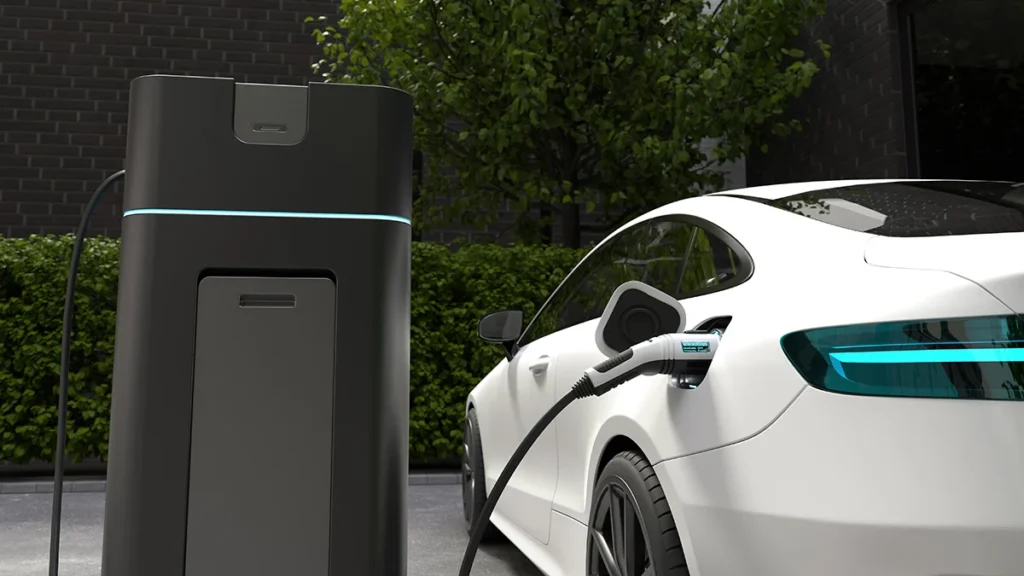
At its core, a charging station is a broad, umbrella term that encompasses any device designed to transfer electrical energy to a plug-in electric vehicle. This definition spans everything from heavy-duty public DC fast chargers to residential AC wall units. Conversely, a wallbox represents a specific subcategory: a compact, wall-mounted charging unit engineered primarily for domestic and semi-public use.
Understanding the technical nuances, power capacities, safety implications, and financial investments associated with each option is essential for optimizing EV ownership. While both systems share the ultimate goal of replenishing a vehicle’s battery, their deployment contexts, power outputs, and target audiences vary significantly.
Chronology and Evolution of EV Charging Infrastructure
To fully appreciate the distinction between a wallbox and a general charging station, it is helpful to look back at the evolution of vehicle charging systems over the past two decades.
- The Early Days (Late 2000s – Early 2010s): When modern mass-market electric vehicles first emerged, infrastructure was virtually nonexistent. Early adopters relied heavily on standard domestic electrical outlets (Level 1 charging). However, charging times frequently exceeded 15 to 20 hours, and plugging high-draw automotive loads into unregulated household circuits posed severe thermal and fire risks.
- The Rise of the Wallbox (Mid 2010s): Recognizing the need for a faster, safer domestic solution, the industry popularized the "wallbox"—a term derived both from its physical mounting structure and popularized by pioneering European hardware manufacturers. These dedicated alternating current (AC) units transformed residential garages, bringing charging times down to a manageable 4 to 8 hours and introducing smart-charging safety protocols.
- The Public Fast-Charging Boom (Late 2010s – Present): As battery capacities grew and long-distance travel became a priority, governments and energy providers deployed high-power direct current (DC) "totem" style charging stations along major transit corridors. These installations pushed power thresholds past 50 kW, eventually scaling up to ultra-fast hubs exceeding 300 kW. Today, the market features a deeply segmented ecosystem where residential wallboxes and high-capacity public stations coexist to serve distinct daily driving needs.
Supporting Data and Technical Specifications
Navigating the world of EV charging requires a firm grasp of electrical metrics, power outputs, and hardware classifications. The table below outlines the primary categories of charging solutions available on the market today.
| Charging Device Type | Typical Installation Location | Power Output Range | Average Charging Time (0–100%) | Primary Target Vehicle / User |
|---|---|---|---|---|
| Standard Domestic Socket | Residential (Indoor/Outdoor) | 2.3 kW (10A) | 15 – 24+ Hours | Plug-in hybrids (PHEVs) / Emergency use |
| Reinforced Socket (Prise renforcée) | Residential Garages / Carports | 3.2 kW – 3.7 kW | 8 – 12 Hours | PHEVs / Small City EVs |
| Wallbox | Homes, Apartment Buildings, Workplaces | 3.7 kW – 22 kW | 3 – 8 Hours | Private owners, Fleet operators, Multi-family housing |
| Public Fast Charging Station (DC) | Highways, Service Stations, Urban Hubs | 22 kW – 360 kW+ | 20 – 45 Minutes (0–80%) | Long-distance travelers, Commercial transit fleets |
The Wallbox Advantage
The wallbox stands out as the definitive standard for domestic installations. Delivering power outputs ranging from 3.7 kW (single-phase) up to 22 kW (three-phase), a wallbox accelerates charging speeds by up to 10 times compared to a standard wall socket.
Most residential electrical panels have strict capacity limits (typically constrained to 9kVA, 12kVA, or 15kVA contracts in standard domestic settings). A 7.4 kW single-phase wallbox represents the sweet spot for residential applications, maximizing the home’s available electrical throughput without tripping the main circuit breaker. Furthermore, wallboxes incorporate integrated circuit protection, dynamic load balancing, and communication modules that allow users to schedule charging during off-peak electricity hours, drastically reducing energy bills.
The Spectrum of General Charging Stations
By definition, the broader category of "charging stations" also includes reinforced sockets (prises renforcées). While structurally resembling standard wall outlets, reinforced sockets are engineered with heavier gauge wiring and built-in thermal sensors to safely handle continuous electrical draws of 3.2 kW to 3.7 kW over many hours. Though insufficient for large battery-capacity pure EVs, they serve hybrid owners cost-effectively.
At the opposite end of the spectrum lie high-power DC charging stations. Delivering upwards of 50 kW to 360 kW, these commercial units bypass the vehicle’s onboard charger, feeding direct current straight into the battery pack. While indispensable for road trips, automotive engineers caution against over-relying on ultra-fast DC charging. The immense heat generated during high-speed energy transfer can accelerate chemical degradation and thermal stress on battery cells over time.
Official Perspectives and Industry Insights
Energy regulators, electrical safety agencies, and automotive manufacturers maintain unified guidance regarding residential charging safety.
According to electrical safety authorities, plugging a modern electric vehicle into an unrated, standard household outlet for prolonged periods is a dangerous practice. Standard domestic sockets are designed for intermittent loads (such as vacuum cleaners or coffee makers) rather than continuous, high-amperage draws lasting several hours. This mismatch can cause terminal overheating, melted faceplates, and, in severe cases, structural electrical fires.
Industry groups and professional electrician associations (such as IRVE-certified installers in Europe) emphasize that transitioning to a dedicated wallbox is not merely a matter of convenience, but a critical safety compliance measure. Official standards dictate that any charging installation exceeding 3.7 kW in a residential or commercial building must be handled by certified professionals capable of evaluating the property’s load capacity, earthing systems, and residual current circuit breakers (RCCBs).
Furthermore, vehicle manufacturers routinely invalidate battery warranties if telemetry data proves chronic damage resulting from improper charging equipment or substandard makeshift adapters. Consequently, official dealer networks strongly recommend pairing every EV purchase with a professionally installed wallbox.
Implications for Consumers and the Future Market
The distinction between wallboxes and general charging stations carries profound financial, practical, and environmental implications for consumers.
1. Financial Investment and Budgeting
Purchasing and installing a wallbox is a capital expenditure. Costs vary depending on hardware features (smart connectivity, RFID access control, tethered vs. untethered cables) and the complexity of the home’s electrical layout. Because unexpected wiring upgrades (such as upgrading the main switchboard or running heavy armored cable across a property) can drive up expenses, obtaining a formal, customized quote (devis) is a mandatory first step. Consumers are heavily advised to utilize online estimation tools and consult certified technicians to secure government grants or tax credits available for green energy installations.
2. Daily Convenience and Fleet Management
For multi-car households or business fleet managers, choosing the correct infrastructure dictates daily operational fluidity. A 22 kW three-phase wallbox installed at an office enables employees to fully recharge commercial fleets during standard working hours. Meanwhile, domestic wallboxes grant residential users the peace of mind of waking up every morning to a "full tank" without ever needing to visit a public refueling station for routine commuting.
3. The Grid and Long-Term Sustainability
As millions of households adopt wallboxes, grid operators face the challenge of managing peak demand spikes. The future of residential charging lies in "smart wallboxes"—units capable of communicating with the local power grid to shift charging sessions to periods of low demand or high renewable energy generation (such as mid-day solar peaks or windy nights).
Ultimately, while the terms wallbox and charging station will likely continue to be used interchangeably by the general public, recognizing their structural and functional differences empowers consumers to build safer, more efficient, and cost-effective charging ecosystems tailored to the electric mobility era.
