

Main Facts: The Low-Mileage Classic Up for Grabs
For decades, the automotive landscape has held a peculiar fascination for utility-passenger hybrids—vehicles that offered the comfort of a mid-size sedan up front and the utility of a cargo bed in the back. Among the most iconic nameplates of this genre is the Ford Ranchero. Now, a meticulously cared-for and thoughtfully preserved 1979 Ford Ranchero 500 has emerged from long-term ownership, offering collectors and classic car enthusiasts a rare window into late-1970s American automotive design.
Showing a remarkably low 22,000 miles on its five-digit odometer, this seventh-generation Ranchero has spent the vast majority of its life under the stewardship of a single owner who acquired the vehicle back in 1993. Prior to that, the trucklet reportedly passed through the hands of just two other owners following its original delivery.
The vehicle is defined by a comprehensive, staged refurbishment that spans over two decades. Work carried out on the Ranchero includes a striking two-tone exterior respray in Light Jade Glow and Dark Jade Metallic, a professional interior retrim in matching Jade vinyl, re-plated exterior chrome components, and a complete mechanical rebuild of its 351-cubic-inch V8 powerplant. Power is routed to the rear wheels via a stalwart three-speed FMX automatic transmission.

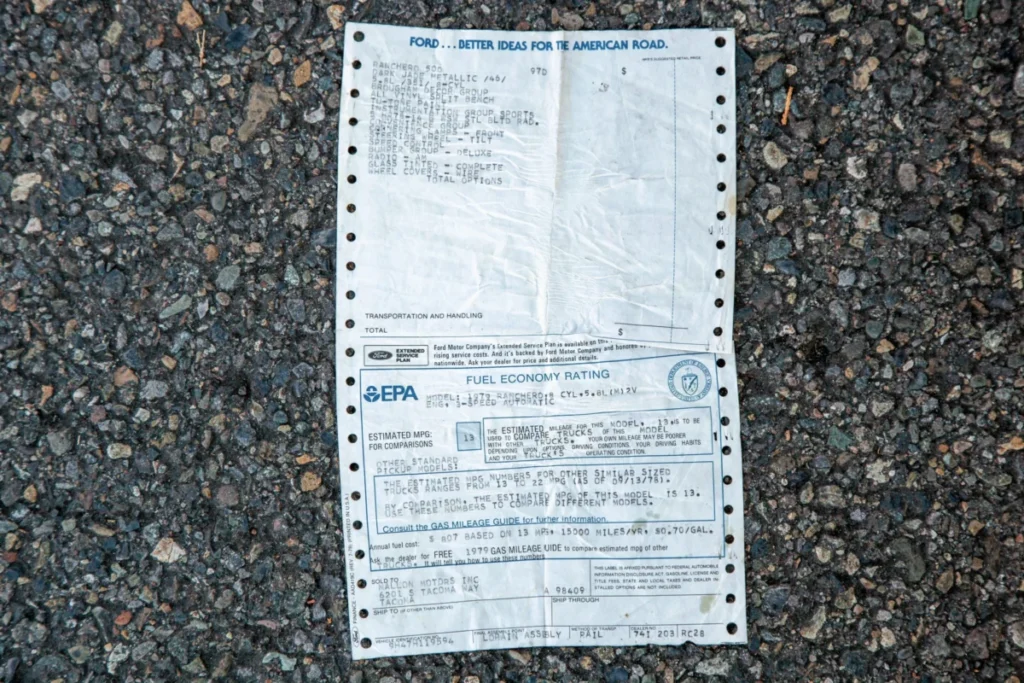
Outfitted with desirable factory options and period-correct accessories—including turbine-style 15-inch wheels, power steering, power front disc brakes, stacked quad headlights, and a Kraco cassette stereo—this Washington-titled classic is accompanied by an impressive historical file. The sale includes a window sticker, build sheet, service records, spare parts, a tonneau cover, and the original factory glovebox. Despite a few minor cosmetic blemishes and non-functioning accessories typical of a preserved driver-quality classic, this Ranchero represents an extraordinary preserved piece of Ford history.
Chronology: A Timeline of Care and Preservation
The life story of this 1979 Ford Ranchero 500 is a testament to long-term dedication, patience, and meticulous staging. Rather than undergoing a frantic, total tear-down restoration, the vehicle’s current custodian chose to preserve its integrity by addressing needs incrementally over a 33-year period.
1979: Factory Origin and Initial Delivery
The vehicle rolled off the assembly line and was originally delivered to Mallon Motors Inc. of Tacoma, Washington. Built during the final generation of the Ranchero lineage, it shared its foundational platform and distinctive styling cues with the contemporary Ford LTD II.

1993: The Current Stewardship Begins
After passing through two prior owners, the Ranchero was purchased by its current owner in 1993. At this stage, the vehicle was already a well-preserved survivor, setting the stage for a multi-decade journey of careful curation.
2002–2004: The Turning Point (Body and Engine Work)
In 2002, a minor parking lot accident resulted in localized damage to the driver’s side front fender. Rather than letting the injury mar the vehicle’s appearance, the owner seized the opportunity to refresh the exterior. The truck was treated to a professional respray in its factory-correct two-tone color scheme: Light Jade Glow (7L) and Dark Jade Metallic (46).
Shortly thereafter, in 2004, attention turned to the mechanical heart of the machine. The factory-rated 144-horsepower 351ci V8 engine was completely rebuilt to ensure reliable operation, strong performance, and crisp throttle response.

2012: Cabin Renewal
Nearly a decade after refreshing the sheet metal and engine bay, the interior received attention. Circa 2012, the split bench seat was retrimmed in premium Jade vinyl upholstery, breathing new life into the cabin while keeping with the factory aesthetic. Chrome components around the vehicle were also systematically re-plated to restore their showroom brilliance.
Present Day: Offering to the Market
After 33 years of continuous care, the current owner—acting through a seller—has made the decision to part with the vehicle. Complete with its original window sticker, an exhaustive paper trail of service records, and a binder documenting its life, the Ranchero stands ready for its next chapter.
Supporting Data: Specifications and Equipment Breakdown
To truly understand the appeal of this 1979 Ford Ranchero 500, one must examine the hardware, dimensions, and operational characteristics that defined the final years of the nameplate.

Powertrain & Performance
- Engine: 351ci (5.8L) V8 engine (rebuilt in 2004)
- Horsepower Rating: 144 hp (factory specification)
- Transmission: Three-speed FMX automatic transmission
- Drivetrain: Front-engine, rear-wheel drive
Chassis, Suspension & Brakes
- Platform: Shared with the Ford LTD II
- Bed Length: 6.5-foot utility bed equipped with a drop-down tailgate and an included tonneau cover
- Suspension: Independent front suspension and multi-link rear suspension
- Steering: Power-assisted steering system
- Brakes: Power-assisted front disc brakes and rear drum brakes
- Wheels & Tires: 15-inch turbine-style wheels wrapped in 225/75 Toyo Eclipse tires, with a full-size spare tire housed securely inside the cabin behind the passenger seat.
Interior Comfort & Amenities
- Upholstery: Jade vinyl split bench seat (retrimmed circa 2012)
- Trim: Faux wood accents on the dashboard, instrument cluster, and two-spoke tilting steering wheel, complemented by Brougham-spec door panels and deep cut-pile carpeting.
- Instrumentation ("Sports Instrumentation" Cluster):
- 85-mph speedometer
- 6,000-rpm tachometer
- Analog clock
- Ammeter
- Fuel level, coolant temperature, and oil pressure gauges
- Entertainment: Aftermarket Kraco cassette stereo system
Known Imperfections and Quirks
In the spirit of transparent classic car ownership, the vehicle’s listing highlights several minor cosmetic and functional quirks:
- The remote-adjustable exterior mirrors do not hold their position when adjusted.
- The cornering lights are currently inoperative.
- The driver’s side door features minor dings.
- The air conditioning and cruise control systems do not function.
- The left seat belt is temporarily held in place using two small clamps.
- A replacement glovebox requires final mounting (the factory glovebox is included in the sale).
- Some dashboard illumination lights are burnt out, and the horn is currently non-functional.
Official Responses and Market Context: The Legacy of the Final-Gen Ranchero
While no corporate entities or public figures issued formal statements regarding this specific vehicle, automotive historians, classic truck evaluators, and market analysts frequently weigh in on the cultural significance of seventh-generation Rancheros.
The Ranchero nameplate, introduced by Ford for the 1957 model year—two years ahead of Chevrolet’s competing El Camino—pioneered the coupe utility segment in North America. By the time the seventh generation rolled onto showroom floors for the 1977 to 1979 model years, stricter federal emissions regulations and changing consumer preferences had shifted the automotive landscape dramatically.

Automotive preservation experts note that cars from the late 1970s often suffered from high attrition rates. Many were driven hard as utilitarian workhorses, neglected, or eventually scrapped. Finding a seventh-generation Ranchero equipped with the desirable 351ci V8 engine, featuring an odometer reading of just 22,000 miles, and backed by three decades of single-ownership care is exceptionally rare.
Market specialists point out that vehicles undergoing staged, sympathetic restorations often command strong interest among hobbyists. Unlike frame-off trailer queens that owners fear driving, a well-maintained driver-quality classic with documented provenance offers an inviting entry point into vintage vehicle ownership, combining usability with undeniable curb appeal.
Implications: What This Sale Means for Collectors and the Classic Truck Market
The public offering of this 1979 Ford Ranchero 500 carries several notable implications for the vintage car hobby, particularly regarding the valuation and appreciation of late-malaise-era American iron.

1. Rising Appreciation for Late-70s "Malaise Era" Vehicles
For decades, vehicles produced between the mid-1970s and early 1980s were overlooked by mainstream collectors due to lowered horsepower ratings and bulky safety bumpers. However, generational shifts in the collector car market have sparked a wave of nostalgia. Enthusiasts who grew up seeing these vehicles on suburban streets are now seeking them out, driving a renaissance for well-preserved examples of late-70s styling, such as stacked quad headlights and plush velour/vinyl interiors.
2. The Value of Long-Term Custodianship and Documentation
Buyers in the classic car market increasingly prioritize provenance over perfection. A car that has spent 33 years with a dedicated owner—supported by an organized binder, build sheets, service logs, and the original window sticker—tells a compelling story. This transparency instills confidence in potential bidders, proving that the vehicle’s low mileage and mechanical overhauls are backed by genuine care rather than a quick flip.
3. Practicality Meets Nostalgia in the Hobby
The coupe utility segment holds a unique psychological space in automotive culture. It offers the aesthetic flair and cruising comfort of a personal luxury coupe combined with the practical utility of an open bed. For collectors looking for a machine that can comfortably cruise down Pacific Northwest highways, turn heads at local cars-and-coffee meetups, and haul weekend project supplies, vehicles like this Jade-hued Ranchero bridge the gap between form and function in a way modern trucks simply cannot replicate.
