

The landscape of Formula 1 is defined by its pursuit of the cutting edge, not just in aerodynamics and power unit development, but in the critical contact patch between the machine and the asphalt. As the sport moves toward the 2029 season, a familiar name is beginning to echo through the corridors of the paddock: Bridgestone. The Japanese rubber giant, which served as a cornerstone of F1’s technological evolution for over a decade, is reportedly laying the groundwork for a serious bid to reclaim its status as the sport’s official tire supplier.
With Pirelli’s current tenure set to conclude at the end of the 2028 season, the FIA’s upcoming tender process is shaping up to be one of the most competitive battles in recent motorsport history. Bridgestone is not merely "testing the waters"; they are aggressively positioning themselves to dismantle the status quo.
A Historical Retrospective: The Bridgestone Era
To understand the weight of a potential Bridgestone return, one must look back at their illustrious tenure in the sport. Bridgestone entered Formula 1 in 1997, immediately shaking up a monopoly held by Goodyear. Their arrival ushered in a golden age of tire competition, most notably the legendary "Tire Wars" against Michelin, which pushed the boundaries of compound longevity and grip.
From 1997 to 2010, Bridgestone was at the heart of some of the sport’s most iconic moments. They were the silent partners to Michael Schumacher and Ferrari during their dominant streak in the early 2000s. In 2007, following Michelin’s departure, Bridgestone became the sole tire supplier, a role they held with distinction until they opted to exit the sport at the end of the 2010 season to focus on internal restructuring and sustainability initiatives. Their departure paved the way for Pirelli, which has occupied the position of sole supplier since 2011.
Strategic Infiltration: The Paddock Observation Mission
Bridgestone’s interest is no longer a matter of speculation; it is a visible, coordinated effort. In recent months, the Japanese manufacturer has significantly increased its physical footprint in the F1 paddock. High-ranking delegations, comprised of senior executives and lead technical engineers, were spotted in both Singapore and Austin.
These visits were not merely ceremonial. They served as reconnaissance missions to assess the current operational requirements, the logistics of the modern F1 calendar, and to engage in preliminary, informal dialogues with FIA officials and team principals. By immersing themselves in the reality of the current "ground effect" era of F1, Bridgestone is ensuring that any technical proposal they submit for 2029 is grounded in the current realities of the cars, which are significantly heavier and more technologically complex than those they supplied in 2010.
The Human Factor: Recruiting for Excellence
A critical pillar of Bridgestone’s strategy is the acquisition of top-tier talent. The most significant move in this direction is the return of Hiroshi Imai to the Bridgestone fold. Imai is a name synonymous with excellence in F1 circles. Having spent nearly two decades at Bridgestone (1990–2008), he moved to McLaren in 2009, where he became an indispensable asset.
Imai’s tenure at McLaren, which spanned until 2025, saw him climb the ranks to become the Director of Race Engineering. His intimate knowledge of modern car dynamics, suspension geometry, and braking systems—the very components that interact most directly with the tires—makes him the ideal architect for Bridgestone’s F1 project. His return to the company in 2025, specifically tied to a reorganization of their motorsport department, is a clear signal that Bridgestone is building a team capable of hitting the ground running. His presence in the delegations at Singapore and Austin was no coincidence; he is the bridge between Bridgestone’s past mastery and the demands of the future.
Supporting Data: A Global Motorsport Pedigree
Bridgestone’s argument for a return to F1 is bolstered by their continued dominance in other high-stakes environments. While they have been absent from the F1 grid, they have remained a titan in the world of racing:
- IndyCar: Operating under the Firestone brand, Bridgestone remains the exclusive supplier for the NTT IndyCar Series, demonstrating their ability to handle high-speed ovals and complex road courses alike.
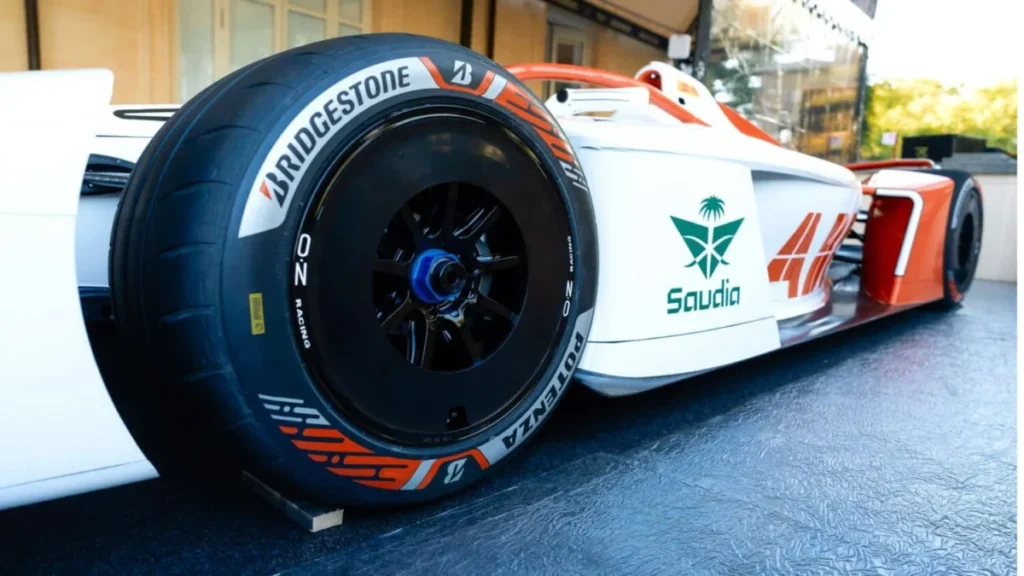
- Formula E: Bridgestone has been confirmed as the future sole supplier for the series starting in the 2026-2027 season, tasked with supporting the high-performance Gen4 cars. This proves their commitment to sustainability and electric vehicle tire technology.
- Super GT: Their continued involvement in the Japanese Super GT series confirms that their research and development cycles are constantly producing tires capable of extreme thermal management and high-load endurance.
These programs serve as living laboratories, ensuring that Bridgestone’s technical knowledge has not stagnated during their hiatus from the pinnacle of motorsport.
The Competitive Landscape: A Three-Way Battle
While Bridgestone is preparing a formidable bid, they are by no means the only player interested in the 2029-2031 tender. The competition will be fierce:
- Pirelli: The incumbent. Pirelli has invested heavily in the sport, navigating the difficult transition to 18-inch wheels and surviving the criticism that naturally comes with being the sole supplier. They are unlikely to relinquish their position without a significant fight.
- Hankook: The South Korean manufacturer has been vocal about its desire to enter the F1 space. Having already established itself in Formula E, Hankook views F1 as the final frontier for brand recognition.
- Michelin: While they have maintained a policy of "technological relevance" as a barrier to their return, rumors persist that the French giant could be tempted back if the FIA moves toward a more open development cycle or tire-war scenario.
The FIA’s tender process will be a three-tiered hurdle: technical capability, commercial viability, and financial stability. Bridgestone is reportedly drafting a proposal that aims to exceed their previous benchmark, focusing on tires that allow for maximum driver aggression—a frequent request from both teams and fans who miss the days of pushing without the constant threat of thermal degradation.
Implications for the Future of F1
The potential return of Bridgestone carries significant implications for the sport:
- Technological Shift: A new supplier would force every team to essentially "re-learn" how to design their cars. The tire is the most important component of the suspension, and a change in philosophy from Pirelli to Bridgestone would reset the competitive order.
- Commercial Appeal: For Formula 1, having a legacy brand like Bridgestone return adds prestige and validates the sport’s massive global reach. It signals that F1 is the ultimate marketing platform for automotive manufacturers.
- Sustainability: With the FIA pushing for carbon neutrality by 2030, the new tire supplier will be mandated to meet stringent environmental standards. Bridgestone’s recent work in Formula E puts them in a strong position to meet these ecological criteria, potentially giving them an edge over competitors who are still scaling their sustainable manufacturing processes.
Official Responses and Next Steps
As of now, the FIA has not officially opened the bidding window for the 2029-2031 period. However, the informal consensus in the paddock is that the governing body will look for a partner that balances performance, safety, and the sport’s broader sustainability goals.
Bridgestone has remained tight-lipped in official press releases, maintaining a standard corporate stance: "We are always evaluating our motorsport strategy to ensure it aligns with our long-term goals." However, the sheer scale of their recent activity suggests that an internal "green light" has been given.
For the fans, the prospect of a change in supplier offers the hope of a fresh start. Whether it leads to a return to the "tire wars" of the past or simply a shift in the status quo, the battle for the 2029 contract will be a defining subplot of the coming years. As the 2025 season approaches, all eyes will be on Hiroshi Imai and his team to see if they can finalize the blueprint that brings the Japanese powerhouse back to the pinnacle of global racing.
The journey toward 2029 has begun. While Pirelli holds the track today, the shadows in the paddock are growing longer, and they are painted in the corporate colors of Bridgestone. The race to be the most important partner in Formula 1 is officially on.
