

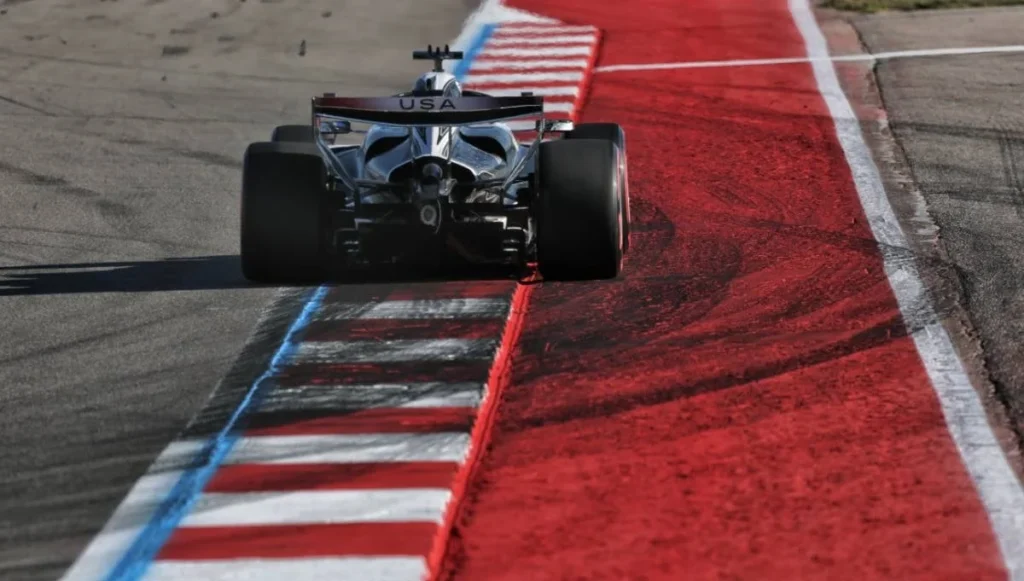
The Circuit of the Americas (COTA) is widely celebrated as a crown jewel of modern Formula 1 design. With its elevation changes, iconic blind corners, and the challenging triple-apex of Turn 11, it is a driver’s track that demands absolute precision. However, as the sport returned to Austin for the latest iteration of the United States Grand Prix, the conversation was dominated not by lap times or technical upgrades, but by the relentless, often frustrating, scrutiny of track limits.
During Friday’s opening practice sessions, the stewards were kept busier than perhaps at any other point this season, handing down a staggering 207 lap-time deletions. This "festival of white lines" has cast a long shadow over the remainder of the weekend, raising the terrifying prospect that the qualifying session and Sunday’s Grand Prix could be decided by the stewards’ office rather than the action on the tarmac.
The Anatomy of the 207: A Data-Driven Breakdown
To understand the scale of the issue, one must look at the numbers. Across the two 60-minute Free Practice (FP1 and FP2) sessions, 23 drivers had a cumulative total of 207 laps deleted. In the world of Formula 1, where every millisecond is treated as sacred, these deletions represent a significant portion of the data-gathering exercise that teams rely on to set up their cars for the race.
The deletions occurred primarily due to the physical nature of COTA. The track’s high-speed sections encourage drivers to flirt with the painted boundaries, effectively extending the racing surface to carry more momentum into the following sectors. While the FIA has employed various sensors and high-definition cameras to monitor these infringements, the sheer frequency of violations on Friday suggests that the current track configuration—combined with the high-downforce, high-speed nature of modern F1 cars—is fundamentally at odds with the current regulatory enforcement.
Chronology of the Infringements
The chaos began in earnest during FP1. As track temperatures fluctuated and grip levels shifted, drivers were seen repeatedly running wide at the exit of the high-speed curves. As the day progressed into FP2, which featured a Pirelli tire test component, the frequency of infringements did not abate. If anything, as teams pushed their cars to the limit of their mechanical threshold, the frequency of "off-track" excursions increased, resulting in a constant stream of messages on the FIA timing screens informing teams that their efforts had been erased.
The Drivers in the Hot Seat: Who Struggled the Most?
The statistical breakdown of the infractions reveals a fascinating, if concerning, trend. Leading the charge in terms of violations was Williams Racing’s Alex Albon. The Anglo-Thai driver saw 20 of his laps deleted over the course of the day. For Williams, the day was defined by a volatile, unpredictable car balance. Albon’s struggle with the limits was a direct symptom of a car that appeared to be lacking rear-end stability, forcing him into aggressive corrections that inevitably pushed his tires beyond the white lines.
His teammate, Carlos Sainz, echoed these frustrations. The Spaniard, known for his technical precision, openly admitted to a lack of confidence in the rear of his challenger. When a driver cannot trust the car to hold its line under cornering loads, the margin for error effectively vanishes.
Perhaps more surprisingly, Lando Norris, the championship contender, also found himself on the wrong side of the stewards, with 18 of his laps deleted. Norris’s predicament highlights the "performance paradox": to find the ultimate pace required to challenge for pole position, drivers must push to the absolute edge of the track. When that edge is a white line, the risk of a "deleted lap" becomes a tactical hazard that can dismantle a qualifying run in an instant.
On the other end of the spectrum, Valtteri Bottas displayed a masterclass in discipline. The veteran driver recorded only a single violation during the entire day. Along with Esteban Ocon, Bottas stands as a beacon of restraint, proving that while the track is difficult to master, the "perfect" line is achievable for those who sacrifice a fraction of speed for total adherence to the rules.
The Regulatory Implications: From Practice to Podium
While Friday’s deletions serve as a warning, the real drama lies in what happens next. In Free Practice, a deleted lap is an annoyance—a loss of data that hinders setup. In Qualifying, it is a disaster. A single mistake in Q3 can result in a deleted time, potentially dropping a driver from the front row to the back of the session’s order. With the field as compressed as it is this season, a deleted lap will almost certainly determine who starts on the front row and who is relegated to the midfield.
The "Three-Strike" Rule
The situation is even more precarious in the Grand Prix itself. The FIA’s protocol is clear:
- First, Second, and Third Infringement: A warning is issued.
- Fourth Infringement: A "black and white" flag is shown.
- Fifth and Subsequent Infringements: A five-second time penalty is automatically applied.
Given the frequency of violations on Friday, it is entirely possible that multiple drivers will reach the "penalty zone" before the chequered flag falls on Sunday. This transforms the race into a high-stakes game of discipline, where the fastest driver may not necessarily be the winner if they cannot keep their wheels within the bounds of the circuit.
Historical Context: Are We Facing an "Austria 2023" Scenario?
The paddock is understandably anxious, remembering the infamous 2023 Austrian Grand Prix. At the Red Bull Ring, over 1,200 track limit infringements were recorded, leading to a post-race reshuffling of the results hours after the cars had crossed the line. It was a dark day for the sport’s credibility, as fans waited for official word on who had actually finished in the points.
While the 207 deletions in Austin are significant, they are currently far from the levels seen in Spielberg. However, the FIA’s officials are acutely aware that they are walking a fine line. There is a growing consensus among team principals and drivers that the enforcement of track limits needs to be more intuitive—perhaps through the use of physical kerbs or gravel traps—rather than relying on millimeter-perfect video analysis that the human eye cannot perceive in real-time.
Conclusion: The Path Forward
As the teams prepare for the high-pressure environment of Saturday’s qualifying and Sunday’s race, the "track limits" issue remains the elephant in the room. The challenge for the drivers is clear: they must find the balance between the aggressive exploitation of the track and the rigid discipline required by the stewards.
For the fans, the hope is that the battle for the United States Grand Prix is decided by overtaking maneuvers on the track rather than administrative decisions in the stewards’ room. But as Friday’s data suggests, COTA is a beast that demands respect. Those who fail to yield to its boundaries will likely pay a heavy price, potentially altering the course of the championship in one of the most pivotal weekends of the season.
The stage is set in Texas. The cars are fast, the stakes are high, and the white lines have never been more significant. It remains to be seen whether the drivers will master the circuit, or if the circuit will, once again, force the stewards to intervene.
