

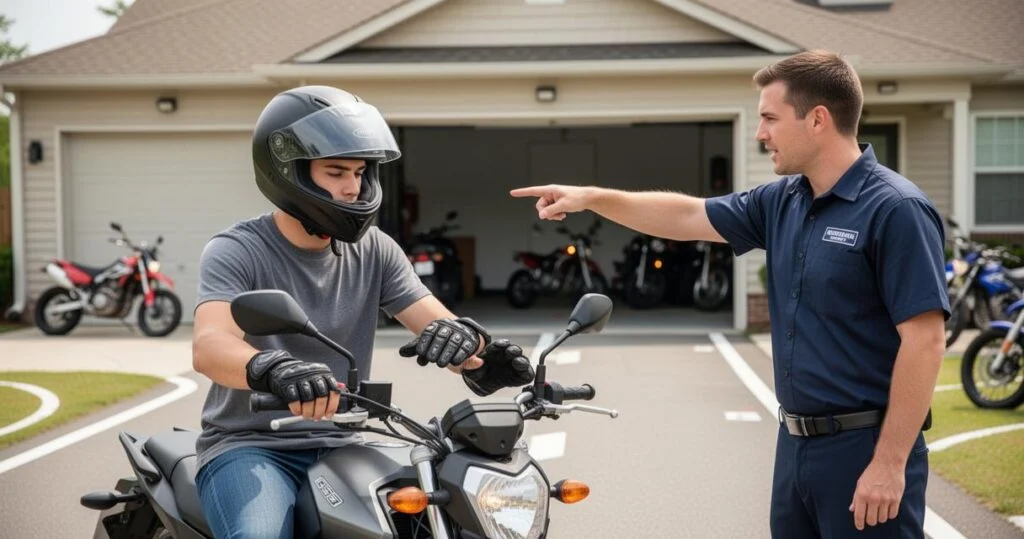
Embarking on the journey to obtain a motorcycle license is a milestone that blends the thrill of freedom with the gravity of road safety. Whether you are a sixteen-year-old eyeing your first 125cc machine or an experienced rider looking to unlock higher engine capacities, the path to licensure is governed by rigorous standards and specific regulatory hurdles. In an era where urban mobility is shifting, understanding the nuances of the French motorcycle licensing system—from the A1 and A2 categories to the crucial "passerelle" transition—is essential for any aspiring motorcyclist.
Main Facts: Decoding the Licensing Landscape
The regulatory framework for motorcycle licenses in France is designed to ensure a progressive acquisition of skills. Before approaching an instructor, candidates must familiarize themselves with the primary tiers of licensure:
- Permis A1: Designed for novices as young as 16, this license authorizes the operation of light motorcycles not exceeding 11 kW (125cc). It serves as the foundational step for younger riders.
- Permis A2: The standard for most adults, this license is accessible from age 18. It covers motorcycles with a maximum power of 35 kW. This is the primary gateway for the majority of the riding population.
- The Passerelle (A2 to A): After two years of holding the A2 license, riders can "upgrade" to the full A license via a streamlined seven-hour training course, bypassing the need for a full re-examination.
All pathways require mastery of the ETM (Épreuve Théorique Moto), a specialized motorcycle-focused theory exam. Candidates must correctly answer at least 35 out of 40 questions, demonstrating a deep understanding of road safety, physics, and traffic rules specific to two-wheeled vehicles.
Chronology: The Journey from Enrollment to License
The road to the license follows a structured timeline, demanding both time and commitment.
- Initial Assessment and Enrollment: Upon choosing a certified motorcycle school (moto-école), candidates undergo an initial evaluation to determine the number of hours required. While the legal minimum is 20 hours, individual progress varies.
- Theory Phase (ETM): The ETM acts as the gatekeeper. Candidates study road signs, mechanical basics, and specific motorcycle hazards. Success here is the prerequisite for the practical phases.
- The Plateau (Off-Road Phase): This is the technical crucible. Candidates must master slow-speed maneuvering, emergency braking, and slalom techniques within a private, secured area. This phase builds the muscle memory required for real-world safety.
- Circulation (On-Road Phase): Once the plateau is mastered, the candidate enters the public road network. Under the guidance of an instructor, the student learns to navigate traffic, manage blind spots, and anticipate the movements of other motorists.
- The Practical Examination: The final hurdle. It consists of the plateau exam followed by the circulation test. Passing both secures the coveted license.
Supporting Data: Why Quality Training Matters
When selecting a training facility, data—while useful—should be interpreted with a critical eye. While a school’s "success rate" is a frequently requested metric, experts advise looking beyond raw percentages. A high success rate might indicate a school that only accepts "easy" candidates or pushes students through a rote-learning process.
Instead, prioritize the following indicators of a high-quality establishment:
- Instructor-to-Student Ratio: Ideally, a low ratio ensures personalized feedback. In the technical environment of a motorcycle plateau, having an instructor who can dedicate time to correcting your specific posture or trajectory is invaluable.
- Equipment Maintenance: The condition of the motorcycle fleet is a direct reflection of the school’s professionalism. Well-maintained, modern bikes not only provide a better learning experience but also serve as a safety prerequisite.
- Private Training Grounds: Access to a private, dedicated plateau ensures that training is conducted without the pressure of external traffic, allowing for a focused environment where the student can safely fail and learn from mistakes.
Official Responses and Regulatory Standards
The Ministry of the Interior and relevant transport authorities emphasize that motorcycle training is not merely about passing a test, but about "risk management." Official directives highlight that the transition to the A license (the passerelle) is not merely a formality; it is a pedagogical bridge that reinforces the habits of experienced riders.
The introduction of the ETM (replacing the general theory test) was an official response to the high accident rate among new riders. By focusing specifically on motorcycle physics—such as the impact of road surface conditions on two wheels and the necessity of specialized protective gear—the state aims to reduce the "casualty gap" between novice and seasoned motorcyclists. Furthermore, the integration of CPF (Compte Personnel de Formation) funding for motorcycle training has been a significant official step, democratizing access to professional training and encouraging a higher standard of safety for all road users.
Implications: Choosing Your Path in the Ile-de-France
For those residing in the Ile-de-France region, the sheer density of motorcycle schools can be overwhelming. The proximity of institutions like Easy Monneret serves as a benchmark for what a comprehensive school should offer: multiple training sites, a diverse fleet, and pedagogical continuity.
The Impact of "Intensive" vs. "Standard" Formulas
Candidates often weigh the benefits of intensive "crash courses" against traditional, spread-out training.
- Intensive formulas are ideal for those with limited availability, providing a total immersion that can help consolidate skills quickly. However, they require high levels of concentration and physical stamina.
- Standard formats allow for a "maturation" of skills. For many, the time between lessons allows the brain to process the complex physical movements required for safe cornering and emergency avoidance.
The Human Factor
Beyond the equipment and the classroom, the most important element remains the human connection. A mentor-like relationship with an instructor who prioritizes defensive driving over simple test-passing maneuvers is the most significant indicator of future safety.
Final Recommendations for the Aspiring Rider
- Visit in Person: Do not sign up based on a website alone. Visit the training ground, inspect the bikes, and talk to the instructors.
- Verify Accreditation: Ensure the school is officially recognized by the Prefecture.
- Prioritize Quality over Price: The cost of a few extra hours of quality training is negligible compared to the long-term safety benefits of mastering advanced riding techniques.
- Review the Reviews: While online reviews should be taken with a grain of salt, look for consistent comments regarding instructor patience and transparency in billing.
In conclusion, the motorcycle license is more than a piece of plastic; it is a license to operate a machine that demands constant vigilance. By choosing a reputable school, respecting the training process, and approaching the learning curve with humility and diligence, you are not just ticking a box—you are investing in a lifetime of safer, more enjoyable riding. Whether you are navigating the chaotic streets of Paris or the open roads of the countryside, the foundation you build today will dictate your safety tomorrow.
