

By Audric Doche
Automotive Journalist
Main Facts: The Fiat Multiplina at a Glance
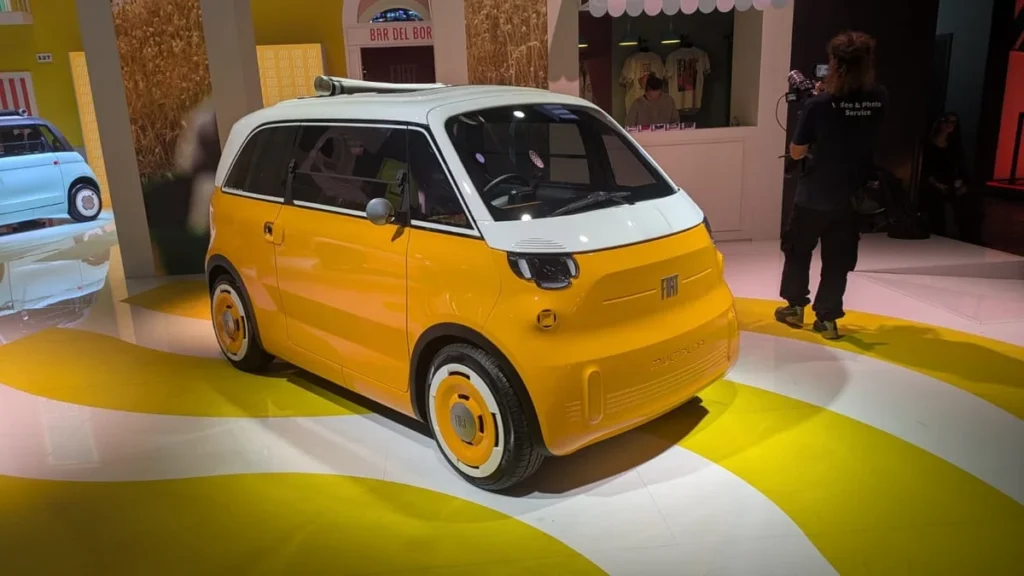
Unveiled as a world premiere at the Mondial de l’Automobile (Paris Motor Show), the Fiat Multiplina concept is turning heads and challenging traditional concepts of urban transport. Effectively serving as a "Topolino XXL," this bold new vehicle is engineered to bridge the critical gap between lightweight quadricycles and traditional, overly heavy city cars.
Designed for the heavy quadricycle category (L7e), the Multiplina is legally permitted to reach a top speed of 90 km/h (56 mph), enabling it to navigate suburban boulevards and ring roads, though it remains strictly excluded from major motorways and high-speed highways.
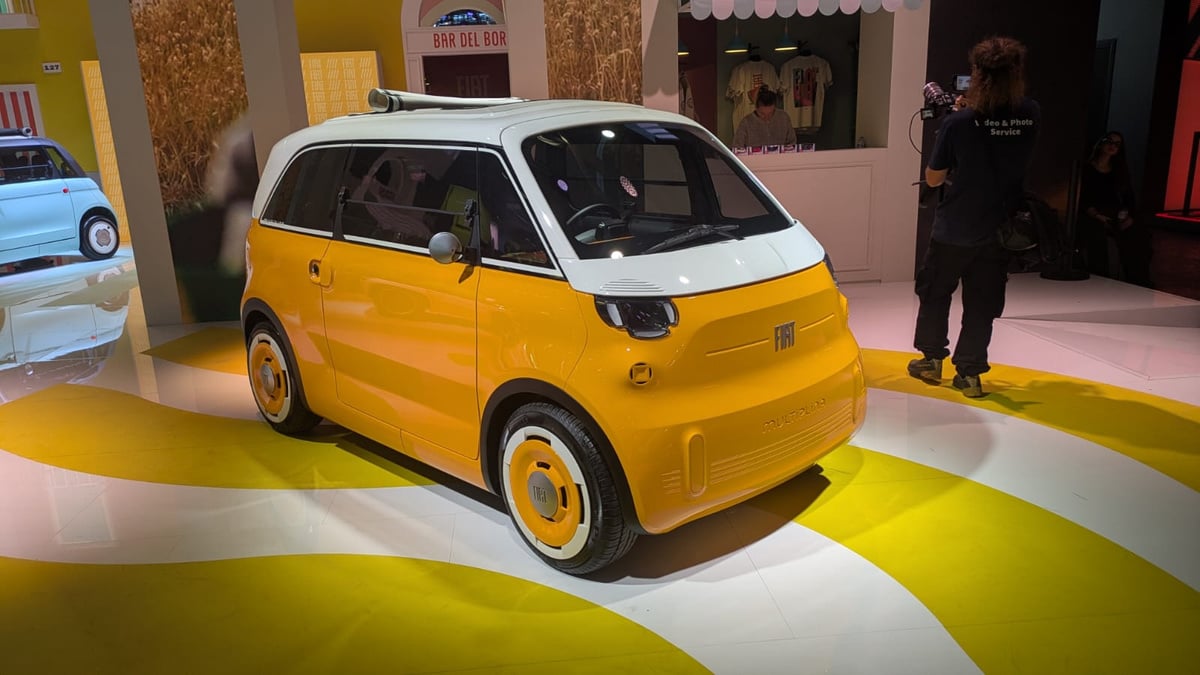
Despite its diminutive footprint—barely larger than a standard microcar—Fiat’s design team has pulled off an impressive packaging feat: fitting four true seats into the cabin. This massive leap in interior space optimization comes with one notable, unavoidable trade-off: a non-existent boot (trunk).
Rooted deeply in Fiat’s rich heritage, the Multiplina name pays homage to both the legendary 1956 600 Multipla and the wildly controversial, highly practical Multipla MPV of the late 1990s. Positioned by Fiat executives as a launch as strategically vital to the brand as a brand-new 500, the Multiplina concept heralds a new era of family-friendly micromobility. However, eager buyers will need to exercise patience, as the Italian manufacturer has slated the official commercial release for 2028.
Chronology: From Retro Icons to the Future of Micromobility
To fully understand the significance of the Multiplina concept, it is essential to trace the evolutionary timeline of Fiat’s innovative approach to space, mobility, and city cars.
- 1956 — The Birth of the Multipla Concept: Fiat introduces the 600 Multipla, a vehicle that revolutionized interior packaging by pushing the cabin forward over the front wheels, creating an MPV format long before the acronym even existed.
- 1998 — The Controversial Icon: Fiat launches the unconventional Multipla. Despite dividing opinions with its polarizing, multi-layered exterior styling, it wins universal praise for its brilliant internal packaging, offering six full-size seats across two rows.
- 2022–2023 — The Micromobility Boom: Fiat introduces the Topolino, a tiny, all-electric quadricycle (L6e category) modeled after the Citroën Ami. Capped at 45 km/h, it quickly becomes a favorite accessory for urban centers and teenagers.
- Late 2024 — The Mondial de l’Automobile Premiere: Fiat pulls the wraps off the Multiplina concept in Paris. Billed as a major strategic milestone, the vehicle previews an L7e-category family quadricycle meant to capture the urban and shared mobility markets.
- 2028 (Projected) — Commercial Launch: Fiat confirms that the production-ready incarnation of the Multiplina will roll off production lines and hit European streets.
Supporting Data: Specifications and Categorization
While Fiat has kept specific technical metrics—such as exact battery capacity, real-world range, and retail pricing—strictly under wraps, the foundational parameters of the Multiplina are defined by European vehicle homologation standards.
| Feature / Specification | Fiat Topolino (L6e) | Fiat Multiplina Concept (L7e) |
|---|---|---|
| Vehicle Category | Light Quadricycle (L6e) | Heavy Quadricycle (L7e) |
| Maximum Speed | 45 km/h (28 mph) | 90 km/h (56 mph) |
| Seating Capacity | 2 Persons | 4 Persons |
| Trunk / Cargo Space | Minimal / Front storage | Inexistent (Cabin space prioritized) |
| Target Infrastructure | City centers, narrow lanes | Urban, suburban, and ring roads |
| License Requirement | Varies (often age 14+ with no license) | Standard quadricycle/car license rules |
| Projected Market Entry | Available Now | Horizon 2028 |
Navigating the L7e Classification
The shift from the L6e category (which governs the standard Topolino) to the L7e heavy quadricycle category changes the operational profile of the vehicle entirely. By allowing the Multiplina to achieve a top speed of 90 km/h, Fiat ensures that the vehicle is not restricted strictly to dense urban cores. Drivers can safely navigate multi-lane urban arteries and suburban connectors without holding up traffic.
However, because it remains classified as a quadricycle rather than a full passenger car (M1 category), it is legally barred from high-speed motorways and express highways—a limitation that aligns with its core mission as a localized urban commuter.
Official Responses and Design Philosophy
Speaking at the Paris debut, Fiat’s leadership did not shy away from bold declarations, comparing the strategic weight of the Multiplina project to the introduction of a brand-new Fiat 500. The brand’s design and engineering departments focused heavily on mining the past to solve the modern mobility equation.
A Masterclass in Packaging
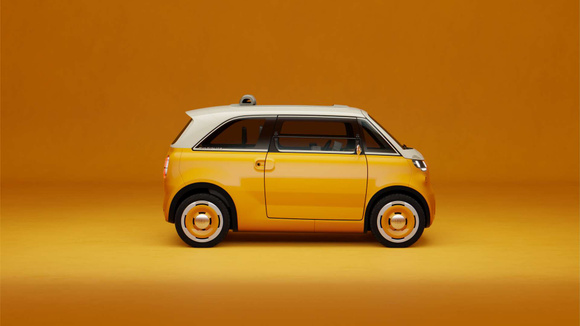
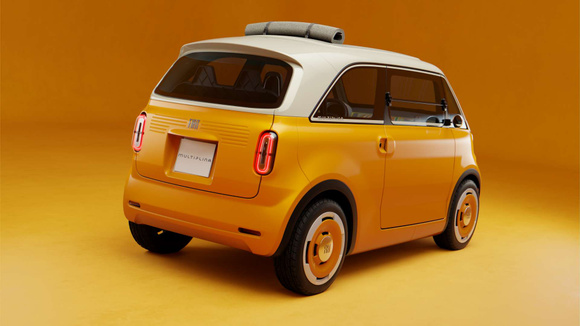
Aesthetically, the Multiplina wears its lineage proudly. Its vertical nose, expansive glasshouse, charming round headlamps, and playful two-tone color scheme immediately capture public goodwill. But beneath the retro-chic exterior lies a radical engineering achievement.
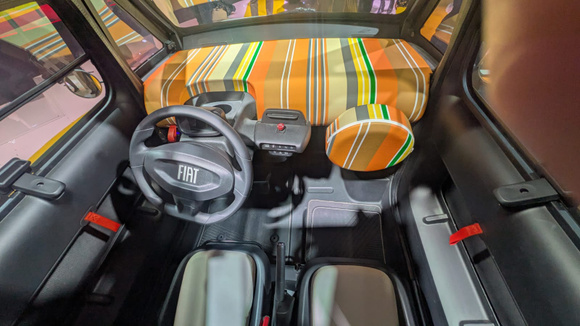
By pulling the driving position as far forward into the front fascia as humanly possible, Fiat’s designers managed to carve out enough interior volume to house four distinct seating positions within a footprint only marginally larger than a standard microcar. Unfortunately, during the premiere event, access to the interior was strictly restricted by Fiat representatives, leaving journalists and the public to anticipate the precise dashboard layout and interior ergonomics for a future date.
The Great Compromise: Zero Boot Space
Fitting four human beings into an ultra-compact vehicle inevitably requires sacrifice. For the Multiplina, that sacrifice fell entirely on cargo capacity. With all four seats occupied, the trunk is practically non-existent.
When asked about this design choice, Fiat insiders emphasized that the Multiplina is intentionally purposed for short daily journeys, urban carpooling, and weekend family outings rather than cross-country road trips. Passengers will either need to pack exceptionally light, rely on cabin storage pockets and nets, or place shopping bags on the laps of rear-seat occupants. It is an unapologetic, pragmatic compromise designed to maximize passenger headcount over luggage volume.
Implications: The Future of Urban and Shared Mobility
The unveiling of the Fiat Multiplina concept signals a broader, much-needed shift within the European automotive industry. For years, traditional city cars have grown progressively larger, heavier, and more expensive, loaded with complex technologies that inflate both price tags and carbon footprints during manufacturing.
An Alternative to Heavy EVs
By introducing a four-seat, L7e-category vehicle that prioritizes simplicity and lightness, Fiat is directly targeting a gaping hole in the micromobility market. The Multiplina offers a compelling alternative for urban households seeking a secondary vehicle, as well as for corporate car-sharing fleets operating in congested metropolitan areas.
If Fiat can successfully transition the Multiplina from a charming show concept to a production-ready reality without letting costs spiral out of control, it could redefine how families move within dense environments. However, the four-year wait until 2028 means the automotive landscape will undoubtedly evolve further. Until then, Fiat’s ultimate success with the Multiplina will hinge on one final, crucial ingredient yet to be revealed: a tightly controlled, highly accessible retail price.
