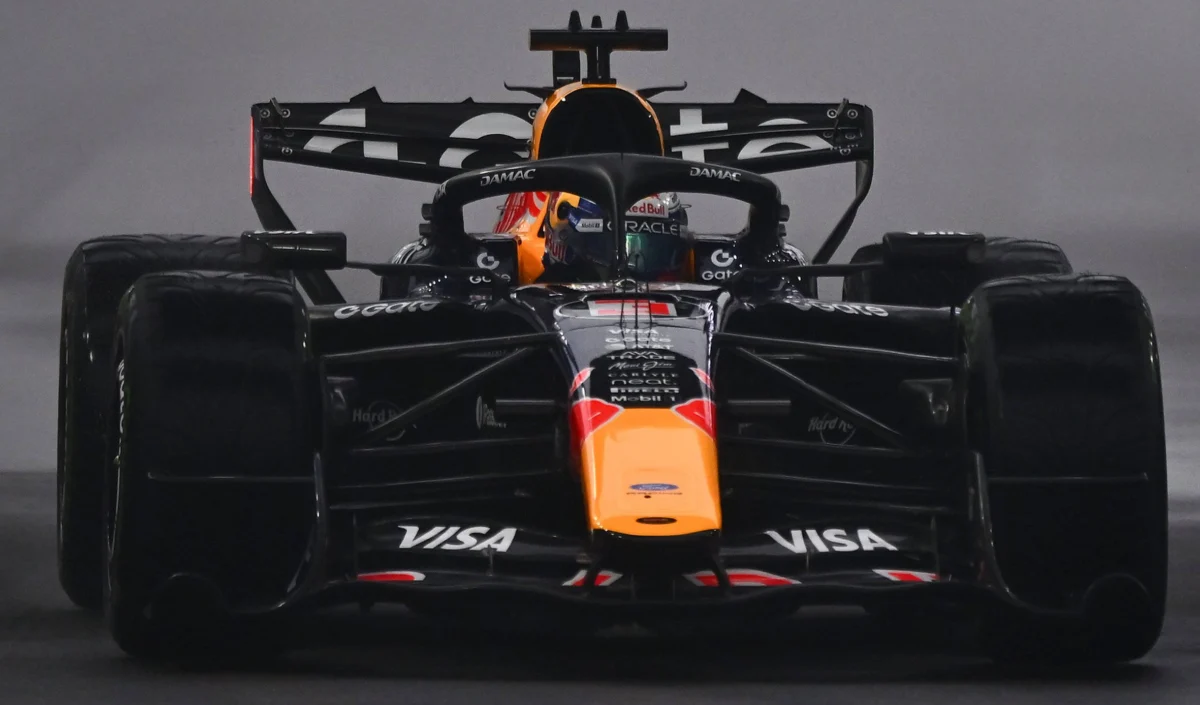
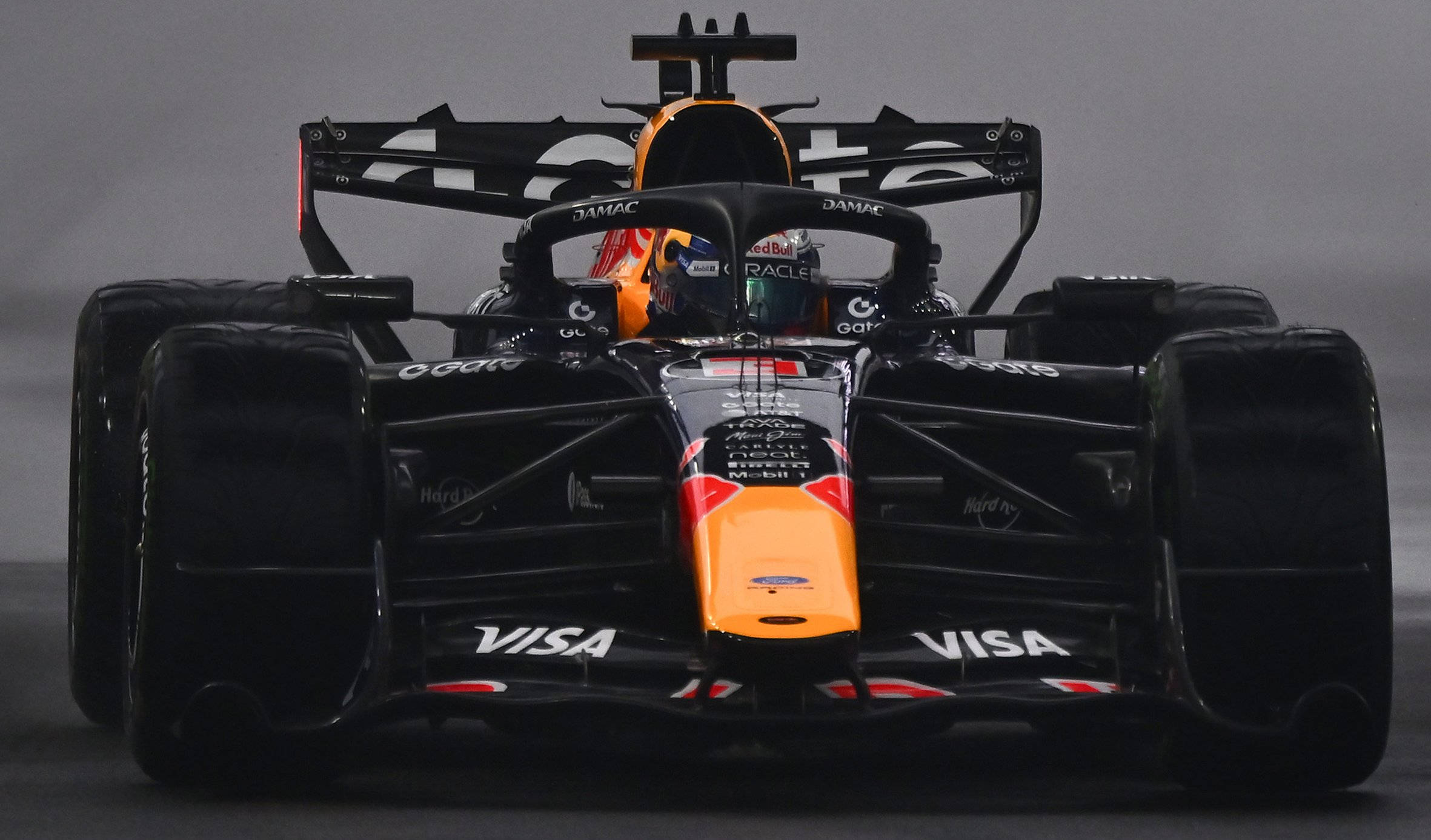
SINGAPORE — Formula 1’s return to the Marina Bay Street Circuit for the 2026 Singapore Grand Prix Sprint delivered a race of attrition, high drama, and unpredictable weather. When the spray finally settled under the floodlights, it was Red Bull Racing’s Max Verstappen who mastered the treacherous conditions to claim his maiden Sprint victory of the season—and the fourth of his illustrious career.
Yet, the headline-grabbing win tells only half the story of a chaotic Saturday afternoon. From pre-race storms and questionable stewarding decisions to a catastrophic late-race collision between championship contenders, the Singapore Sprint offered a masterclass in why street circuits in the wet remain the ultimate test of survival.
Behind Verstappen, Ferrari’s Lewis Hamilton and Charles Leclerc completed the podium, while Mercedes youngster Kimi Antonelli capitalized on late-race chaos to extend his advantage in the Drivers’ Championship standings following a disastrous outing for teammate George Russell.
Main Facts
The 20-lap Sprint at Marina Bay was defined by extreme weather and high-stakes drama from the opening moments:
- The Winner: Max Verstappen secured a commanding victory for Red Bull Racing, controlling the race from the front after navigating a chaotic opening lap.
- The Podiums: Lewis Hamilton drove a stellar race to secure second place for Ferrari, with teammate Charles Leclerc rounding out the podium in third.
- The Championship Impact: Kimi Antonelli finished fourth, securing crucial championship points and extending his lead over teammate George Russell, who crashed out on Lap 1.
- The Carnage: Out of 22 cars that started the race, a staggering eight drivers failed to see the checkered flag, victims of a soaking wet track, lingering damp patches, and aggressive wheel-to-wheel battles.
- The Late Drama: A dramatic collision between McLaren teammates Oscar Piastri and Lando Norris on the penultimate lap blew the final points-paying positions wide open, handing unexpected gifts to the chasing pack.
Pre-Race Chaos: Weather, Penalties, and FIA Controversy
Formula 1 weekends in Singapore are rarely straightforward, and the 2026 edition lived up to its unpredictable reputation well before the cars even lined up on the grid.
As is customary given the regional climate, torrential rain hammered the Marina Bay area in the late afternoon, leaving the asphalt completely drenched. Safety concerns forced race control to delay the start of the Sprint by 30 minutes, pushing the formation lap to 17:30 local time. Teams and drivers faced a tactical nightmare: all cars rolled out on intermediate tires, but with parts of the circuit drying rapidly while others remained completely waterlogged, the question of whether a late switch to slick tires would be necessary hung heavy in the paddock.
Adding to the tension were controversies surrounding the FIA’s officiating. Just a day prior, Max Verstappen had bypassed Lewis Hamilton under a yellow flag. While Hamilton was on a deceleration lap and Verstappen was on a flying lap, precedents suggested penalties were likely. However, the stewards ruled that the Dutchman had sufficiently slowed down, sparing him a sanction—a decision heavily criticized in the paddock as "clientele-pleasing" given stricter enforcement in past, identical scenarios.
Controversy struck again during SQ1 when a software or human error allowed several cars to access the overtake mode—granting a momentary boost in power—for 27 seconds. Despite the clear technical advantage, the FIA wrote it off as a simple human error, refusing to annul the qualifying session and leaving rival teams frustrated by the lack of accountability.
To compound the pre-race shuffle, Carlos Sainz was forced to start from the pit lane, setting the stage for an intense 20-lap sprint into the unknown.
Chronology of the Race: Lap-by-Lap Breakdown
The Start and Early Carnage (Laps 1–5)
When the lights finally went out, the start was explosive. George Russell made a brilliant getaway from the front row, diving down the inside to snatch the lead from Verstappen before the first corner. Hamilton slotted cleanly into third, while further back, Pierre Gasly made immediate gains, climbing to eighth ahead of Oliver Bearman and Isack Hadjar.
Russell’s glory, however, was exceptionally short-lived. Exiting the final corner on the opening lap, the Mercedes driver suffered a sudden snap of oversteer on the re-acceleration, pitching his car hard into the concrete wall. The impact heavily damaged the rear suspension and gearbox, triggering an immediate Safety Car and leaving Mercedes mechanics with a monumental repair job ahead of the afternoon’s main qualifying session.
[LAP 1] Russell overtakes Verstappen for the lead -> Russell crashes out in final corner -> Safety Car deployed.Russell was not the only casualty. Lance Stroll was forced into early retirement following contact with Sergio Perez (though initial telemetry suggested a self-inflicted error by the Aston Martin driver). Isack Hadjar found himself stranded in an escape road, and Franco Colapinto soon joined the growing list of retirements. Even rookie Arvid Lindblad suffered a heart-stopping spin in the midfield.
By the fifth lap, under the control of the Safety Car, the grid had been decimated, leaving just 15 cars circulating in a race that many felt warranted a red flag.
The Mid-Race Stalemate (Laps 8–15)
As racing resumed, the top ten order featured Verstappen leading Hamilton, Leclerc, Piastri, Norris, Antonelli, Lawson, Gasly, Bearman, and Hülkenberg.
By Lap 8, the track began showing dry lines in certain sectors, though treacherous wet patches remained off the racing line. While drivers tested the limits of their intermediate tires, no one dared to roll the dice on slick tires. With only the top eight scoring points in a Sprint format, the incentive to risk a catastrophic error for minor gains was minimal.
Battles intensified in the midfield. Oliver Bearman fought past Pierre Gasly after a multi-corner duel, while Gasly’s race unraveled, dropping him out of realistic points contention. Further back, Williams’ Alexander Albon pitted for extensive checks after an incident involving Sauber’s Gabriel Bortoleto, eventually falling a lap down before retiring later in the session.
The Dramatic Climax (Laps 16–20)
Entering the final stages, Verstappen maintained a steady cushion at the front, though Hamilton slowly whittled the gap down to 3.4 seconds with two laps remaining.
Behind them, the two McLarens of Oscar Piastri and Lando Norris began swarming Ferrari’s Charles Leclerc. With overtaking notoriously difficult on the narrow street layout, the McLaren pit wall watched anxiously as their drivers looked for a way through.
Then, disaster struck on the penultimate lap. Norris, seeing Piastri momentarily slowed by Leclerc at an apex, lunged down the inside. Misjudging the braking zone on the damp asphalt, Norris locked up and slammed directly into his teammate. Both McLarens spun wildly.
Piastri’s race ended in the barriers, while Norris managed to limp his wounded machine back onto the racing surface. The chaotic collision completely altered the points-paying positions, handing an unexpected fourth place to Kimi Antonelli and pushing Liam Lawson, Oliver Bearman, Nico Hülkenberg, and Norris himself into the remaining points.
Supporting Data: Official Classification
| Position | Driver | Constructor |
|---|---|---|
| 1 | Max Verstappen | Red Bull Racing |
| 2 | Lewis Hamilton | Ferrari |
| 3 | Charles Leclerc | Ferrari |
| 4 | Kimi Antonelli | Mercedes |
| 5 | Liam Lawson | Racing Bulls |
| 6 | Oliver Bearman | Haas F1 Team |
| 7 | Nico Hülkenberg | Audi |
| 8 | Lando Norris | McLaren |
| 9 | Pierre Gasly | Alpine |
| 10 | Esteban Ocon | Haas F1 Team |
| 11 | Fernando Alonso | Aston Martin |
| 12 | Carlos Sainz | Williams |
| 13 | Arvid Lindblad | Racing Bulls |
| 14 | Oscar Piastri | McLaren |
| 15 | Alexander Albon | Williams |
| 16 | Gabriel Bortoleto | Audi |
| 17 | Valtteri Bottas | Cadillac |
| 18 | Isack Hadjar | Red Bull Racing |
| 19 | Franco Colapinto | Alpine |
| 20 (DNF) | George Russell | Mercedes |
| 21 (DNF) | Sergio Perez | Cadillac |
| 22 (DNF) | Lance Stroll | Aston Martin |
Official Responses and Paddock Reactions
The aftermath of the Singapore Sprint was dominated by reactions to the chaotic conclusion and the ongoing debate over Sprint weekend formats.
Max Verstappen reflected on a hard-earned victory under extreme conditions:
"It was extremely tricky out there. The visibility in the spray early on was virtually non-existent, and the grip levels changed from corner to corner. We managed the tires well and stayed out of trouble, which was the name of the game today. It’s a great way to start the weekend, but our focus immediately shifts to qualifying."
Lewis Hamilton, satisfied with Ferrari’s pace in second, acknowledged the immense challenges posed by the Marina Bay asphalt:
"The car felt decent in the wet, but keeping it on the island was the main challenge today. Max was very quick, but securing a double-podium finish for the team is a fantastic result. We maximized our opportunities."
Meanwhile, frustration brewed within the McLaren garage following the intra-team collision. Team principal Andrea Stella addressed the late-race incident between Norris and Piastri:
"It’s a deeply disappointing outcome for the team. When you have two cars fighting at the sharp end, you expect hard, fair racing. We will review the data internally to understand what happened, but losing a car on the penultimate lap hurts our points haul significantly."
Implications for the Championship and the Sport
As the dust settled on a frantic Saturday afternoon, the sporting and championship implications of the Singapore Sprint became clear:
- The Title Fight: Kimi Antonelli’s opportunistic fourth-place finish, combined with George Russell’s costly Lap 1 retirement, delivers a psychological and mathematical blow to Russell’s championship ambitions. Antonelli continues to showcase maturity beyond his years, capitalizing when front-runners falter.
- McLaren’s Lost Opportunity: The collision between Norris and Piastri not only squandered a potential double-points haul but handed vital momentum to their rivals in the Constructors’ Championship battle.
- The Sprint Format Debate: Once again, critics of the Sprint format pointed to the high rate of attrition and limited strategic variance as reasons to question their inclusion at punishing street circuits like Singapore. With teams facing immense pressure to repair heavily damaged cars within tight parc fermé windows ahead of Grand Prix qualifying, questions regarding the risk-to-reward ratio of Sprints will undoubtedly continue.
As the paddock pivots toward the main qualifying session under the Singapore lights, the teams left picking up the pieces—most notably Mercedes and McLaren—face a race against the clock to ensure their machines are ready for the ultimate showdown.