

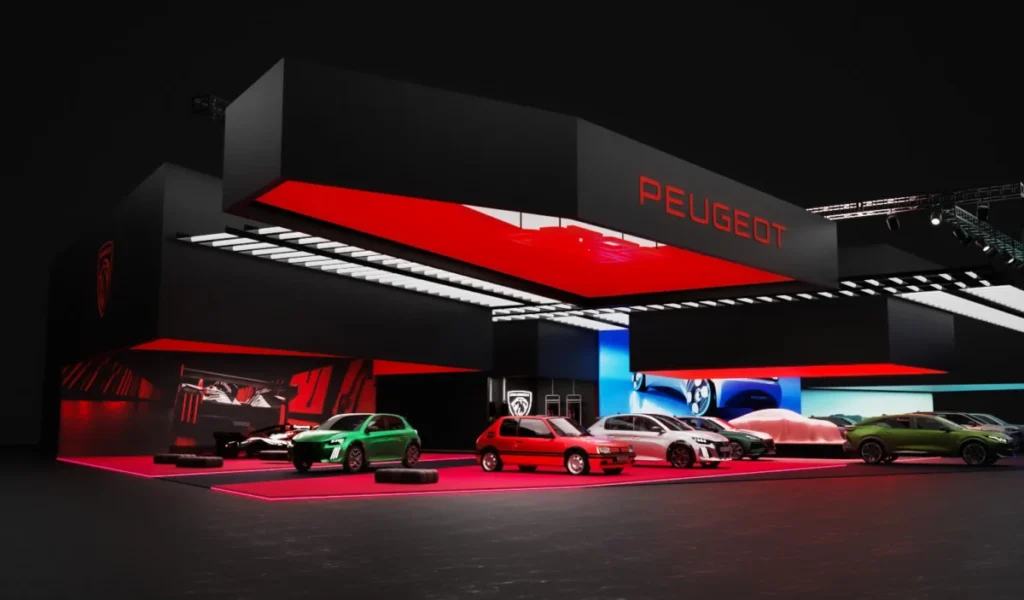
The gates of the Paris Expo Porte de Versailles are set to open, but for the 2026 edition of the Mondial de l’Auto, the atmosphere is markedly different from the glitzy, high-concept spectacles of the past. Organizers are no longer chasing the vanity metrics of record-breaking attendance. Instead, they are doubling down on a cold, hard, and highly effective objective: transformation.
In a world where digital showrooms and social media influencers have redefined how consumers interact with new vehicles, the traditional motor show was facing an existential crisis. To survive, the Paris Motor Show has undergone a radical metamorphosis, pivoting from a passive gallery of automotive art into a precision-engineered engine for lead generation and conversion.
The Strategy: Quality Over Quantity
The 2026 edition has set a firm cap at 500,000 visitors, a deliberate choice after the 508,000 attendees in 2024 led to severe physical saturation. Serge Gachot, the Director General of the event, famously compared the end of the previous show to "the Tokyo subway during rush hour." By resisting the urge to expand into additional halls and opting for controlled flow management—including new Friday and Saturday night sessions—the organizers are prioritizing the experience of the serious buyer over the casual window-shopper.
This strategic pivot is a direct response to the "ROI imperative." For years, manufacturers complained that the millions of euros sunk into elaborate, temporary scenography provided no traceable return. The 2026 format is the answer to those complaints: a venue designed to facilitate the transition from "visitor" to "qualified lead."
The Conversion Equation: Why Test Drives Change Everything
The most compelling argument for the current format lies in the data. Audit results from 2024 revealed that 28% of all visitors are in the market for a new vehicle within the next twelve months—a figure that jumps to 40% among the 55+ demographic, the industry’s most reliable cohort of new-car buyers.
However, the real magic happens on the tarmac. According to Gachot, the conversion rate for an intention to purchase skyrockets to nearly 60% once a visitor gets behind the wheel. This has led to the massive expansion of the "Test Drive Center." With 100 series-production vehicles available for real-world road testing, the goal is to exceed 5,000 test drives over the course of the week.
Stellantis alone has committed over 30 vehicles to the fleet, while brands like BYD are using the event to aggressively introduce their premium sub-brand, Denza, to a European public that is unfamiliar with the logo. The message is clear: if you aren’t offering a test drive, you aren’t really doing business.
The Global Shift: A New Industrial Reality
The exhibition map for 2026 tells the story of a changing world. The floor features 61 brands, up from 48 in 2024. While the return of heavyweights like Mercedes-Benz, Volvo, and Hyundai provides much-needed prestige, the underlying trend is undeniable: the rise of the East.
The salon now hosts 30 Asian manufacturers, including three Japanese, two Korean, and a staggering 25 Chinese brands. Companies like GAC, Li Auto, Changan, and Dongfeng are now household names in the halls of Paris, standing shoulder-to-shoulder with the 27 European brands present. The United States presence is thinner, with only four brands—Ford, Tesla, Lucid, and Jeep—often represented through creative local partnerships to minimize the financial burden on their domestic parent companies.
When pressed on the political implications of this "Chinese wave" in the heart of France, the organization maintains a neutral, pragmatic stance. Gachot argues that the Mondial is a reflection of the global industry at a specific moment in time. "Our role is not to engage in politics," he states. "If Chinese manufacturers are taking a growing share of the market, it is our duty to showcase that reality." It is a cold, business-first approach that acknowledges the shifting winds of the global economy, regardless of the potential domestic industrial consequences.
A Showcase of Innovation: From Cybercabs to AI-Assisted Driving
Despite the focus on sales, the product remains the star. The 2026 show features over 60 world premieres and concept cars. Dacia is generating significant buzz with the unveiling of the "Striker" and the updated Spring, while Tesla has brought its long-awaited Cybercab for its first European public appearance. For the enthusiasts, the "Unlimited" zone gathers the elite of the supercar world, featuring the Ferrari F80, Bugatti Chiron Sport, and McLaren Senna LM, serving as a magnet for younger visitors and automotive fans.
However, the most significant technical development is happening on the streets surrounding the venue. For the first time in Europe, eight vehicles equipped with Level 2++ autonomous driving systems are available for public testing. This is a massive shift, facilitated by the "Automotive Platform" (PFA) and its "Innovation Factory," which seeks to demystify the complex software and hardware integration that defines the modern cockpit.
The Regulatory Precedent: Level 2++ on the Road
The inclusion of Level 2++ systems—where the vehicle handles lane changes, merging, and navigating dense traffic under active human supervision—marks a major regulatory milestone. While the U.S. and China have already embraced these technologies on public roads, the European Union has historically been cautious, with regulations like the UNECE’s DCAS (Driver Control Assistance Systems) often stifling real-world demonstrations.
By conducting these supervised trials near the Porte de Versailles, the organizers aim to address the skepticism surrounding autonomous technology. The message is that the software is not a futuristic promise, but a current, actionable tool for safety. The goal is to prove to the public that "supervision" is not a burden, but an enhancement to the driving experience.
Data Points: The 2026 Mondial in Numbers
| Parameters | Official 2026 Data |
|---|---|
| Dates and Location | Oct 12–18, 2026, Paris Expo Porte de Versailles |
| Attendance Cap | 500,000 visitors |
| Total Brands | 61 (vs. 48 in 2024) |
| Geographic Split | 27 European, 30 Asian (25 Chinese), 4 American |
| Test Drive Fleet | 100 vehicles (Target: >5,000 drives) |
| Conversion Data | 28% purchase intent (12 months); 60% after test drive |
| Key Premieres | 60+ world premieres and concept cars |
| Entry Pricing | €20 (Weekday), €22 (Weekend), €17 (Nocturne) |
Implications: The Future of the Motor Show
The 2026 Paris Motor Show proves a vital point: the traditional auto show is not dead, but it has been forced to evolve. In an era where a car’s "image" can be built on a smartphone screen, the physical space must offer something that the digital world cannot: the tactile, visceral experience of the test drive and the human-to-human interaction of the sales floor.
By moving away from being a "museum of steel" and toward becoming a "qualified lead factory," the Mondial has secured its relevance for the next decade. For the manufacturers, the math is simple. A stand that does not convert a lead is an expense; a stand that puts a prospect in a driver’s seat is an investment. As the industry faces the most significant transition in its history—from internal combustion to electrification and from manual to autonomous—the ability to connect directly with the customer has never been more critical.
Paris has set a new standard for global motor shows. It is no longer just a place to look at the cars of the future; it is a place to start driving them. Whether this transition will be enough to save the traditional industrial giants from the rising tide of international competitors remains to be seen, but one thing is certain: at the Porte de Versailles, the business of the automobile is being conducted with a newfound, singular focus.
