

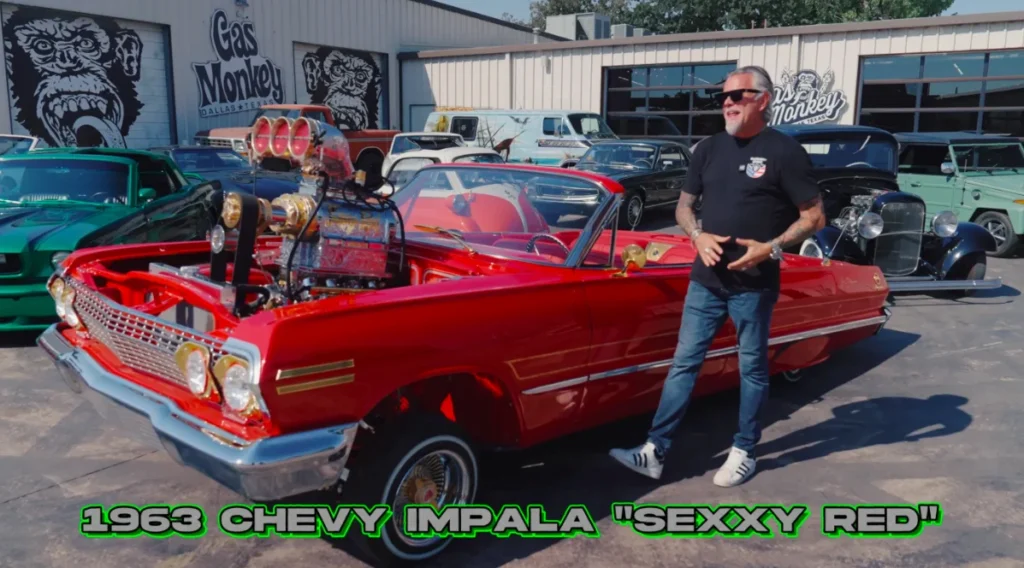
From October 22 to October 29, 2026, the automotive world turned its collective gaze toward the digital auction block of Bring a Trailer. Richard Rawlings, the charismatic and polarizing face of the global phenomenon Fast N’ Loud and the founder of Gas Monkey Garage, initiated a sweeping liquidation of his personal collection. With approximately 25 vehicles—ranging from pristine, low-mileage classics to highly customized muscle machines—hitting the block without reserve, the event sent shockwaves through the collector car community. While the sale offered a rare opportunity for enthusiasts to own a piece of television history, it also ignited a firestorm of speculation regarding the financial health of the Gas Monkey empire.
The Main Facts: A Digital Garage Sale of Epic Proportions
The auction, hosted exclusively on the Bring a Trailer platform, was billed as a major rotation of the Gas Monkey fleet. For seven days, bidders competed for a diverse catalog that defied easy categorization. Unlike traditional high-end auctions that might focus on a singular marque or era, the Rawlings collection was a masterclass in variety.
The inventory featured a Ford Mustang Coupe from 1968, boasting an incredibly low odometer reading of just 1,036 miles, and a 1987 Chevrolet Corvette that appeared almost factory-fresh with a mere 1,600 miles on the clock. Beyond the pristine classics, the auction included heavily modified builds that define the "Gas Monkey" aesthetic: a 1963 Chevrolet Impala featuring intricate, western-style engravings and a massive audio system, and a 1979 Ford F-150 Ranger XLT that had been meticulously restored from the chassis up.
Perhaps most intriguing was the inclusion of unconventional vehicles, such as a 1957 BMW Isetta, proving that Rawlings’ personal taste extends well beyond the American V8 muscle cars that made him a household name. By offering nearly every lot without a reserve price, Rawlings ensured that the market—not the seller—would dictate the value, a bold strategy that guaranteed a flurry of activity as the final countdown approached.
Chronology: The Lifecycle of a Gas Monkey Collection
To understand the significance of this 2026 auction, one must look at the historical trajectory of the Gas Monkey Garage. Rawlings has long operated on a philosophy of "churn and burn," treating his collection as a living, breathing entity rather than a static museum.
- Pre-2022: Rawlings established the pattern of periodically refreshing his garage. Through various small-scale sales, he demonstrated a desire to keep his inventory relevant and financially fluid.
- 2022: A significant milestone occurred when Rawlings auctioned 23 vehicles and two motorcycles, generating between $800,000 and $900,000. This event solidified his relationship with online platforms like Bring a Trailer as a primary channel for divestment.
- October 2026: The current sale marks the latest iteration of this cycle. By offloading this latest batch, Rawlings is effectively pruning his current holdings to create both physical space in his Texas workshop and liquidity in his accounts.
- Post-2026 Outlook: Rawlings has been vocal about his intentions. He is not retreating from the hobby; rather, he is "clearing the deck" to pursue "blue chip" investments. He has set his sights on the upper echelon of the automotive world, including legendary vehicles like the Lamborghini Miura and the Ferrari Monza SP2, which require significant capital and space to acquire and maintain.
Supporting Data: Why the "Reserve-Free" Strategy Works
The decision to list these items without a reserve price is a calculated business move that serves two purposes: urgency and transparency. In the world of high-end automotive auctions, a reserve price acts as a safety net, ensuring the seller doesn’t lose money on a low bid. By removing this net, Rawlings signals extreme confidence in his brand.
The 2026 auction was not merely about offloading "dead weight." It was an exercise in brand management. The data from his previous sales shows that Gas Monkey vehicles carry a premium, often exceeding their standard market value due to the "celebrity provenance" attached to the builds. By liquidating these assets, Rawlings is essentially converting tangible metal into liquid capital, allowing him to pivot his strategy toward more exclusive, high-value assets.
Furthermore, the logistical aspect of managing 25 vehicles is immense. For a garage that is constantly building, modifying, and flipping cars, holding onto older projects eventually creates a bottleneck. This sale serves as a systemic "reboot," allowing the team to focus on new commissions and higher-tier acquisitions without the clutter of yesterday’s projects.
Official Responses: Rawlings Addresses the "Bankruptcy" Rumors
In the digital age, a high-profile liquidation is often misinterpreted by social media algorithms and content mills as a sign of financial distress. As the auction went live, rumors began to circulate—fueled by AI-generated clickbait videos and speculative social media threads—that Richard Rawlings was on the brink of bankruptcy or even facing legal trouble.
Rawlings, known for his unfiltered and combative style, addressed these allegations directly. In a scathing retort cited by Supercar Blondie, he dismissed the rumors with characteristic Texan bluntness. "If you are one of those idiots behind the keyboard saying, ‘Richard is broke and he’s selling. He’s in bankruptcy.’ Well, you’re probably part of the idiots who think I went to prison," he stated.
He further clarified that these narratives are often the byproduct of automated, low-effort journalism. By clarifying his position, Rawlings framed the sale not as an act of desperation, but as a strategic decision. He emphasized that the "rotational cycle" of his collection is a standard operating procedure, not a reaction to economic hardship. His public stance serves as a reminder of the disconnect between the curated, high-stakes world of celebrity business and the often-inaccurate commentary of the internet.
Implications: The Future of Gas Monkey Garage
The 2026 Bring a Trailer auction provides a window into the evolving strategy of the Gas Monkey brand. As the automotive industry shifts toward electrification and new paradigms of ownership, legacy builders like Rawlings are forced to adapt.
Shifting Focus to "Blue Chip" Assets
The most significant implication of this sale is the shift in focus. By moving away from custom builds and mid-tier classics, Rawlings is signaling a transition toward the "collector" side of the market. Acquiring cars like a Ferrari Monza SP2 or a Lamborghini Miura isn’t just about owning a car; it’s about holding an asset that appreciates in value within the most exclusive circles of global finance.
The Role of Digital Marketplaces
The success of this sale reinforces the dominance of platforms like Bring a Trailer over traditional auction houses. The ability to reach a global audience, combined with the transparency of the bidding process, makes online platforms the preferred choice for high-profile sellers. This transition is likely to continue, further democratizing the high-end collector car market while simultaneously increasing the velocity of transactions.
The "Fast N’ Loud" Legacy
Even years after the peak of his television show, Rawlings maintains a powerful grip on the industry’s attention. The fact that his collection can draw thousands of eyes to a screen is a testament to the brand equity he built. The 2026 auction proves that while the Fast N’ Loud era of reality television may be in the rearview mirror, the business of Gas Monkey Garage remains as active and aggressive as ever.
A Masterclass in Brand Resilience
Finally, the sale is a case study in brand resilience. By tackling the bankruptcy rumors head-on, Rawlings prevented a potential PR crisis from gaining momentum. By framing his business decisions within the context of growth and strategic upgrading, he maintained his image as a savvy entrepreneur who is always three steps ahead of the curve.
As the final gavel fell on October 29, 2026, the garage was quieter, but the vision for the future was louder than ever. Richard Rawlings remains a polarizing figure, but his ability to command the market, liquidate assets at will, and dictate the narrative of his own success remains an undeniable force in the automotive world. Whether one views this as a simple garage clear-out or a strategic repositioning of a multi-million dollar portfolio, the result is the same: the Gas Monkey is moving on to bigger, faster, and more exclusive things.
