

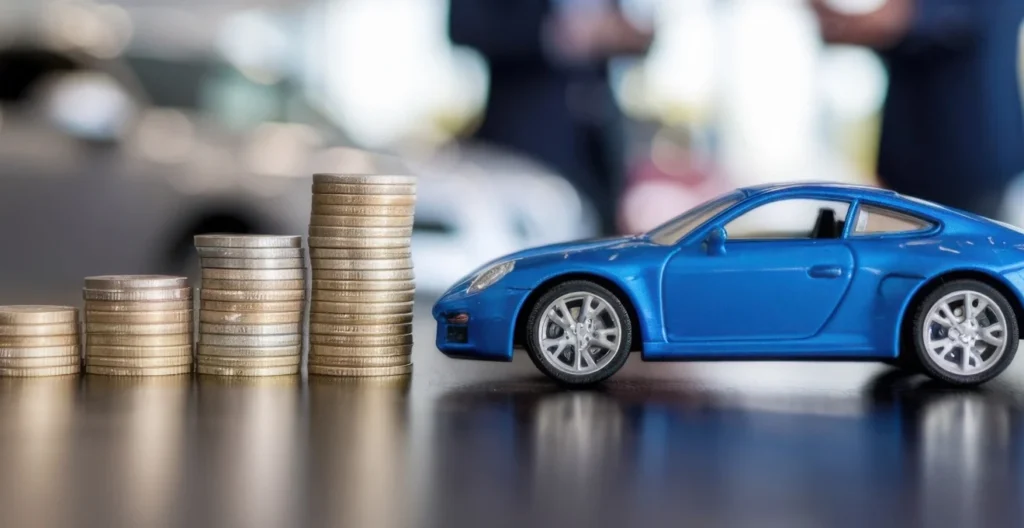
Selling a pre-owned vehicle is frequently described as a "war of attrition" between the seller’s emotional attachment and the buyer’s rational demand for value. In today’s competitive automotive marketplace, the speed of your transaction is intrinsically linked to one critical factor: the accuracy of your initial valuation. A price that is too high leads to stagnant listings, while an undervalued car leaves thousands of dollars on the table.
Achieving the "sweet spot"—a price that attracts immediate attention while maximizing financial return—requires a blend of empirical data, market psychology, and mechanical transparency. This guide explores the essential mechanisms for valuing your vehicle and the strategic maneuvers that ensure a rapid, profitable sale.
Main Facts: The Core Components of Valuation
The fundamental truth of the used car market is that value is not an arbitrary figure; it is a convergence of objective data points. When a potential buyer assesses your vehicle, they are not merely looking at a mode of transportation; they are performing a risk assessment.
The primary objective of an accurate valuation is to mitigate the buyer’s perceived risk. By providing a transparent price based on the current "Argus" (or local equivalent) rating, you establish instant credibility. However, the market is dynamic. Factors such as the current economic climate, fuel price volatility, and the release of new model generations can shift the baseline value of your vehicle overnight. Understanding that your car’s value is a living figure, influenced by both internal mechanical health and external market trends, is the first step toward a successful transaction.
Chronology of the Valuation Process
To arrive at a fair price, sellers should follow a structured, chronological workflow. Skipping these steps often leads to "listing fatigue," where a vehicle remains online for months, eventually forcing a desperate, low-ball price drop.
Phase 1: The Preliminary Data Collection (Weeks 1-2)
Start by gathering all documentation. A vehicle without a service history is a "black box" that buyers will either avoid or heavily discount.
- Identify the VIN and exact trim level: Minor variations in features can lead to a 5-10% difference in market value.
- Review the maintenance log: Ensure every oil change, brake replacement, and tire rotation is documented.
- Check the "Argus" or online benchmarks: Use multiple valuation tools to identify a consistent price floor and ceiling.
Phase 2: The Mechanical and Aesthetic Audit (Week 2)
Perform a "pre-sale inspection." This is the point where you decide whether to invest in repairs. If the vehicle has a minor dent or a worn-out component, calculate if the cost of repair is offset by the potential increase in the final sale price. Often, a professional interior detail and a high-quality paint touch-up yield a 200% return on investment in the form of a faster sale.
Phase 3: Market Positioning (Week 3)
Once the data is collected, analyze the competition. Filter online marketplaces for vehicles with similar mileage, year, and trim. If your car is priced at the 75th percentile of the market, your listing must clearly highlight why it is superior to the 25th percentile.
Supporting Data: Understanding Depreciation and Market Trends
Depreciation is the silent killer of automotive value. While it is impossible to stop, understanding the curve allows you to time your sale optimally.
The Depreciation Curve
Most vehicles lose 20-25% of their value in the first year. By the time a car reaches its third year, it has typically lost 40-45% of its original MSRP.
| Age of Vehicle | Average Mileage | Estimated Depreciation |
|---|---|---|
| 1 Year | 15,000 km | 20-25% |
| 3 Years | 45,000 km | 40-45% |
| 5 Years | 75,000 km | 55-60% |
| 7 Years | 105,000 km | 65-70% |
Note: These figures represent averages; high-reliability brands (e.g., Toyota, Porsche, BMW) often deviate from this curve, maintaining value significantly longer than average-tier commuter vehicles.
The "Option" Trap
A common misconception is that every dollar spent on options increases the resale value by a dollar. In reality, luxury features like high-end sound systems or panoramic roofs lose value faster than the base chassis. Generally, you can expect to recover only 10-20% of the cost of these features after five years.
Professional Insights: Expert Responses to Market Realities
Industry experts emphasize that the most common mistake is "emotional pricing." Sellers often base their price on what they need to pay off a loan or what they feel the car is worth, rather than what the market dictates.
"The market does not care about your sentiment," notes one automotive consultant. "It cares about the cost of ownership, the remaining lifespan of the consumables (tires, brakes, timing belt), and the local demand."
Professionals suggest that if a car has not received an inquiry within seven days, the price is too high for the current market. By adjusting the price incrementally (2-3% per week), you signal to the market that the seller is serious, which in turn attracts more motivated buyers.
Implications of Strategic Valuation
The implications of a precise valuation go far beyond just "making a sale."
- Reduced Negotiation Friction: When you arrive at a price that is defensible through data and documentation, you eliminate the "negotiation gap." A buyer who knows the price is fair is less likely to attempt aggressive, insulting low-ball offers.
- Enhanced Trust: Transparency in your valuation builds a bridge of trust. Buyers are often willing to pay a premium if they feel the seller is being honest about the car’s history and state.
- Time Efficiency: For most people, selling a car is a chore. A well-priced vehicle sells in days rather than months, saving you the cost of ongoing insurance, registration, and the potential for new mechanical issues to arise while the car sits idle.
Final Best Practices for Sellers
- Leverage the Local Market: If you are in a snowy region, sell your AWD vehicle in late autumn. If you are in a city with tight parking, prioritize the sale of your compact car in the spring.
- Professional Presentation: Invest in a high-quality, professional photography session. In the digital age, your photos are your first (and often only) chance to make an impression.
- Be Transparent with Defects: Do not hide mechanical issues. If the car needs a repair, disclose it. It is better to lower the price by the amount of the repair than to have a deal collapse during a test drive when the buyer discovers the issue independently.
Conclusion
Selling a car efficiently is not about luck; it is about preparation. By combining the objective reality of the Argus rating with a keen awareness of market demand and local conditions, you transform your vehicle from a liability into a highly desirable asset. Treat the process as a business transaction, provide clear and honest information, and you will find that a precise valuation is the ultimate accelerator for your sale. Remember: the goal is not to win the negotiation; the goal is to close the deal on your terms, quickly and effectively.
