

By Editorial Staff | July 20, 2026
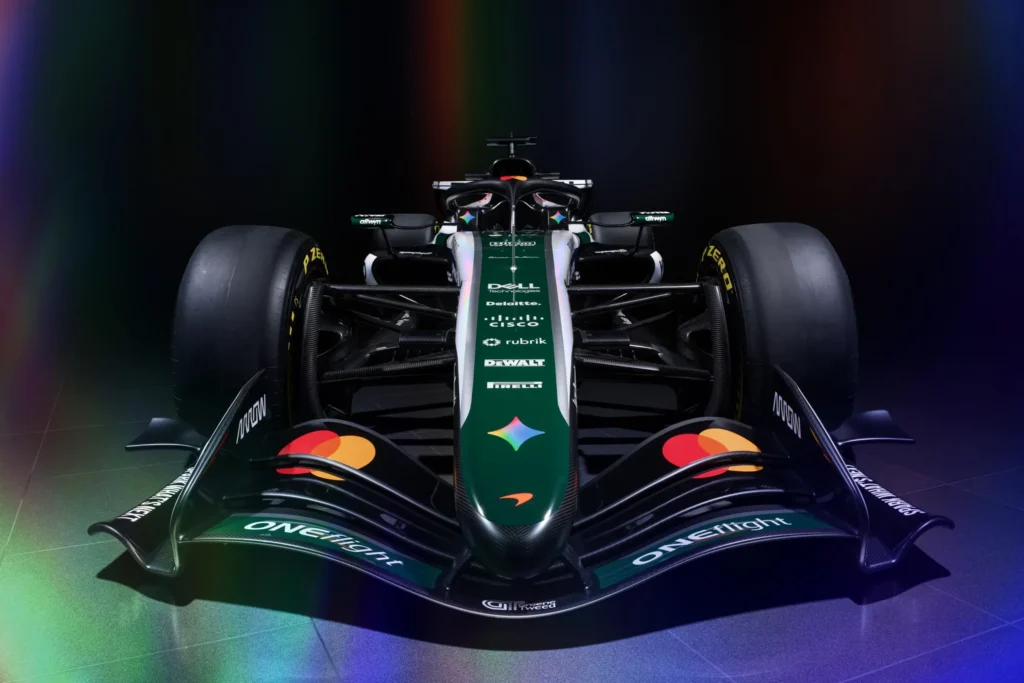
As the Formula 1 circus descends upon the iconic Silverstone Circuit for the British Grand Prix, McLaren Racing has unveiled a striking, historically-charged aesthetic for its MCL40 challenger. Moving beyond mere paint, the team has introduced a special, one-off livery designed in collaboration with Google Gemini. This visual transformation is more than a tribute; it is a sophisticated bridge between the grit of 1966 and the algorithmic precision of 2026.
The Genesis of an Icon: From M2B to MCL40
The core of the livery’s inspiration is the legendary McLaren M2B, the team’s maiden Formula 1 machine. Debuting at the 1966 Monaco Grand Prix, the M2B was a testament to the raw ambition of Bruce McLaren. Designed by Robin Herd, the car was the vessel through which the team first tasted the complexities of Grand Prix racing.
The choice of Silverstone for this commemorative livery is far from arbitrary. While Monaco hosted the debut, it was the 1966 British Grand Prix where McLaren secured its first-ever World Championship point. By adorning the 2026 MCL40 in the spirit of the M2B, the Woking-based outfit is symbolically reclaiming the genesis of its existence. It represents a 60-year arc of evolution, shifting from the era of rudimentary mechanics to the current age of artificial intelligence.
Chronology: A Season of Reflection
The 2026 season has served as a year-long retrospective for McLaren. The team has strategically utilized key venues to honor its heritage, creating a narrative of "continuous progression."

- 1966 (The Foundation): Bruce McLaren enters his eponymous team into F1 with the M2B. The team captures its first point at the British Grand Prix at Brands Hatch.
- May 2026 (The Milestone): Marking its 1,000th Grand Prix at the Monaco circuit, McLaren invited two-time World Champion Mika Häkkinen to pilot the original M2B, creating a poignant link between the team’s past and present.
- June 30, 2026 (The Reveal): McLaren officially announces the "Spark What’s Next" campaign, unveiling the Gemini-inspired livery.
- July 3-5, 2026 (The Showcase): The MCL40 hits the track at Silverstone, sporting the special livery, accompanied by the "Gemini Paddock" fan activation in London.
The Intersection of Heritage and Innovation
The "Spark What’s Next" initiative is a masterclass in modern brand storytelling. By partnering with Google Gemini, McLaren is signaling that its future is as much about data science as it is about aerodynamics. The livery serves as a billboard for a philosophy that has remained constant for six decades: iterate, test, and evolve.
In the modern era, the pace of development is staggering. McLaren’s engineering team notes that a single F1 car can undergo as many as 18,000 design modifications throughout a season. This hyper-evolution contrasts sharply with the static nature of the 1966 M2B, yet the underlying ethos—the relentless pursuit of performance—remains identical.
The Role of Google Gemini in the Paddock
While the livery honors the history of the sport, the partnership with Google Gemini is firmly rooted in the competitive demands of 2026. This is not merely a sponsorship deal; it is a technical integration.
Creative Ideation and Brand Strategy
McLaren is currently utilizing Gemini’s creative suite, including "Nano Banana" and "Omni" models, to streamline its marketing and brand development. By leveraging generative AI, the team can rapidly prototype visual concepts, social media campaigns, and fan-facing content, ensuring that their off-track engagement is as sharp as their on-track performance.
Data-Driven Racing
On the engineering front, the integration of Gemini Enterprise is revolutionizing how McLaren processes information. During the intense pressure of a Grand Prix weekend, engineers are tasked with interpreting vast quantities of data. McLaren has developed a bespoke tool via Google Cloud that allows pit-wall staff to instantly parse complex sporting regulations.

Furthermore, the team is deploying a natural language processing (NLP) interface that extracts insights from siloed internal systems. Instead of spending precious minutes sifting through disparate databases, engineers can now query the system for comparative analysis on lap times, tire degradation, and strategic delta-times in real-time. This technological edge is intended to facilitate split-second decision-making, a critical component in the modern, tight-knit midfield battle.
Official Responses: A Shared Vision
The collaboration has been framed as a symbiotic relationship where history informs innovation.
Louise McEwen, Chief Marketing Officer at McLaren Racing:
"Our Silverstone livery celebrates our beginnings and everything we have built since. The McLaren M2B represents the start of a journey defined by constant innovation and a belief in the possible. This design brings that spirit to life. Our partnership with Google Gemini rests on these same principles. Together, we are exploring how technology can unlock new ways to innovate and push performance boundaries, both on and off the track. This livery is a powerful expression of that shared mindset."
Marvin Chow, VP of Consumer and AI Marketing at Google:
"From generating creative ideas with the Gemini app to securely transforming complex datasets into real-time insights at the track with Gemini Enterprise, McLaren is showing what it means to harness the power of AI. We are thrilled to continue exploring new ways that Gemini can nourish their creativity, their operations, and their race strategy."
Implications for the Future of F1
The "Spark What’s Next" campaign has broader implications for the sport. It reflects a shift in how Formula 1 teams perceive their identity. Modern teams are no longer just automotive manufacturers; they are high-tech data hubs.

By tying the aesthetic of 1966 to the utility of 2026, McLaren is successfully engaging two generations of fans: those who romanticize the "golden age" of motorsport and those who are enthralled by the possibilities of the AI revolution.
The Fan Experience: The Gemini Paddock
The engagement extends beyond the Silverstone circuit. McLaren and Google have established the "Gemini Paddock" at the Truman Brewery in East London. This immersive installation allows fans to explore the intersection of F1 history and future tech, providing an educational experience that demystifies the role of AI in professional sports. By opening this space to the public, McLaren is reinforcing its commitment to accessibility and community—a trait that was a hallmark of Bruce McLaren himself.
Conclusion: A Legacy Refined
As the cars line up on the grid at Silverstone, the MCL40 will stand as a visual manifesto. It is a tribute to the simplicity of the 1966 M2B, but it is driven by the complexity of the 2026 digital era. Through this initiative, McLaren is not just looking back at its roots; it is using those roots to anchor its future in a rapidly changing technological landscape.
The "Spark What’s Next" campaign suggests that while the cars, the speed, and the technology have changed, the fundamental "spark" that ignited a team in a small workshop six decades ago is still burning with the same intensity today. Whether through the lines of a chassis or the lines of code in a neural network, McLaren continues to define itself by the future it creates.
