

Main Facts
For air-cooled Porsche enthusiasts and serious collectors, few automotive designations carry the mythical weight of the factory "Slant Nose"—officially known by its German moniker, Flachbau. A rare, highly coveted factory option from an era of unbridled 1980s automotive excess, a pristine 1988 Porsche 911 Turbo (930) Cabriolet M505 Slant Nose has recently emerged on the market through a specialized dealer.
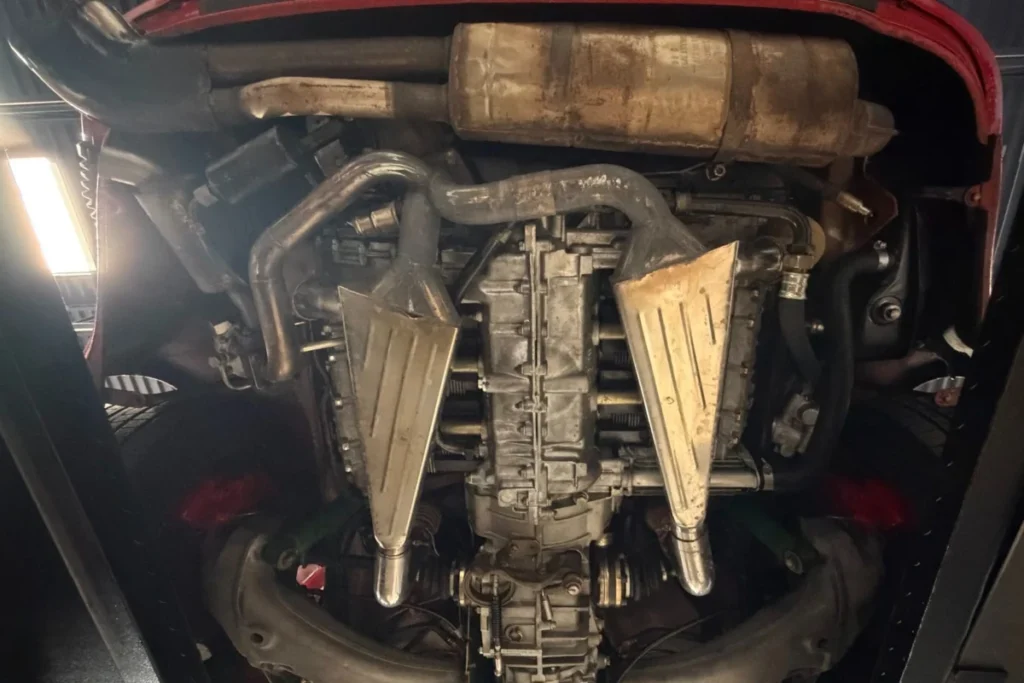
Showing a mere 32,000 miles on its six-digit odometer, this particular example represents the pinnacle of late-1980s Porsche exclusivity. Finished in iconic Guards Red over a supple black leather interior, it is powered by a turbocharged 3.3-liter flat-six engine mated to a four-speed manual transaxle. Beyond its striking visual presentation and low mileage, this 930 Turbo benefits from a comprehensive, over-$15,000 mechanical refresh performed in May 2026 by Trophy Performance of Las Vegas.
The car’s provenance is further elevated by the presence of its original factory option-code sticker underneath the front hood, matching numbers, a clean Carfax report confirming no accidents or structural damage, and a clean Florida title. It is accompanied by an owner’s manual, service records, and a factory tool set.

Chronology of a Legend: The History and Timeline of the M505 Flachbau
To fully appreciate this 1988 Porsche 911 Turbo Cabriolet, one must understand the unique lineage of the Flachbau program.
The Racetrack Origins (Late 1970s–Early 1980s)
The aerodynamic nose design trace its roots directly to the motorsport world. In 1976, Porsche introduced the legendary 935 race car to compete in the FIA Group 5 silhouette formula. To cheat the wind and gain a crucial aerodynamic advantage on the Mulsanne Straight at Le Mans and other high-speed circuits, engineers discarded the iconic 911 upright round headlights in favor of a sloping, wedge-shaped front end featuring pop-up headlamps and louvered front fenders.
The race cars dominated tracks globally. Soon, affluent privateers and racing enthusiasts began clamoring for a road-legal version of the flat-nose look.

The Sonderwunsch (Special Wishes) Era
Initially, fulfilling these requests fell to Porsche’s Sonderwunsch (Special Wishes) department, where coachbuilders painstakingly hand-crafted custom metalwork for select, deep-pocketed clients. These early conversions were breathtakingly expensive and varied wildly in execution.
Factory Standardization: The M505 and M506 Options
Recognizing sustained demand for the aerodynamic styling, Porsche finally formalized the process for the 1987 model year. They introduced the Flachbau aesthetic into regular production scheduling under specific factory option codes:
- M505: Designated for the North American market.
- M506: Designated for the Rest of the World (ROW) market.
Equipping a 911 Turbo with the M505 package was no minor checkbox; it was an extraordinarily costly upgrade that effectively added a massive premium to the vehicle’s base MSRP. Because every Slant Nose required extensive hand-assembly—including specialized front fenders, welded-in brake cooling ducts, pop-up headlamp mechanisms, modified side sills, and extended rear quarter-panel strakes—production numbers were exceedingly low.

Recent Preservation and Overhaul (2007–2026)
While this 1988 Cabriolet spent decades carefully preserved and driven sparingly, it has not been neglected mechanically. A timeline of its major historical touchpoints includes:
- 2007: The four-speed manual transaxle underwent a comprehensive mechanical overhaul.
- 2008: The Permatune electronic control unit was replaced to ensure optimal ignition reliability.
- May 2026: Trophy Performance of Las Vegas executed a deep, preventive maintenance and refurbishment campaign exceeding $15,000. This work included a total engine reseal, soft top cable replacements, an air conditioning system conversion to modern R134a refrigerant, a brand-new clutch assembly, and the replacement of aging primary fuel lines.
Supporting Data and Technical Specifications
A deep dive into the engineering, equipment, and meticulous service records of this specific chassis reveals a well-documented machine designed to be both driven and admired.
Powertrain and Performance
- Engine Type: Turbocharged, air-cooled 3.3-liter horizontally opposed flat-six (M30/66).
- Induction: Single KKK turbocharger paired with an upgraded aftermarket intercooler.
- Factory Output: Rated at 282 horsepower and 278 lb-ft of torque (when new).
- Transmission: Four-speed G50-derived manual transaxle directing power exclusively to the rear wheels via a limited-slip differential.
- Recent Mechanical Invoices (May 2026):
- Front crankshaft seal and rear main seal replacement.
- Camshaft oil feed lines and oil pressure switch replacement.
- Turbocharger gaskets and exhaust manifold gaskets renewed.
- New clutch disc, pressure plate, and release bearing installed.
- Transaxle gasket, rear shift coupling, and shifter bushings replaced.
- Main fuel lines replaced.
Exterior Specifications
- Paint Code: Guards Red (L80K).
- Body Modification: Factory M505 Slant Nose Flachbau equipment (sloping bonnet, electric pop-up dual headlamps, front fender louvers, side sills, and widened rear intake strakes).
- Soft Top: Power-operated black canvas convertible top with newly serviced operating cables.
- Wheels: Forged 16-inch Fuchs alloy wheels finished with black centers and polished lips.
- Tires: Pirelli P Zero Rosso high-performance tires.
Interior Accommodations & Cockpit
- Upholstery: Black leather sport seats featuring power height adjustments and striking red piping.
- Instrumentation: Classic VDO analog gauges framed by a three-spoke leather-wrapped steering wheel, including:
- Central 6,700-rpm redline tachometer.
- 170-mph speedometer.
- Auxiliary gauges for oil pressure, oil temperature, oil level, fuel level, and turbo boost pressure.
- Amenities: Blaupunkt CD stereo system, analog dashboard clock, power windows, and an air conditioning system converted to R134a with fresh components installed in May 2026.
- Chassis Dynamics: Factory-standard front and rear anti-roll (sway) bars, paired with four-wheel cross-drilled and ventilated disc brakes.
Official Responses and Market Context
While individual dealer remarks on boutique classic car platforms are typically brief, market analysts, vintage Porsche brokers, and auction houses have consistently weighed in on the trajectory of the 930 Slant Nose.

Historically, purists in the 1980s and 1990s occasionally debated the aesthetic divergence of the Slant Nose from Ferdinand Alexander Porsche’s classic, uncompromised 911 silhouette. However, time has completely reversed public sentiment. Today, the Flachbau models are celebrated as ultimate expressions of 1980s automotive culture, serving as coveted centerpieces in world-class collections.
Industry experts note that finding a factory-documented M505 car—as verified by the under-hood option sticker and clean Carfax—is exceptionally difficult. Many modified conversions masquerade as genuine factory cars, making certified numbers-matching examples like this Guards Red cabriolet intensely sought after.
Furthermore, because the 930 Turbo (widely known as the "Widowmaker" due to its aggressive turbo-lag and snap-oversteer characteristics) demands absolute mechanical health, the recent $15,000 professional service bill acts as a major selling point. Prospective buyers and collectors often shy away from vintage turbocharged European exotics that require immediate, engine-out maintenance to address weeping seals or degraded fuel lines. With major deferred maintenance items already cleared by a specialized shop, this car presents itself as a turn-key collector’s item.

Implications for Collectors and the Classic Car Market
The emergence of this 32,000-mile 1988 Porsche 911 Turbo Cabriolet M505 highlights several broader trends within the upper echelons of the vintage vehicle market.
1. The Premium on Factory Authenticity
As replica and aftermarket conversions become easier and cheaper to build, the market has drawn an aggressive financial line between coachbuilt or aftermarket "slant noses" and true factory Flachbau vehicles carrying the M505 or M506 codes. Verified documentation, factory option stickers, and unblemished vehicle history reports dictate massive valuation disparities. This vehicle’s confirmed status as a true factory M505 car ensures its long-term investment insulation.
2. Appreciation for Air-Cooled Era Engineering
The 930 generation marks the end of an era when sports cars relied heavily on raw mechanical feedback rather than computer intervention. With no electronic stability control and a heavy, brutal wave of boost delivered via a four-speed manual shifter, driving a 930 Turbo is an unfiltered experience. As modern performance cars grow heavier, quieter, and increasingly digital, analog icons from the late 1980s continue to see surging demand and robust price appreciation.

3. The Value of Transparent, Documented Maintenance
For decades, high-end collector cars were judged almost entirely on low mileage and cosmetic perfection. Today, sophisticated buyers demand comprehensive paper trails and recent mechanical preparation. The fact that this 1988 Cabriolet received a major, no-expense-spared overhaul in 2026—covering everything from critical engine seals and oil lines to clutch replacement and air conditioning modernization—signals a shift toward "usable heritage." Buyers want cars that not only look pristine on a showroom floor or concours lawn, but are mechanically sorted and ready to be driven on winding country roads or exhibited at regional events without immediate fear of catastrophic mechanical failure.
As this rare piece of Porsche history changes hands, it serves as a rolling time capsule of a flamboyant era, proving that genuine engineering pedigree and striking design never go out of style.
