

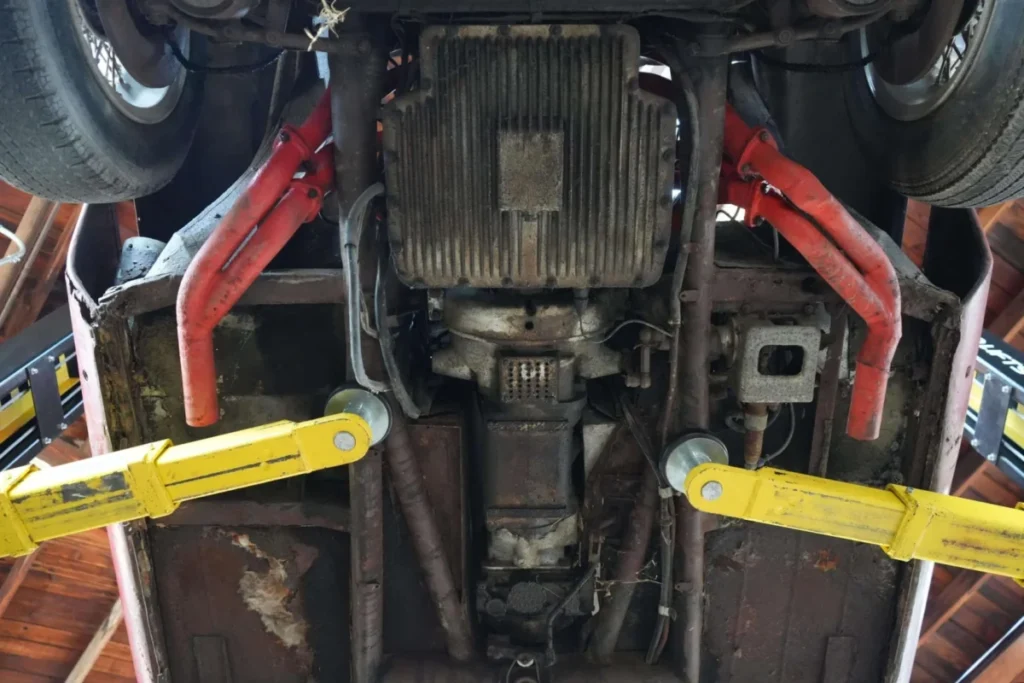
For classic car enthusiasts and historic motorsport purists, few discoveries carry the visceral thrill of a long-dormant vintage Ferrari. Recently brought to market on dealer consignment, chassis 4223—a 1963 Ferrari 250 GTE 2+2 Series III—represents a particularly compelling automotive time capsule. Emerging from decades of California storage, this matching-numbers Pininfarina-bodied masterpiece offers an ambitious yet profoundly rewarding restoration project. With just 954 examples built during a successful three-year production run, the 250 GTE holds a historically significant place in Maranello’s lineage as the House of the Prancing Horse’s first-ever series-production four-seater.
This particular car, one of approximately 300 Series III variants manufactured during the model’s final production year, carries a remarkable provenance. It remained under the dedicated care of a single owner from 1975 until 2025, when it was acquired by the current seller following a prolonged slumber. While currently non-running, the vehicle retains its legendary 3.0-liter Colombo V12 engine, a four-speed manual gearbox equipped with electric overdrive, Borrani knock-off wire wheels, and an array of crucial original components. Offered with a collection of removed parts and a California title listing it as a 1964 model, chassis 4223 invites a passionate custodian to restore it to its former glory.
Main Facts: Anatomy of a Vintage Prancing Horse
To fully understand the significance of chassis 4223, one must examine the engineering and design philosophies that defined Ferrari’s grand tourers of the early 1960s. The 250 GTE was conceptualized to answer a growing market demand for a practical yet high-performance sports car that could comfortably accommodate a family without sacrificing the DNA of a thoroughbred racer.

Powertrain and Performance Engineering
At the mechanical heart of the 1963 Ferrari 250 GTE is the iconic 3.0-liter Colombo Tipo 128E V12 engine. This masterpiece of internal combustion engineering features spark plugs mounted on the exterior of each cylinder head, individual intake ports, and robust coil valve springs. In Series III specification, revised cylinder heads and valvetrain architecture elevated the compression ratio to 9.2:1.
Feeding this V12 are triple Weber 36 DCS carburetors housed beneath a factory air box. The engine bay also preserves essential auxiliary components, including dual distributors, spin-on oil filters, iconic black Ferrari valve covers, factory exhaust manifolds, and a Magneti Marelli alternator. Crucially, engine block number 4223 matches the chassis stampings found on the frame and factory data plate, affirming the car’s highly sought-after matching-numbers status.
Power is channeled to the rear wheels via an all-synchromesh four-speed manual transmission mated to a Laycock de Normanville electric overdrive unit—a setup designed to make high-speed continental cruising effortless. Gallery documentation further verifies gearbox number 58/63 and differential number 56/63, cementing the vehicle’s structural integrity and originality.

Chassis, Suspension, and Braking
The 250 GTE carried over a heavily modified iteration of the legendary 2,600mm-wheelbase 508 chassis utilized in earlier 250 variants. To carve out genuine legroom for rear passengers, engineers cleverly shifted the engine forward within the frame.
The sophisticated suspension layout comprises an independent double-wishbone front setup paired with a leaf-sprung solid rear axle, complemented by coil springs on all four corners. Stopping power is handled by four-wheel disc brakes—a cutting-edge safety and performance feature for the era—while the car rolls on shimmering Borrani knock-off wire wheels, which remain fitted to the vehicle.
Bodywork and Exterior Aesthetics
Penned by the legendary styling house Pininfarina, the 250 GTE melds steel body construction with lightweight aluminum hood and trunk panels. Series III cars introduced subtle yet distinct stylistic refinements over their predecessors, including thicker chrome headlight bezels, driving lights positioned outboard of the main grille, revised rear fender profiles, and unified single-piece taillights.

Finished in a weathered coat of red paint, chassis 4223 displays the visual patina expected of a vehicle emerging from decades of storage. Original window glass, chrome window surrounds, headlight housings, side marker lamps, taillights, and the rear bumper remain intact. Furthermore, the sale includes vital detached exterior components, such as the front bumper, headlight bezels, and fender vent grilles, easing the eventual body restoration process.
Chronology: The Journey of Chassis 4223
The history of this specific Ferrari 250 GTE spans more than six decades, defined by long-term stewardship, silent preservation, and a recent transition into the hands of a classic car dealer.
1963–1975: Early Years and Arrival in America
Manufactured during the final year of 250 GTE production, this Series III coupe rolled off the Maranello assembly line in 1963 before being exported to the United States. While its exact early ownership history remains unrecorded, cars of this caliber typically spent their formative years gracing coastal boulevards or winding through canyon roads, celebrated for their unique blend of track-bred performance and cross-country usability.

1975–2025: Five Decades of Solitude
The defining chapter of chassis 4223’s history began in 1975, when it was acquired by a dedicated enthusiast who would maintain ownership for the next half-century. For much of this period, the car was tucked away into long-term storage in California. Protected from the elements, the vehicle largely escaped modern modifications, preserving its core mechanical components, matching-numbers drivetrain, and factory instrumentation through changing automotive eras.
2025–Present: Discovery and Re-emergence
In 2025, following fifty years under single ownership, the Ferrari was purchased out of its California storage facility by the current consigning dealer. Recognizing the vehicle’s immense historical value and viability as a restoration candidate, the dealer brought the car to market. Although currently non-running, the engine is reported to turn freely by hand, offering a promising starting point for its next caretaker.
Supporting Data: Specifications at a Glance
| Feature | Specification |
|---|---|
| Model | Ferrari 250 GTE 2+2 Series III |
| Production Year | 1963 (Titled in California as 1964) |
| Chassis Number | 4223 (Matching engine number) |
| Production Volume | 1 of ~300 Series III examples (954 total GTEs built) |
| Body Style | Pininfarina-bodied 2+2 Coupé (Steel body with aluminum hood/trunk) |
| Engine | 3.0-liter Colombo Tipo 128E V12 |
| Induction | Triple Weber 36 DCS Carburetors |
| Transmission | 4-speed manual with Laycock de Normanville electric overdrive |
| Suspension | Independent front double-wishbone, leaf-sprung solid rear axle |
| Brakes | Four-wheel hydraulic disc brakes |
| Wheels | Borrani knock-off wire wheels |
| Interior Instrumentation | Veglia (300-km/h speedometer, 8k-rpm tachometer, auxiliary gauges) |
| Odometer Reading | ~55,000 kilometers (~34,000 miles, total mileage unknown) |
Official Responses and Market Perspectives
The market for vintage Ferrari restoration projects—particularly matching-numbers Colombo V12 cars—has undergone significant evolution over the past decade. Industry experts and classic car specialists view barn-find or long-term storage projects like chassis 4223 not merely as financial expenditures, but as rare opportunities for preservation-minded restoration.

Dealer Insights and Transparency
The consigning dealer has taken a transparent approach regarding the condition of chassis 4223. Acknowledging that the car requires a comprehensive, ground-up restoration, the seller noted visible rust along the rocker panels and rear wheel wells—standard trouble spots for steel-bodied cars of this vintage subjected to decades of atmospheric aging.
At the same time, the inclusion of original matching-numbers stampings, unmolested dashboard architecture, and rare auxiliary components significantly enhances the vehicle’s appeal. The stripped cockpit features its original body-color metal dashboard, shifter and parking brake assemblies, a wood-rimmed steering wheel, and full Veglia instrumentation, including a 300-km/h speedometer and an 8k-rpm tachometer. The five-digit odometer reads roughly 55,000 kilometers, though total mileage remains undocumented. Crucially, the removed front bucket seats and door panels accompany the sale, ensuring that major interior trim elements will not need to be sourced from scratch.
The Collector Community Response
Among Ferrari historians, the 250 GTE has historically suffered from underappreciation compared to its two-seat siblings, such as the 250 SWB or 250 California Spider. However, contemporary sentiment has shifted dramatically. Collectors now recognize the 250 GTE as the financial savior of Ferrari, generating the revenue that funded the Scuderia’s legendary racing programs in the early 1960s. Furthermore, its practicality as a genuine four-seater grand tourer makes it one of the most usable and accessible entry points into classic V12 Ferrari ownership.

Implications: The Future of Chassis 4223
The offering of this 1963 Ferrari 250 GTE Series III project carries profound implications for the high-end collector car market. As truly original, un-messed-with V12 Ferraris become increasingly scarce, projects of this caliber serve as crucial links to automotive history.
The Restoration Path Ahead
Restoring a vintage Ferrari is a meticulous undertaking that requires deep technical expertise, specialized craftsmanship, and substantial financial investment. For chassis 4223, the restoration roadmap will likely involve:
- Structural Remediation: Addressing rust mitigation along the rocker panels, floor pans, and rear wheel wells while maintaining factory alignment and metal integrity.
- Mechanical Rebuilding: Overhauling the matching-numbers Colombo V12, carburetors, transmission, electric overdrive unit, and four-wheel disc braking system.
- Cosmetic and Interior Refurbishment: Repainting the exterior in either its current shade or a factory-correct period hue, while reupholstering the original bucket seats and door panels to concours-ready standards.
Preservation Versus Restomod Debate
While some modern collectors advocate for restomod conversions, purists will undoubtedly champion a faithful, factory-specification restoration for chassis 4223. Given its matching engine, gearbox, and differential numbers, returning the car to its original delivery specifications will maximize its historical value and secure its eligibility for prestigious international concours events, historic rallies, and Ferrari club gatherings.

Conclusion
The discovery and sale of this 1963 Ferrari 250 GTE 2+2 Series III project is more than just a transaction; it is an invitation to resurrect a legendary piece of Italian automotive history. Protected by half a century of continuous ownership and featuring its vital matching-numbers drivetrain, chassis 4223 stands ready for its next chapter. Whether it returns to the open road as a meticulously restored grand tourer or takes its place on a show lawn, this slumbering Prancing Horse proves that true automotive greatness is never truly lost—it is merely waiting for the right enthusiast to wake it up.
