

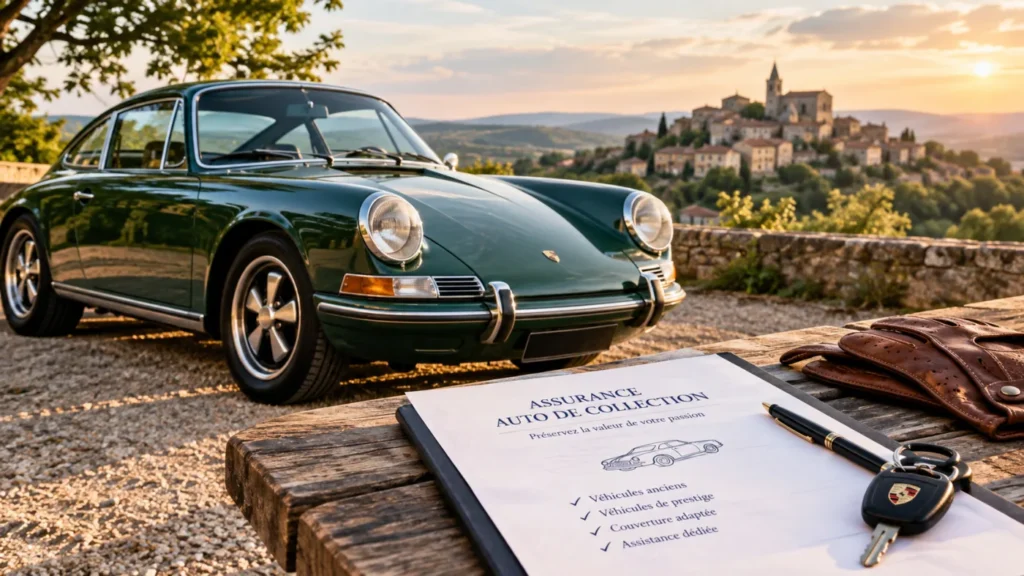
Owning a vintage or classic car is far more than simply possessing a means of transportation; it is an active stewardship of automotive history. However, protecting these rolling pieces of art requires navigating a specialized sector of the insurance industry. Traditional auto policies often fail to capture the true value, rarity, and unique usage patterns of historic vehicles. Selecting the right coverage ensures that a passion for motoring history remains a source of joy rather than financial vulnerability.
Main Facts: Understanding Classic Car Insurance and Legal Criteria
Defining a Classic Vehicle
According to standard regulatory frameworks—such as Article R311-1 of the French Highway Code, which serves as a benchmark across much of Europe—a vehicle is officially classified as a "classic" or "collection" vehicle if it was constructed or first registered at least 30 years ago. Furthermore, the model must be out of production, and its core structural components must remain in their original condition.
This specific status is formally recognized through a specialized registration document, often denoted by specific markers on the vehicle’s title (such as field Z.1 in European registration systems). This administrative distinction separates classic automobiles from daily drivers, acknowledging their historical and cultural significance.
Tailored Coverage vs. Standard Policies
Unlike an everyday commuter car, a classic car is rarely used for daily tasks, grocery runs, or routine business commutes. Instead, it is reserved for leisure drives, club rallies, weekend excursions, and concours d’elegance events.
While third-party liability coverage remains legally mandatory for any motorized vehicle capable of being driven on public roads, the similarities with standard insurance largely end there. Classic car insurance policies are engineered around restricted annual mileages, specialized repair networks, and, crucially, bespoke valuation models that protect the owner against market fluctuations and the loss of irreplaceable components.
Chronology: The Evolution of Classic Car Regulations and Market Protection
To understand how the modern classic car insurance market operates, it is helpful to trace the regulatory and administrative milestones that have shaped the sector over recent decades:
- The 30-Year Threshold Establishment: Regulatory bodies standardized the definition of historic vehicles, setting the baseline age at 30 years to qualify for specialized historic registration, protecting vehicle integrity and offering exemptions from certain modern manufacturing compliances.
- The Advent of Specialized Agreed Value Policies: Insurers recognized that standard "Argus" or depreciated book values completely failed classic cars. The industry shifted toward "agreed value" contracts, established via professional appraisal.
- April 2024 (Digital Modernization): The physical insurance green sticker was officially removed from vehicle windshields in several European jurisdictions, modernizing controls. Law enforcement agencies transitioned to verifying insurance status instantly via digital national databases (such as the Fichier des Véhicules Assurés).
- Late 2025 (Introduction of Heritage Decals): Regulatory and historic vehicle federations rolled out specialized recognition markers (such as the FFVE Collection Vignette in France) valid for five-year periods. While not a compulsory insurance document, this credential provides authorities with immediate visual confirmation of a vehicle’s historic status, facilitating exemptions in restrictive urban zones.
Supporting Data: Key Considerations for Policy Selection
When building an insurance portfolio for a vintage automobile, owners must weigh several distinct coverage tiers and specialized options:

1. Insurance Formats
- Third-Party Liability (Au Tiers): The legal minimum. It covers damage caused to others, along with basic defense-recourse and roadside assistance. It offers zero protection for the classic vehicle itself.
- Intermediate Formats: Adds targeted guarantees such as fire, theft, and glass breakage, while omitting "all-accidents" collision coverage. Ideal for vehicles stored securely but driven occasionally.
- Comprehensive (Tous Risques): The highest level of protection, shielding the vehicle against virtually all potential road and stationary hazards.
2. Essential Guarantee Options
- Agreed Value (Valeur Agrée): The cornerstone of proper classic car insurance. Determined via a professional appraisal at inception, this locks in an agreed payout based on market rarity, historical accuracy, and restoration quality rather than arbitrary depreciation.
- Specialized Assistance (0 km): Essential for vintage machinery. This guarantees towing from the driver’s doorstep straight to a specialized marque restoration garage, rather than the nearest generic towing yard.
- Period Accessory and Spare Parts Coverage: Protects hard-to-find components, vintage luggage, or era-specific tools carried with the vehicle.
3. Underwriting Criteria
Insurers manage risk tightly for classic fleets. Typical underwriting prerequisites include:
- Proof of a primary, daily-drive vehicle utilized by the policyholder.
- Mandatory secure, enclosed garage parking overnight.
- Strict annual mileage caps (typically ranging from 3,000 to 9,000 kilometers per year).
- Clean driving records and a minimum age requirement for the primary operator.
Official Responses: Documentation and Administrative Compliance
Securing a specialized classic policy requires meticulous paperwork. Insurance underwriters demand comprehensive dossiers to verify both the owner’s responsibility profile and the authenticity of the vehicle.
Required Documentation Dossier
- The Registration Certificate (Carte Grise): Serves as proof of the vehicle’s age, power rating, and historic classification status.
- The Driver’s Information Record (Relevé d’Information): Details the policyholder’s driving history, emphasizing a clean record and long-term driving experience.
- Primary Vehicle Proof: Verifies that the collector has a separate, insured daily driver, ensuring the classic car is not being subjected to wear-and-tear commuting.
- Expert Appraisal Report: Executed by a certified automotive appraiser, this document establishes the baseline valuation for agreed-value clauses.
Implications: Navigating Modern Urban Mobility and Long-Term Preservation
The intersection of classic car preservation and modern urban legislation carries profound implications for collectors.
Navigating Low-Emission Zones (ZFE)
As cities increasingly implement Low-Emission Zones (Zones à Faibles Émissions) to combat air pollution, older internal combustion engines face severe restrictions. However, vehicles holding official historic status often benefit from specific municipal exemptions. Displaying heritage recognition markers—such as specialized historic vignettes—greatly simplifies transit through these urban sectors during club events, parades, or weekend outings without incurring penalties.
Financial and Cultural Security
Ultimately, moving beyond basic third-party coverage to secure a robust, agreed-value classic car policy protects far more than metal and rubber. It safeguards an irreplaceable piece of industrial heritage. As restoration costs, scarcity of skilled master mechanics, and component prices continue to rise, appropriate insurance coverage ensures that a mechanical failure, garage fire, or road incident does not spell the permanent loss of automotive history.
By carefully evaluating policy tiers, maintaining pristine documentation, and staying informed on regulatory shifts, enthusiasts can ensure their prized vintage automobiles remain safely on the road for generations to come.
