

October 6, 2026
The global transition to electric mobility has reached a critical juncture. While the automotive industry has made monumental strides in battery range, charging speeds, and vehicle performance, a persistent hurdle remains: the price tag. For the average consumer, the entry barrier for a reliable, long-range electric vehicle (EV) remains prohibitively high.
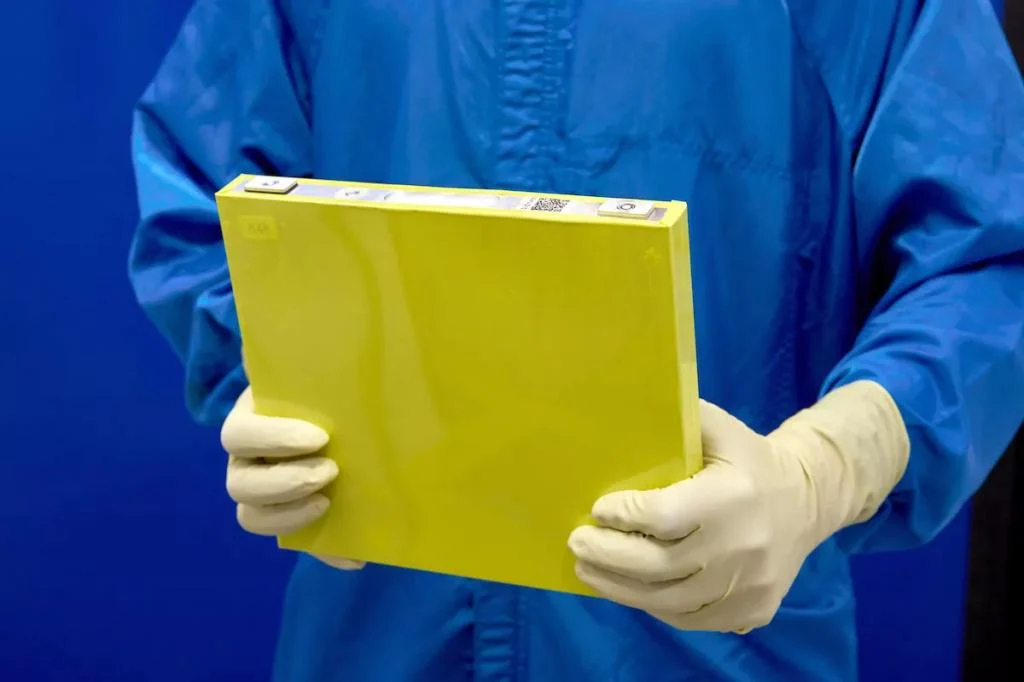
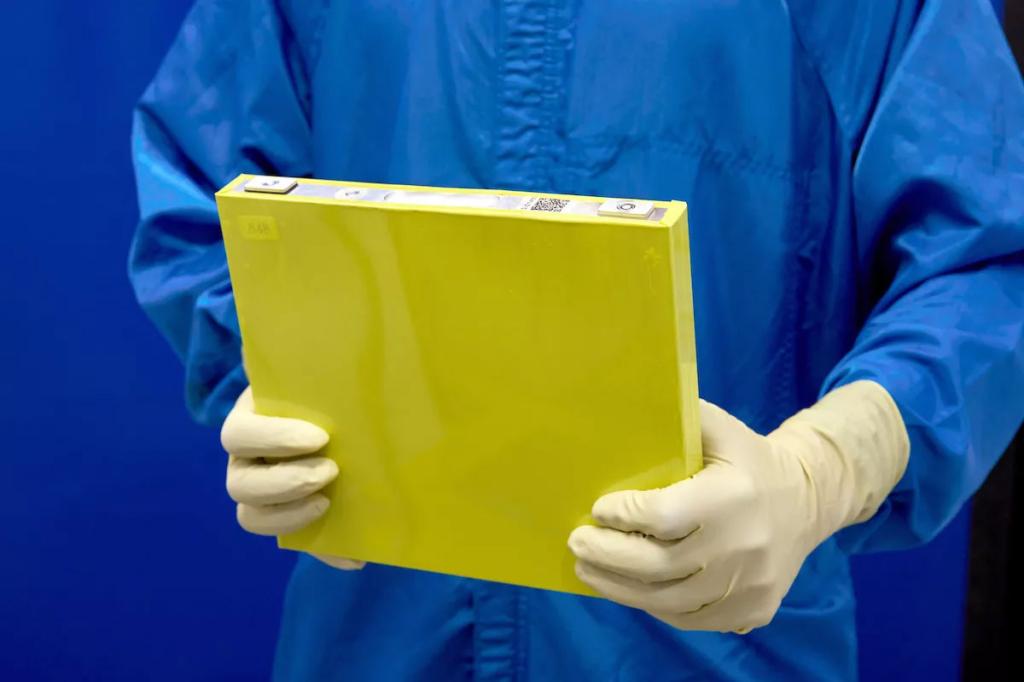
General Motors (GM), in collaboration with its strategic partner LG Energy Solution, believes it has identified the key to unlocking true mass-market adoption. The automaker has officially confirmed the industrial-scale production of a new generation of battery technology dubbed "LMR" (Lithium Manganese Rich), scheduled to hit assembly lines by 2028. This development is not merely an incremental improvement; it represents a fundamental shift in how batteries are engineered, sourced, and priced.
Main Facts: Decoding the LMR Chemistry
The current landscape of EV batteries is dominated by two primary chemistries: the high-performance but expensive Nickel-Manganese-Cobalt (NMC) cells, and the increasingly popular, budget-friendly Lithium Iron Phosphate (LFP) cells. While LFP has been the industry’s go-to for lowering costs, it carries inherent limitations regarding energy density.
GM’s LMR technology is positioned to disrupt this binary. By significantly increasing the proportion of manganese—an abundant, inexpensive, and environmentally accessible earth metal—within the cathode, GM has managed to reduce the reliance on cobalt, one of the most volatile and expensive components in modern battery manufacturing.
The Technical Edge
LMR batteries are designed to achieve a 33% higher energy density compared to traditional LFP cells. This technical leap allows for a "choose your own adventure" manufacturing strategy:
- Range Extension: Maintaining the current battery size while significantly increasing the vehicle’s driving range.
- Weight and Space Optimization: Reducing the physical size of the battery pack, which lowers vehicle weight and improves overall handling and interior space.
- Cost Reduction: Retaining current range and performance standards while drastically slashing the bill-of-materials (BOM) cost.
Chronology of the Development
The path to the 2028 production goal has been a multi-year effort defined by rigorous research and strategic partnerships.
- 2023–2024 (The Research Phase): GM and LG Energy Solution intensified their R&D efforts into manganese-rich cathodes. The objective was to stabilize the crystal structure of the material, a historic challenge for chemists working with manganese.
- 2025 (Validation): Following successful lab testing, GM began pilot-line production to test the durability and degradation cycles of the LMR chemistry under real-world weather conditions.
- October 2026 (The Announcement): GM officially confirms the roadmap for mass-market integration, signaling to investors and the supply chain that LMR is the cornerstone of their 2028 vehicle lineup.
- 2027 (Scale-up): The construction and retooling of battery cell manufacturing facilities to accommodate the specific requirements of the LMR production process.
- 2028 (Market Entry): The anticipated launch of the first generation of GM vehicles equipped with LMR battery technology.
Supporting Data: Economic Implications
The primary driver behind the LMR initiative is the drastic reduction in production costs. Historically, cobalt prices have been subject to severe market fluctuations due to geopolitical instability in the regions where it is mined, most notably the Democratic Republic of the Congo. By pivoting toward manganese, GM is insulating its supply chain from these shocks.
Industry estimates cited by GM suggest that the LMR technology could generate savings exceeding $6,000 per vehicle on large-format platforms such as electric SUVs and pickup trucks.
Comparative Performance Metrics
| Metric | LFP Battery | LMR Battery (Projected) |
|---|---|---|
| Energy Density | Baseline | +33% over LFP |
| Material Cost | Low | Very Low (Cobalt-Reduced) |
| Primary Usage | Urban/Entry-level | Mid-to-High range/Mass Market |
| Stability | High | High (Optimized) |
This data suggests that LMR technology will not replace all other battery types but will serve as a vital middle ground. GM has indicated that its high-nickel batteries will remain the standard for long-range, performance-oriented premium models, while LMR will democratize the mid-market segment.

Official Responses and Strategic Positioning
In recent briefings, GM leadership has framed the LMR breakthrough as a necessary pivot for the company’s "EV-for-everyone" strategy.
"We are moving past the era where electrification was a luxury feature," a GM representative stated. "The LMR chemistry allows us to offer the consumer the range they demand at a price point they can actually afford. By leveraging our partnership with LG, we are not just building a battery; we are building a sustainable ecosystem for the future of transportation."
Market analysts have noted that this move is a strategic reaction to the aggressive pricing models currently employed by Chinese manufacturers. By localizing supply chains and optimizing material costs, GM is attempting to reclaim the price-performance leadership that it risks losing in an increasingly crowded global market.
Implications: A New Era for the EV Market
The introduction of LMR technology signals a maturation of the electric vehicle market. For the past decade, the industry has been obsessed with "range anxiety"—the fear that an EV cannot travel far enough on a single charge. However, as the infrastructure network has grown, the conversation has shifted. The modern consumer now suffers from "price anxiety."
The Death of the "Compliance Car"
For years, many manufacturers produced "compliance cars"—EVs that were only designed to meet regulatory requirements and were often sold at a loss. The LMR battery marks a transition toward profitable, high-volume production. When a manufacturer can shave $6,000 off the production cost without sacrificing range, it changes the economics of the entire dealership network.
Competitive Pressure
This breakthrough places immense pressure on competitors. Manufacturers who have relied solely on LFP or standard NMC architectures may find themselves at a cost disadvantage by 2028. It forces a broader industry realization: the winner of the EV race will not necessarily be the company with the most advanced autonomous driving software or the flashiest design, but the one that can master the chemistry of the battery to make the vehicle an accessible commodity.
The Environmental Factor
Beyond the balance sheet, the move away from cobalt is a significant win for sustainability. Cobalt mining is fraught with ethical and environmental concerns. By utilizing manganese, a more abundant and ethically sourced material, GM is improving the ESG (Environmental, Social, and Governance) profile of its entire vehicle fleet.
Conclusion: Looking Toward 2028
As we look toward the 2028 horizon, the automotive industry stands at a crossroads. The transition to electric power is no longer a question of "if," but "how." If GM’s LMR technology delivers on its promise, it will serve as the bridge between early adopters and the mass market.
While the industry continues to grapple with external challenges—such as the rapid growth of the Chinese EV sector and the shifting landscape of European energy policy—the fundamental math of the automobile is being rewritten in the laboratory. By focusing on material abundance and energy density, GM is betting that the key to the electric future lies not in more complex technology, but in smarter, more affordable chemistry.
For the everyday driver, this means that the dream of an affordable, long-range electric SUV may finally move from a brochure promise to a showroom reality in the very near future. The "EV revolution" is about to become a practical, economic, and widespread phenomenon, provided these lithium-manganese-rich cells perform as efficiently as the projections suggest. The race to 2028 is officially on.
